February 3, 2026
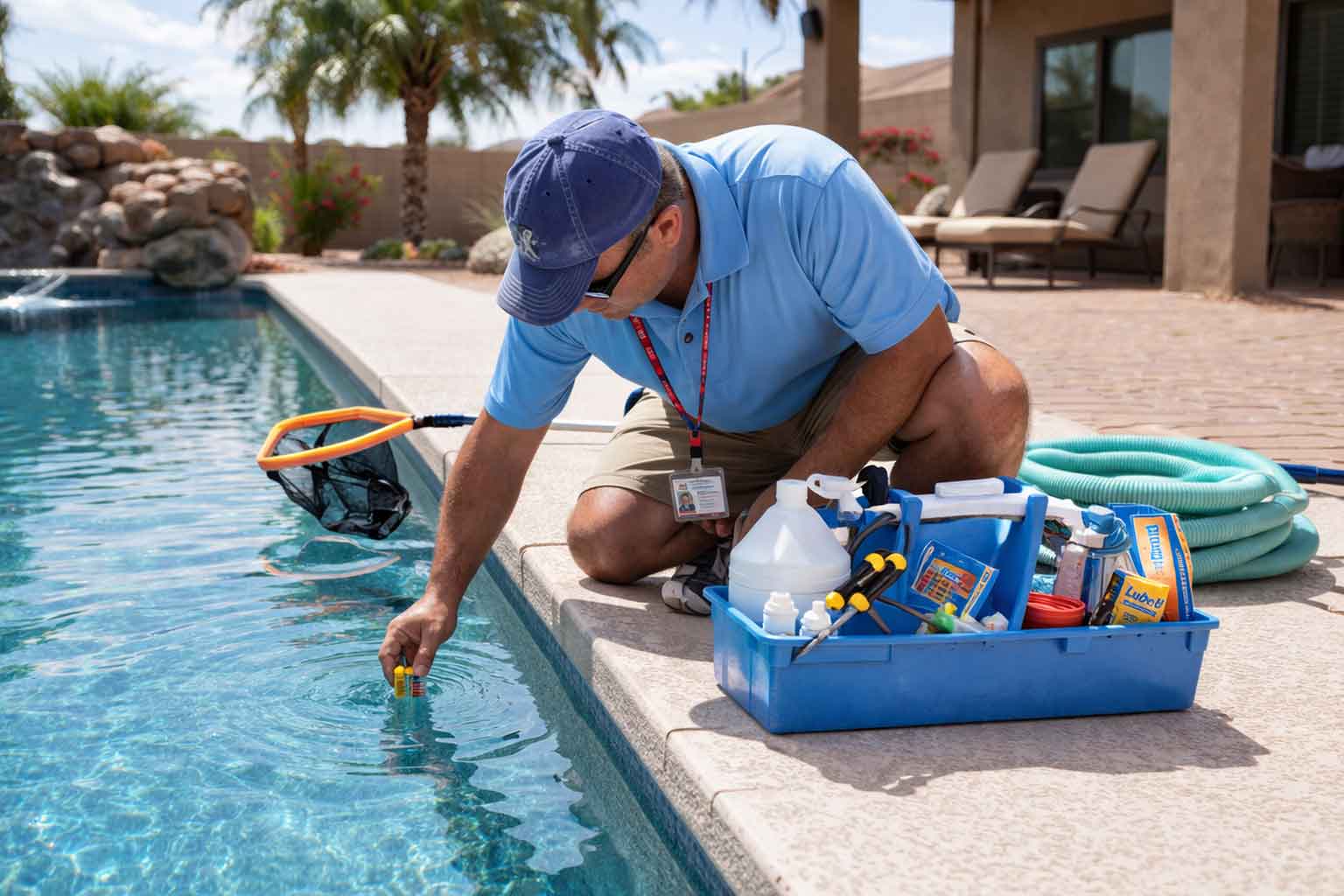
Keeping your pool water properly balanced isn’t just a technical detail—it’s the foundation of a clean, safe, and enjoyable swimming pool. In Phoenix, where heat, evaporation, and mineral-heavy water all work against you, water chemistry can drift out of range faster than most homeowners expect.
When your pool chemistry is off, the effects show up quickly. You might notice cloudy water, algae growth, scale buildup along your tile, or that familiar burning-eye feeling when you jump in. Over time, poor water balance can also damage your pool’s interior finish, clog filters, shorten the life of your equipment, and turn what should be simple maintenance into ongoing repair headaches.
On the flip side, properly balanced water keeps your pool clear, comfortable, and easy to manage. It protects your investment, reduces long-term costs, and makes the pool far more enjoyable for your family and guests.
When water chemistry drifts, it tends to snowball. One imbalance leads to another, and before long, you’re chasing multiple issues at once.
Common problems include:
In a desert environment, these issues tend to develop faster due to heat and evaporation, which concentrate minerals and chemicals in the water.
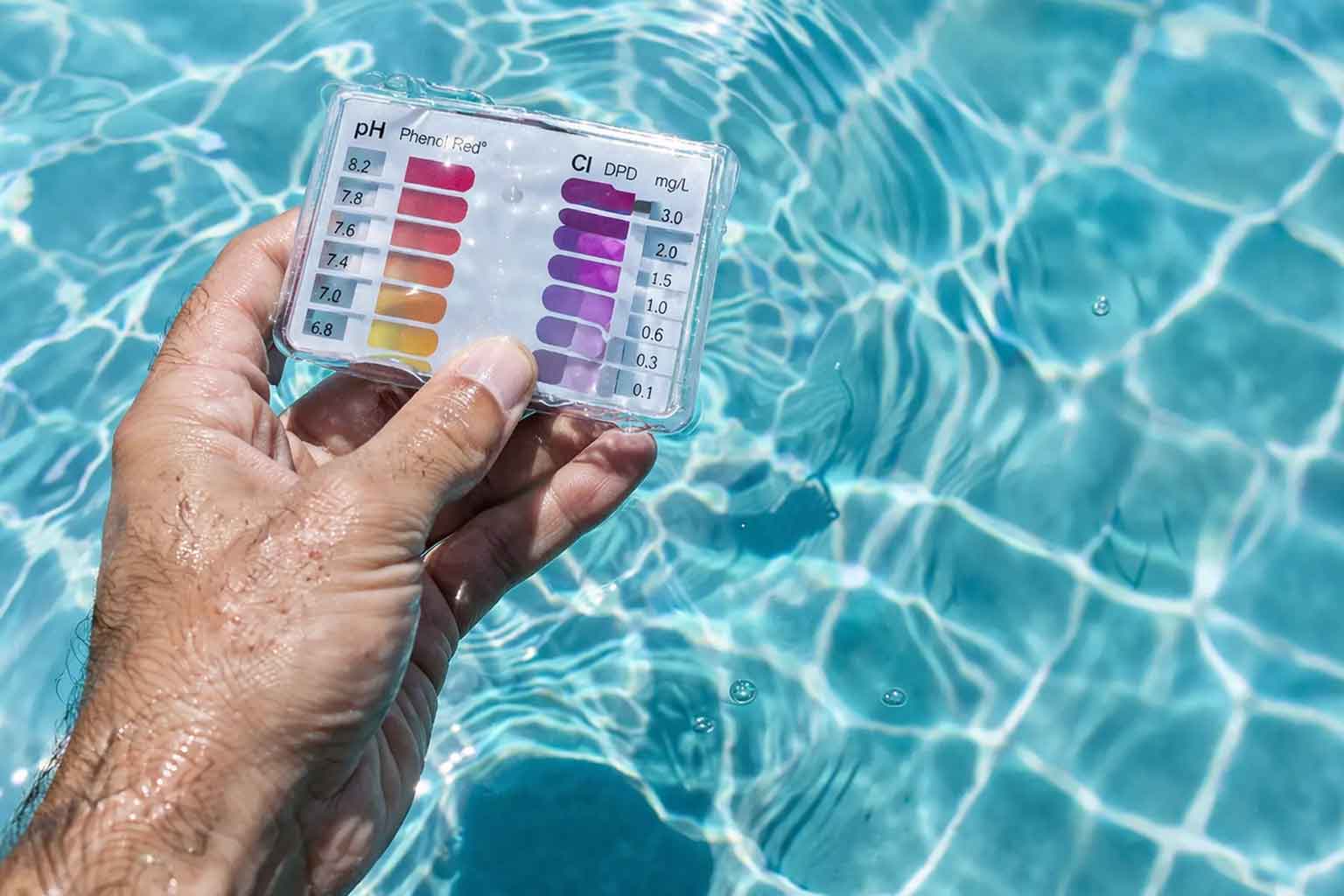
Maintaining proper chemical balance starts with understanding the target ranges and testing your water regularly.
Saltwater pools use a chlorine generator but still require careful balancing.
Even though salt systems automate chlorine production, they don’t eliminate the need for regular monitoring and adjustment.
In Phoenix, chemical adjustments are more frequent than in milder climates.
High temperatures and constant sun exposure break down chlorine quickly, while evaporation leaves behind minerals that continue to accumulate. That means your pool is always changing, even if it looks fine on the surface.
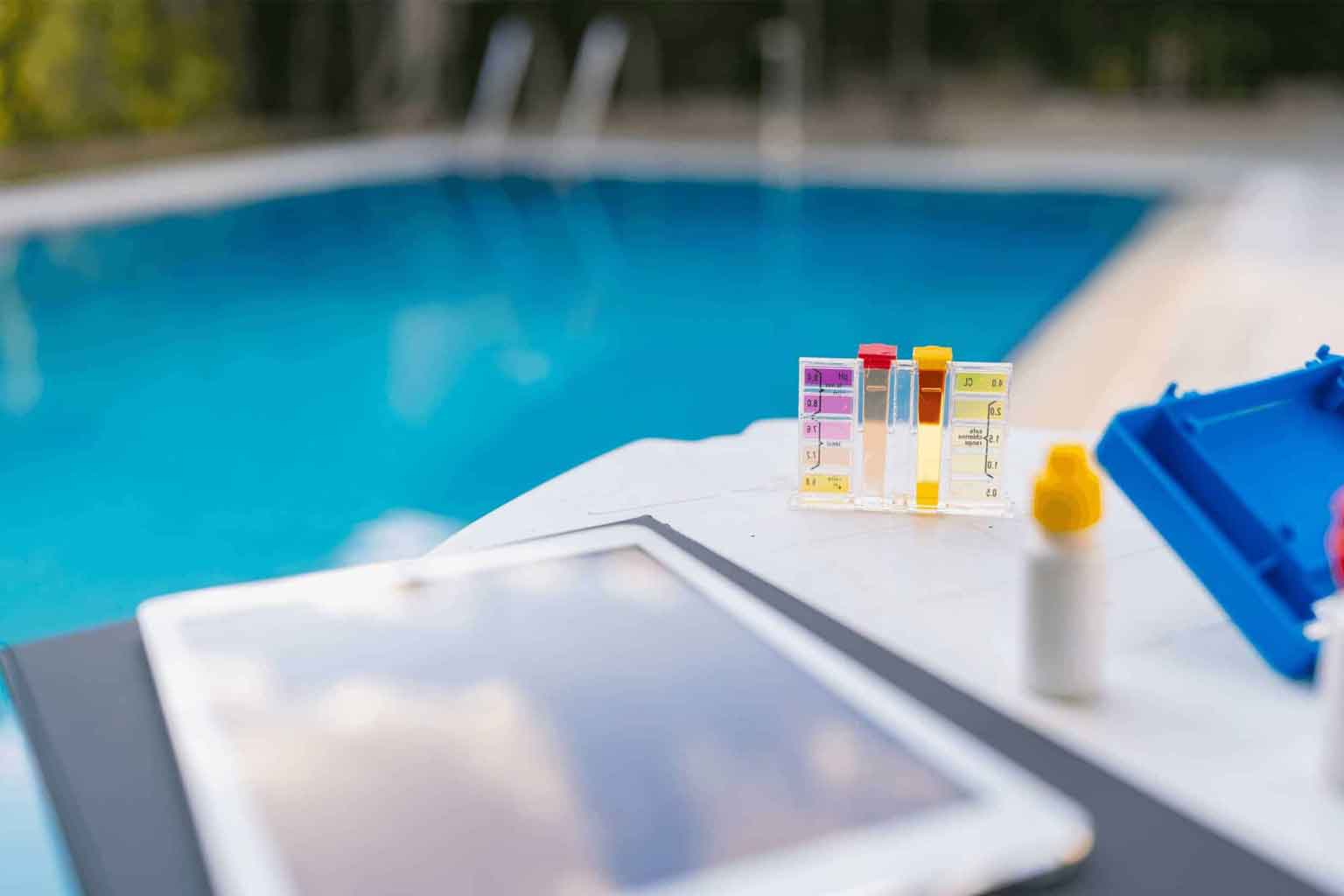
Phoenix pools face a few consistent regional issues that affect water balance:
This is one of the biggest challenges in Arizona.
Water evaporates quickly, but minerals stay behind.
Often introduced through dust, debris, and environmental factors.
Phoenix sun breaks down chlorine rapidly.
Many homeowners start out handling their own pool chemistry, and for some, that works well. But over time, it’s common to run into a few challenges:
Water chemistry can be unforgiving in Phoenix, and small missteps can lead to bigger issues.
A weekly pool service takes that burden off your plate by:
Balancing pool chemicals in Phoenix isn’t a set-it-and-forget-it process. It requires consistency, attention to detail, and an understanding of how the desert environment affects your water.
For homeowners who enjoy managing their pool, staying on top of testing and adjustments is key. But if you find yourself spending more time and money than expected trying to keep everything dialed in, it may be worth having a professional handle it for you.
For those considering weekly pool maintenance in Phoenix, Aqua Harmony Pools provides consistent, reliable service to keep your water balanced, your surfaces protected, and your pool ready to enjoy.

This article explains the importance of properly balancing pool chemicals in Phoenix, where heat, evaporation, and hard water can quickly throw water chemistry out of range. It covers what happens when levels are off, recommended chemical ranges for both chlorine and salt pools, common regional challenges like calcium buildup and phosphates, and whether it makes more sense to manage your pool yourself or rely on a weekly service to keep everything balanced and swim-ready.
.png)

