March 31, 2026

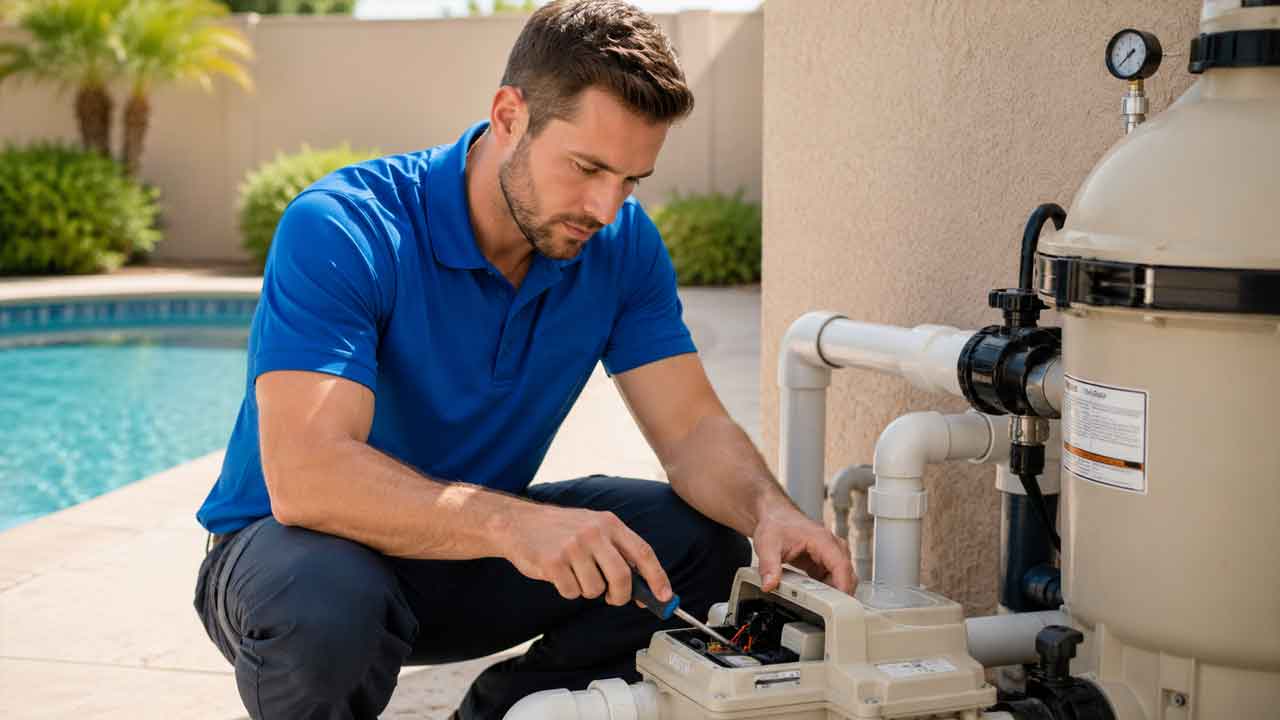
Your pool pump is the heart of your swimming pool. Every day it circulates thousands of gallons of water through your filtration system, helping distribute chemicals, remove debris, and keep your water clean and healthy. When the pump isn't working properly, it doesn't take long before water quality begins to suffer.
In Phoenix, pool pumps work harder than almost anywhere else in the country. Extreme summer temperatures, dust storms, long operating hours, and nearly year-round swimming season put constant stress on pool equipment. It's no surprise that pool pump repairs are one of the most common service calls we receive at Aqua Harmony Pools.
If your pump is making strange noises, losing water flow, or refusing to start altogether, here's what may be happening—and how our experienced technicians can get your system running again.
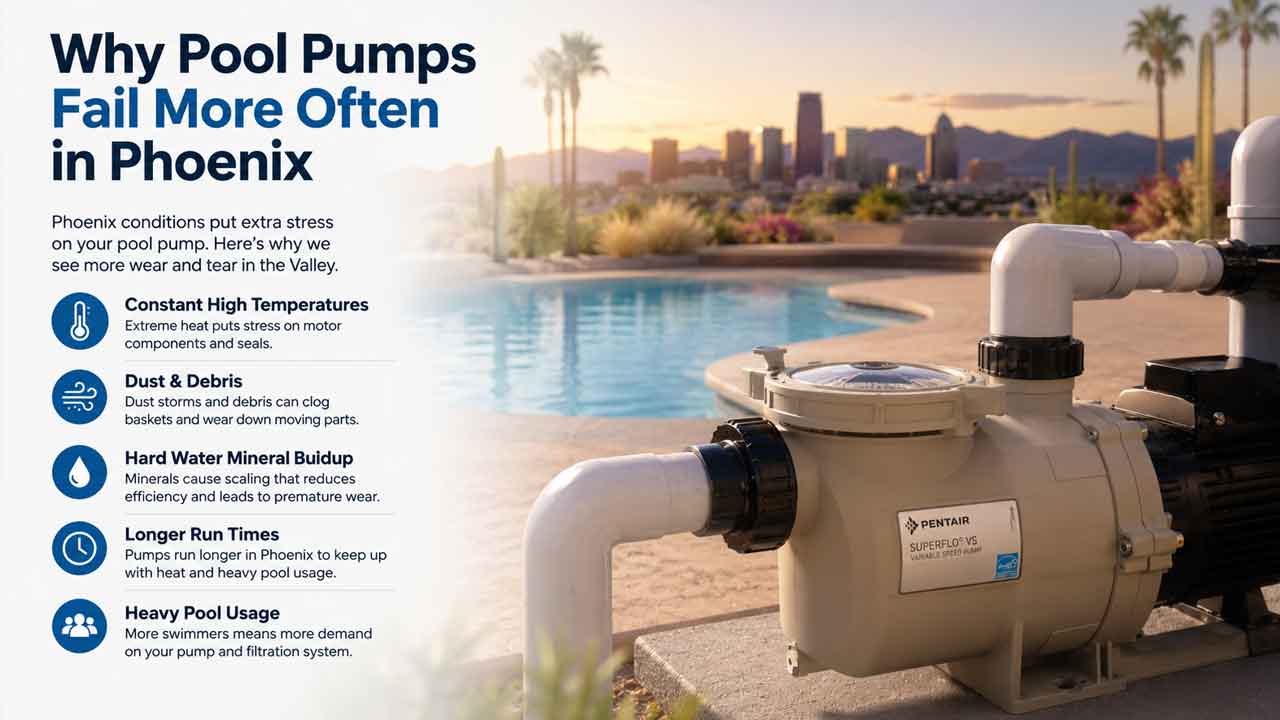
Unlike colder climates where equipment may sit idle for months, Phoenix pool pumps often run every day for most of the year. During summer, many systems operate 10-14 hours daily just to keep up with heat and demand.
Several factors accelerate wear:
Routine inspections and maintenance help prevent many of these failures before they become expensive repairs.
One of the most frustrating problems is a pump that simply won't start.
Sometimes the solution is simple—a tripped breaker, failed timer, or blown capacitor. Other times the motor itself has reached the end of its service life. Capacitors, bearings, electrical connections, and motor windings are all common failure points as pumps age.
Our technicians begin with a complete electrical diagnosis rather than guessing.
We inspect:
If a small component has failed, we'll repair it whenever practical. If the motor or entire pump is no longer cost-effective to repair, we'll recommend replacement options that improve reliability and reduce energy costs.
If your return jets feel weak or your skimmer isn't pulling debris effectively, your circulation system isn't moving enough water.
Common causes include:
Poor circulation allows algae to develop more quickly, creates chemical imbalances, and makes your filtration system much less effective.
Rather than replacing parts unnecessarily, we locate the restriction.
We may:
Many circulation problems can be corrected without replacing the entire pump.
A healthy pool pump should produce a steady, consistent hum.
If your pump suddenly begins making grinding, screeching, rattling, or roaring noises, it's usually trying to tell you something.
Common causes include:
Ignoring these sounds often turns a relatively inexpensive repair into a complete motor replacement.
We identify where the noise originates.
Depending on the diagnosis, we may:
Stopping a noisy pump early can significantly extend the life of your equipment.
Water around your equipment pad is never normal.
Leaks commonly develop around:
Even small leaks allow air into the system and can eventually damage the motor.
Our technicians pressure-test and inspect the entire pump assembly.
Depending on the source, we may:
Fixing leaks early prevents much larger repair bills later.
If your pump basket fills with air or your pump struggles to maintain water flow, it's likely losing prime.
This usually happens because air is entering the suction side of the plumbing through worn seals, loose fittings, cracked pipes, or low pool water levels.
We perform a systematic inspection of the suction side of your circulation system.
That includes checking:
Finding the exact source of the air leak restores reliable circulation.
If your breaker repeatedly trips, never continue resetting it.
This can indicate:
Continuing to run the pump can cause permanent damage or create electrical hazards.
We inspect both the electrical and mechanical sides of the system.
Once we determine whether the issue is electrical or mechanical, we recommend the safest and most economical repair.
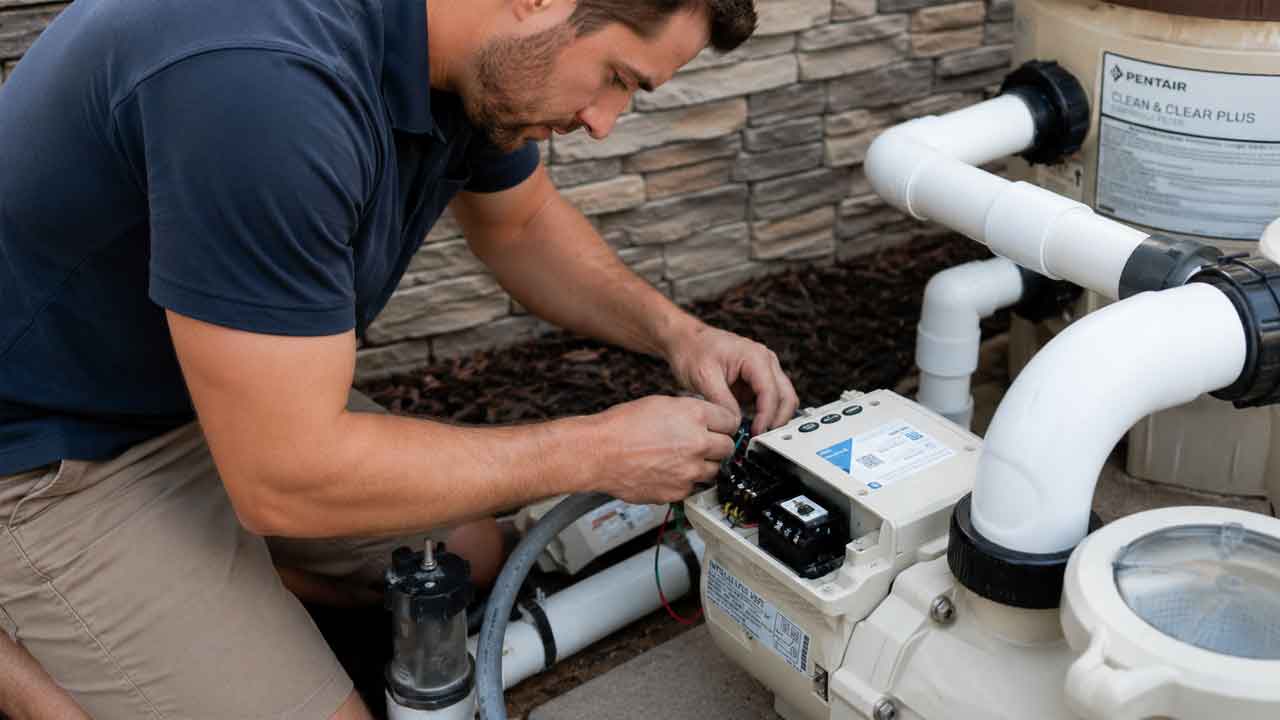
Not every broken pump needs replacement.
If the motor is relatively new and only a seal, capacitor, bearing, or impeller has failed, repairing the pump often makes financial sense.
However, if your pump is over 8-10 years old, requires multiple repairs, or is an older single-speed model, replacing it with a modern variable-speed pump may save hundreds of dollars annually on electricity while operating more quietly and providing better circulation.
Our goal is never to sell you equipment you don't need—we'll always recommend the solution that offers the best long-term value.
Many repairs can be avoided with regular maintenance.
We recommend:
Small maintenance issues are almost always less expensive than emergency repairs.
Whether your pool pump won't start, is making strange noises, leaking water, or simply isn't circulating like it should, Aqua Harmony Pools has the experience to diagnose the problem quickly and repair it correctly.
We service all major pool pump brands and provide honest recommendations that prioritize long-term reliability over unnecessary replacements.
If your pool equipment isn't performing the way it should, contact Aqua Harmony Pools today. We'll restore proper circulation, protect your investment, and keep your Phoenix pool running efficiently all season long.
Grinding usually indicates worn motor bearings or internal mechanical damage. Continuing to operate the pump can lead to complete motor failure.
The pump may have lost prime, the impeller could be clogged, the filter may be dirty, or there could be an air leak in the suction plumbing.
Most quality pool pumps last between 8 and 12 years, depending on maintenance, operating hours, and Arizona's harsh climate.
In many cases, yes. Most leaks come from worn shaft seals, O-rings, or fittings that can be replaced without installing a new pump.
If the repair is minor and the pump is relatively new, repair is usually the better choice. Older pumps with repeated failures are often better candidates for replacement.
Absolutely. Variable-speed pumps use significantly less electricity than older single-speed pumps and are one of the best upgrades for reducing pool operating costs in Phoenix.
We recommend a professional equipment inspection at least once a year, along with routine filter cleaning and regular visual inspections throughout the swimming season.

Pool pump problems are one of the most common service calls we receive in Phoenix. This guide explains the warning signs of a failing pool pump—from noisy motors and leaks to poor circulation, pumps that won't start, and electrical issues—and how Aqua Harmony Pools diagnoses and repairs these problems. Learn when a repair is the right choice, when replacement makes more sense, and how routine maintenance can help keep your pool running reliably year-round.
.png)

