May 5, 2026
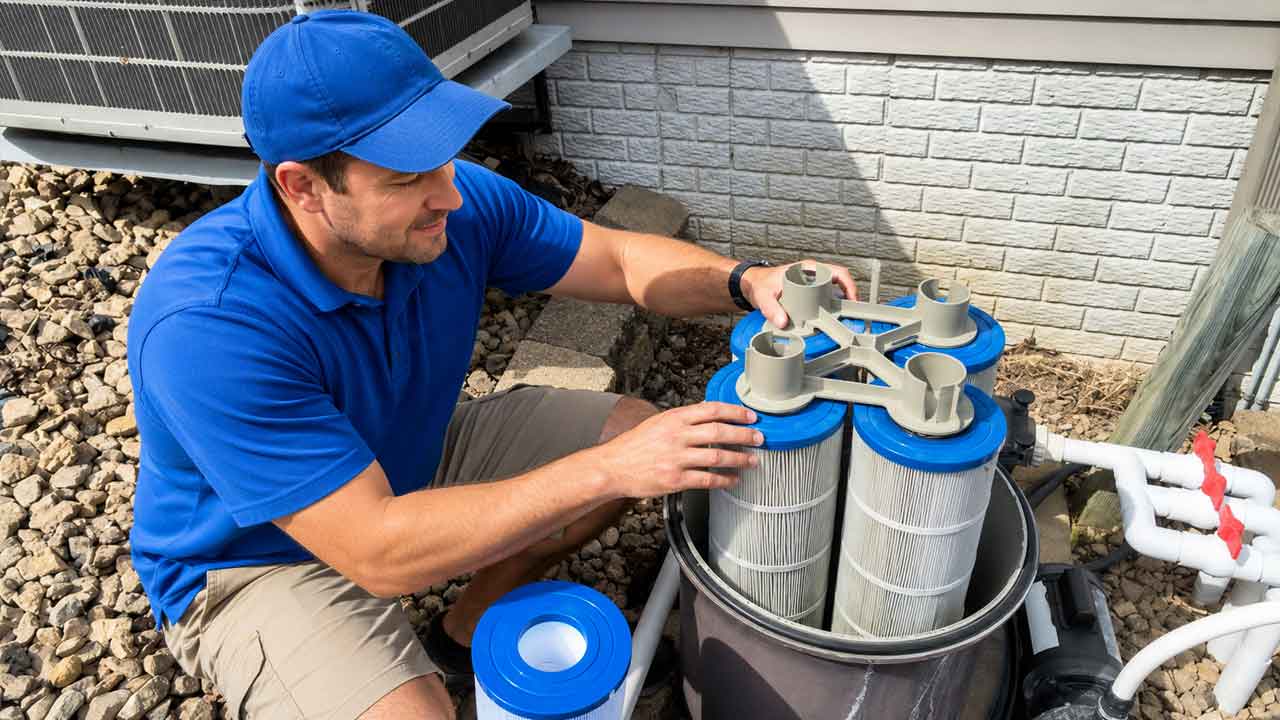
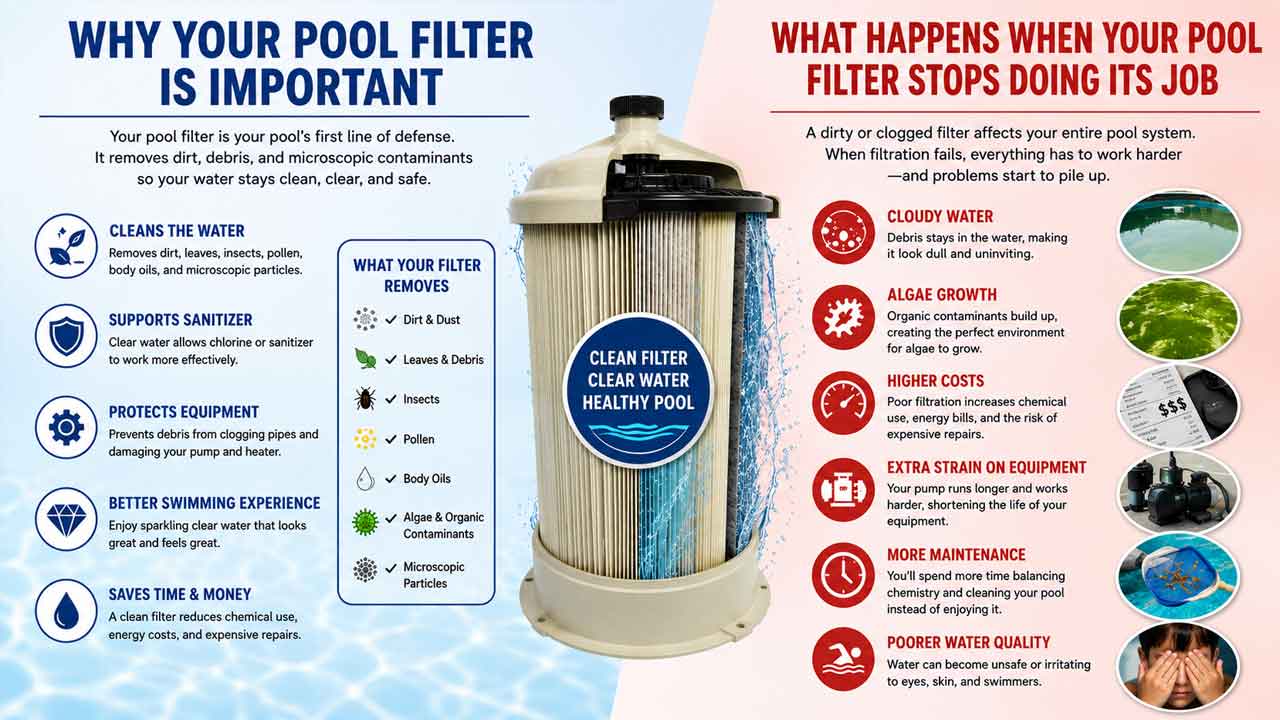
Your pool filter is one of the hardest-working pieces of equipment on your swimming pool. While your pump keeps water moving, it's the filter that actually removes dirt, debris, pollen, dust, body oils, insects, algae spores, and microscopic contaminants from the water. Without proper filtration, even perfectly balanced pool chemistry struggles to keep your water clear.
In Phoenix, where pools run nearly year-round and the desert environment constantly introduces new debris into the water, keeping your filter operating properly is even more important. A neglected filter doesn't just lead to cloudy water—it forces every other piece of equipment to work harder, increases chemical consumption, and creates the perfect conditions for algae growth.
At Aqua Harmony Pools, we help homeowners diagnose, repair, clean, and replace pool filters every week. Understanding the warning signs early can save hundreds—or even thousands—of dollars in unnecessary repairs.
Think of your pool filter as your pool's kidneys.
Every gallon of water passes through the filter multiple times every day. As water flows through the filter media, contaminants become trapped while clean water returns to the pool.
A properly functioning filter removes:
When filtration begins to decline, these contaminants remain suspended in the water. That means your sanitizer has to work harder, chlorine demand increases, and water clarity begins to suffer.
Many homeowners assume cloudy water automatically means a chemistry problem. Often, poor filtration is the real culprit.
Pool equipment works together as one complete circulation system.
When the filter becomes clogged, damaged, or worn out, the entire system suffers.
Common consequences include:
The pump must push harder against a dirty filter, increasing energy consumption and placing additional wear on seals, bearings, and motors.
Meanwhile, debris that should have been removed continues circulating through the pool.
Eventually, algae gains the upper hand.
Pool filters everywhere get dirty.
Pool filters in Phoenix work overtime.
Our desert environment creates unique filtration challenges that homeowners in cooler climates simply don't experience.
Phoenix experiences frequent dust storms, blowing sand, and airborne dirt that settles into pools almost daily.
These microscopic particles quickly clog filter media.
Springtime pollen coats pool surfaces and rapidly loads cartridge filters.
Summer storms dump leaves, dirt, branches, and organic debris into pools almost overnight.
Long swimming seasons mean more sunscreen, body oils, cosmetics, hair products, and debris entering the water.
Palm trees, desert shrubs, flowers, grass clippings, and nearby construction dust all contribute to increased filter loading.
It's one reason Arizona pool owners often need filter maintenance more frequently than homeowners elsewhere.

Most residential pools use one of three filtration systems.
Cartridge filters have become the preferred option throughout the Phoenix metro area.
Why homeowners like them:
Cartridge elements are periodically removed, cleaned thoroughly, and eventually replaced when worn out.
Sand filters use specially graded filter sand to trap contaminants.
Advantages include:
The tradeoff is that sand generally captures larger particles than cartridge or DE filters.
Filter sand typically requires replacement every 5–7 years.
DE filters provide the finest filtration available for residential pools.
A coating of diatomaceous earth powder traps extremely small particles, producing exceptionally clear water.
However, they require more maintenance and periodic recharging with fresh DE after backwashing.
Many older Phoenix pools still use DE systems, although cartridge filters have become the more common choice for new installations and remodels.
Routine maintenance depends on your filter type, pool usage, and surrounding environment.
General guidelines include:
Cartridge Filters
Sand Filters
DE Filters
Phoenix homeowners with heavy dust exposure may require more frequent cleanings.
Waiting until water turns cloudy usually means you've waited too long.
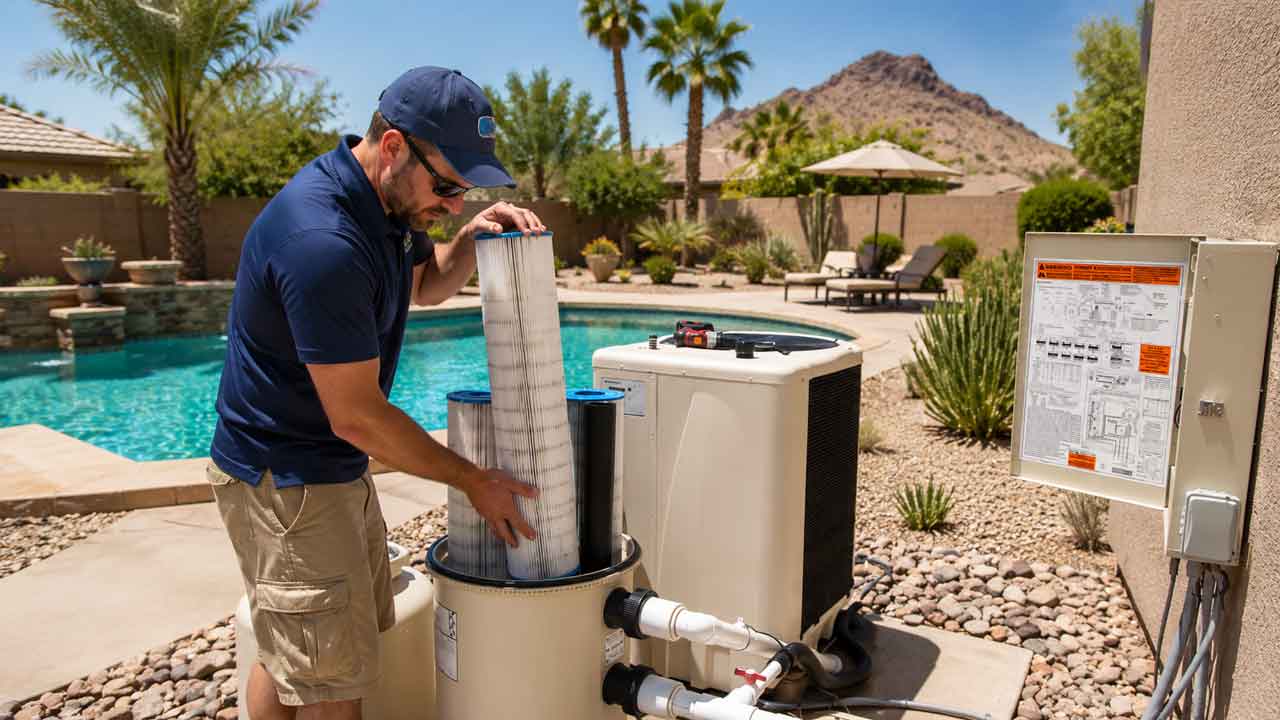
Your pool often tells you when the filter needs help.
Watch for symptoms like:
Ignoring these warning signs often leads to larger equipment problems later.
Many homeowners enjoy maintaining their own pools, but filters can present challenges that aren't always obvious.
Common mistakes include:
Using a pressure washer can damage filter pleats.
Household cleaners may leave behind residue that reduces filtration performance.
Pinched or flattened lid O-rings often cause air leaks that reduce circulation.
Dry O-rings can twist, crack, or fail prematurely.
Small tears allow debris to bypass the filter entirely.
Pressure gauges provide valuable diagnostic information, but many homeowners never check them.
Some filter problems require more than routine cleaning.
Professional service is recommended when:
A technician can also inspect the entire circulation system to determine whether the problem actually originates with the pump, plumbing, valves, or filter.
Cloudy water can result from poor water chemistry, algae, worn filter media, inadequate circulation, or an undersized filter. Cleaning alone may not solve the underlying issue.
If the pleats are torn, flattened, permanently stained, or the filter pressure rises quickly after cleaning, it's usually time for replacement.
A rising pressure gauge usually indicates the filter is trapping debris and needs cleaning. If pressure remains high after servicing, there may be an internal blockage or equipment issue.
Yes. Poor filtration allows algae spores and organic debris to remain in circulation, making it much harder for chlorine to control algae growth.
Most pools benefit from filter cleaning every three to six months, although heavy dust, monsoon storms, or high pool usage may require more frequent maintenance.
Minor issues like replacing O-rings, gauges, or cartridges are usually inexpensive repairs. Cracked tanks, severely damaged internals, or aging equipment may justify replacing the entire filter.
A clean, properly functioning pool filter is essential for crystal-clear water, efficient circulation, and reliable pool equipment. Whether your filter needs a professional cleaning, new cartridges, fresh filter media, repairs, or a complete replacement, Aqua Harmony Pools has the experience to keep your filtration system operating at peak performance. If you're dealing with cloudy water, rising filter pressure, recurring algae, or simply aren't sure your filter is working properly, contact Aqua Harmony Pools today. We'll diagnose the problem, recommend the right solution, and help keep your Phoenix pool clean, healthy, and ready to enjoy all year long.

This article explains how to diagnose common pool filter problems before they lead to cloudy water, algae, or costly equipment repairs. Learn how pool filters work, the unique filtration challenges Phoenix homeowners face, the differences between sand, cartridge, and DE filters, and when it's time to clean, repair, or replace your filter to keep your pool running efficiently.
.png)

