April 12, 2026
If you've been thinking about upgrading your swimming pool, converting to a saltwater system is one of the most popular improvements homeowners are making today. Saltwater pools have earned a reputation for being easier on your skin, requiring less day-to-day maintenance, and delivering a more comfortable swimming experience.
One of the biggest misconceptions, however, is that a saltwater pool doesn't use chlorine. The truth is that every saltwater pool is still a chlorine pool—it simply produces its own chlorine automatically instead of requiring homeowners to regularly add chlorine tablets or liquid chlorine.
Here's what Phoenix pool owners should know before making the switch.
Many people assume that swimming in a saltwater pool is similar to swimming in the ocean. While there is salt in the water, the concentration is much lower than seawater—typically around 3,000 to 3,500 parts per million compared to roughly 35,000 ppm in the ocean.
Instead of manually adding chlorine every few days, a saltwater pool uses a salt chlorine generator (often called a salt cell). As water passes through the salt cell, a small electrical current converts dissolved salt into chlorine through a process called electrolysis.
The chlorine sanitizes your pool exactly the same way traditional chlorine does, killing bacteria, algae, and other contaminants. Once the chlorine has finished sanitizing the water, it converts back into salt, allowing the process to repeat continuously.
The result is a pool that maintains a more consistent chlorine level with far less manual intervention.
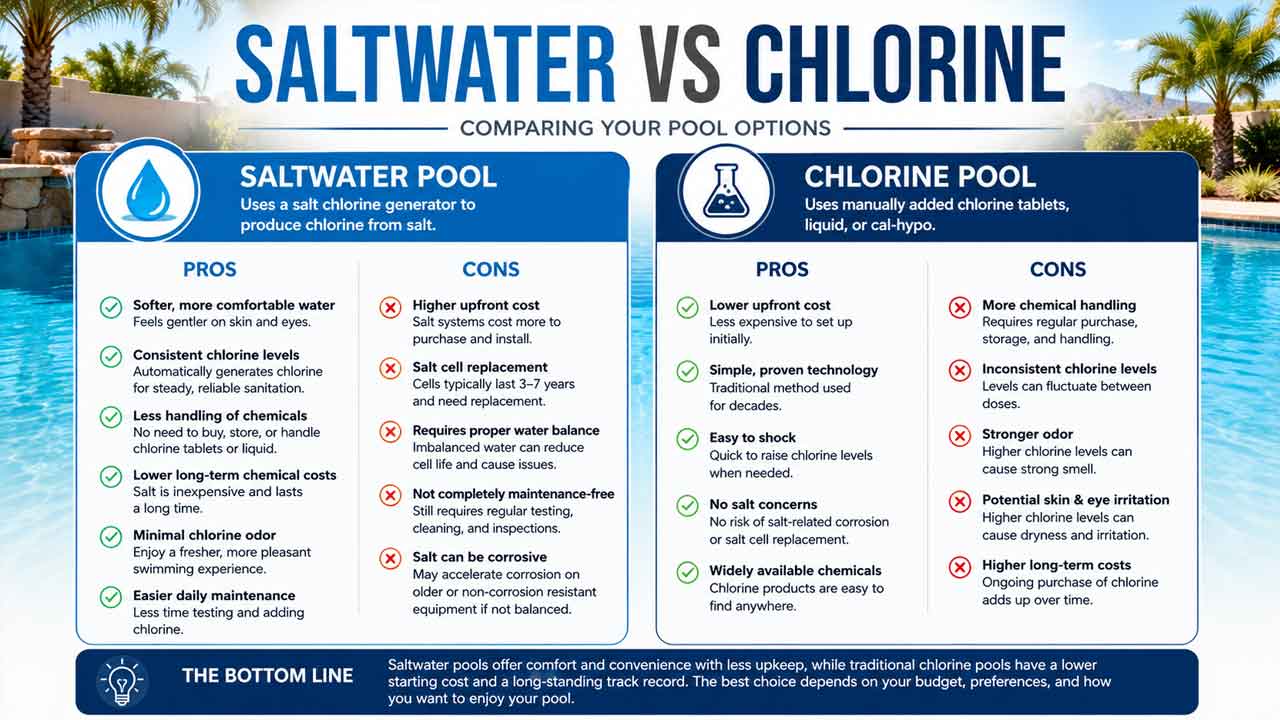
Saltwater pools have become increasingly popular because they offer several advantages over traditional chlorine systems.
Most swimmers immediately notice that saltwater feels softer and silkier. Many people also report less skin irritation, fewer itchy eyes, and reduced dryness after swimming.
Traditional pools often experience chlorine peaks and valleys depending on when chemicals are added. Salt systems generate chlorine throughout the day, helping maintain a more stable sanitizer level.
Instead of purchasing, storing, and handling chlorine tablets or liquid chlorine on a regular basis, you'll simply add pool salt periodically and let the system do the work.
Although a salt system requires an upfront investment, many homeowners find they spend less on chlorine over time since the generator continuously creates sanitizer from inexpensive pool salt.
Steady chlorine production helps maintain balanced water chemistry, reducing the likelihood of cloudy water or sudden algae blooms caused by sanitizer shortages.
Many pool owners simply prefer how a saltwater pool feels. The water tends to be smoother, has little to no noticeable chlorine odor, and provides a more luxurious swimming experience.
Saltwater systems have become extremely popular throughout the Phoenix metro area, particularly in newer pool construction and pool remodels.
With Phoenix homeowners using their pools much of the year, many appreciate the convenience of automated chlorine production. Instead of constantly monitoring chlorine levels during periods of heavy use and intense summer heat, a salt system helps maintain more consistent sanitation.
Saltwater pools are especially common among homeowners who:
Many pool builders now install salt systems as a standard upgrade, and a growing number of existing pool owners are converting during equipment replacement projects.

Converting an existing chlorine pool is typically a straightforward process when performed by a qualified pool equipment professional.
The conversion generally includes:
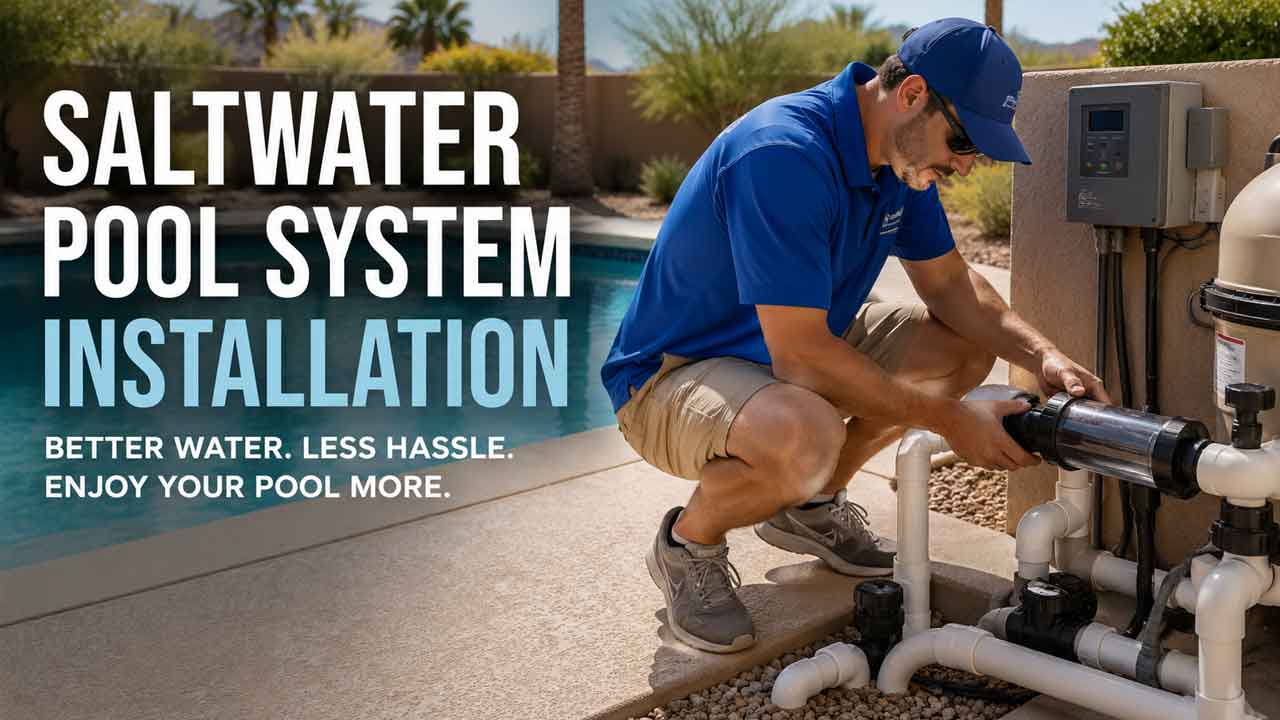
The heart of the system is the salt chlorine generator, which includes a control panel and a salt cell installed in your pool's plumbing after the filter and heater.
Specially formulated pool salt is added to the water until the proper salinity level is reached. Once dissolved, the salt becomes virtually undetectable while swimming.
The pool water is tested and adjusted to ensure proper pH, alkalinity, calcium hardness, and stabilizer levels before the salt system begins operating.
The chlorine generator is calibrated based on your pool's size, circulation schedule, and seasonal chlorine demand.
Salt systems are relatively low maintenance, but they aren't maintenance-free. The salt cell should be inspected regularly and cleaned when calcium buildup develops. Most salt cells last between three and seven years depending on water chemistry and usage before replacement becomes necessary.
Not really. The salt concentration is only about one-tenth that of ocean water. Most swimmers barely notice it.
When properly balanced and maintained, saltwater pools are safe for most modern pool finishes and equipment. Proper water chemistry is essential to prevent corrosion or scaling.
Yes. There are times when supplemental chlorine is recommended, such as after heavy pool use, storms, algae treatment, or opening the pool after extended downtime.
No. While it significantly reduces daily chlorine maintenance, you'll still need routine water testing, filter cleaning, and periodic inspection of the salt cell.
Yes. Saltwater pools still require balancing chemicals such as pH increaser or reducer, alkalinity adjustments, calcium hardness management, and stabilizer. The difference is that the chlorine is generated automatically.
Most conversions can be completed in a single visit, although final startup and water balancing may require a short follow-up to fine-tune the system.
For many homeowners, absolutely. The improved swimming comfort, convenience, and reduced chlorine handling make a saltwater system one of the most popular equipment upgrades available.
Installing a saltwater chlorine generator isn't simply a matter of adding salt to your pool. Proper equipment sizing, plumbing modifications, electrical connections, water chemistry, and system programming all play an important role in ensuring reliable performance and long equipment life.
Whether you're replacing aging pool equipment or looking to upgrade your swimming experience, Aqua Harmony Pools provides expert saltwater system installations throughout the Phoenix area. Our experienced technicians can recommend the right system for your pool, professionally install the equipment, balance your water chemistry, and ensure everything operates exactly as it should.
If you're ready to enjoy softer water, easier maintenance, and the convenience of automatic chlorine generation, contact Aqua Harmony Pools today to schedule your saltwater pool conversion consultation.

Thinking about converting your pool to saltwater? This guide explains how saltwater pools work, the benefits they offer over traditional chlorine systems, what the conversion process involves, answers common homeowner questions, and why professional installation is the best way to ensure years of reliable performance.
.png)

