March 6, 2026
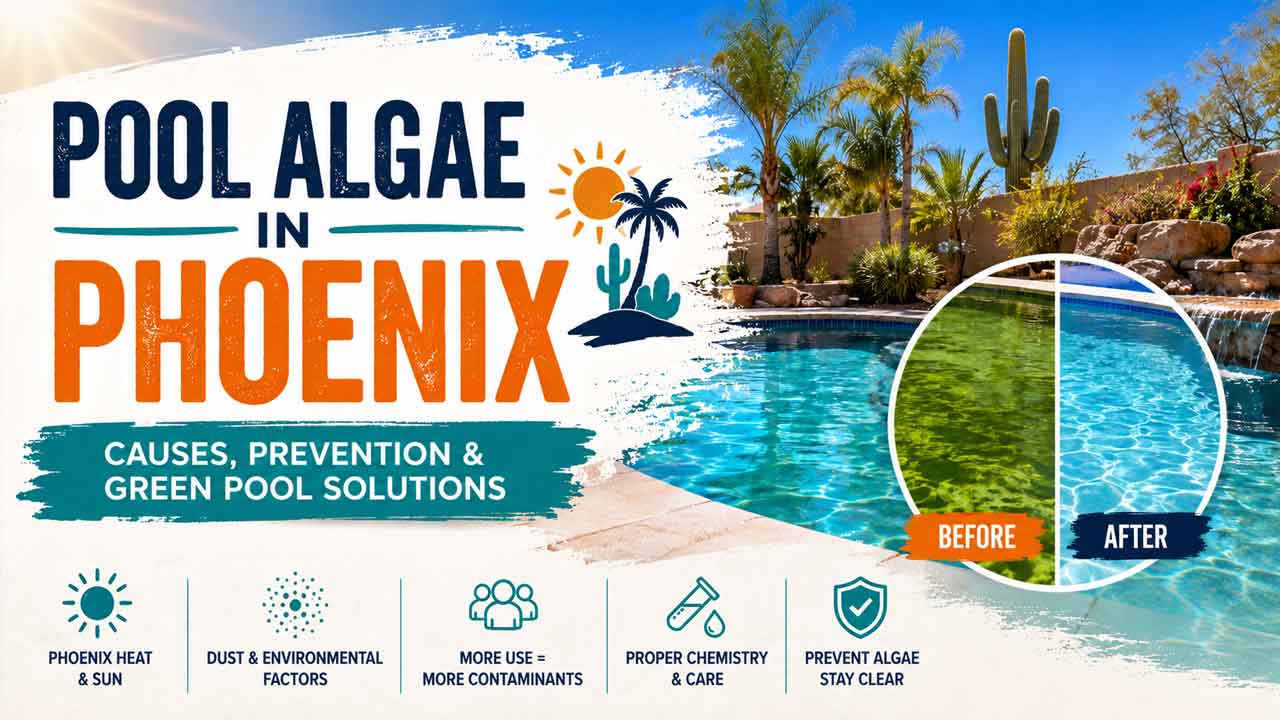
Algae is one of the most common problems Phoenix pool owners face, especially during the long desert summer. It often starts as a faint green haze or a few slippery spots on the walls before quickly turning into a full-blown bloom that leaves the water cloudy, green, and unsafe to swim in. In a city where triple-digit temperatures are the norm for months at a time, pools require consistent attention to stay ahead of algae.
The reality is that Phoenix presents the perfect environment for algae growth. High water temperatures, relentless sunshine, blowing dust, summer monsoons, and nearly year-round swimming season all create conditions where algae can flourish if pool chemistry or circulation falls behind. Fortunately, understanding why algae develops—and taking preventative action early—can help homeowners avoid expensive cleanups and keep their pools looking their best all year long.
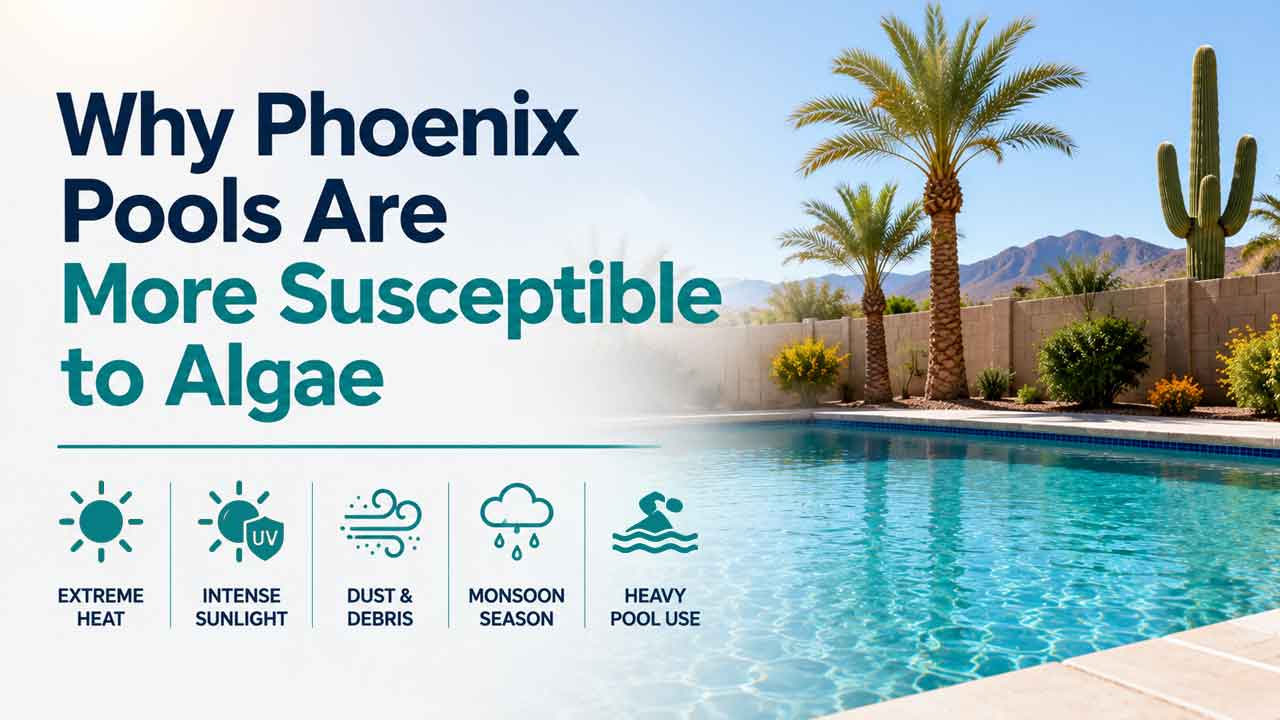
Unlike many parts of the country where pools close for winter, Phoenix pools operate nearly every month of the year. During summer, water temperatures commonly climb into the mid-to-upper 90s, creating ideal conditions for algae to multiply rapidly.
Several environmental factors work together against pool owners:
Warm water speeds up biological activity. As temperatures climb above 85°F, algae reproduce much faster than they would in cooler climates. During July and August, a small algae colony can become a significant bloom in just a few days if chlorine levels drop.
Phoenix receives more sunshine than almost anywhere in the United States. While sunlight makes swimming enjoyable, ultraviolet rays continuously consume free chlorine. Unless chlorine levels are replenished regularly and stabilized properly, the pool can lose its primary defense against algae.
Habobs and everyday desert winds carry enormous amounts of fine dust into swimming pools. That dust doesn't just make the water dirty—it also introduces organic material, phosphates, pollen, and microscopic contaminants that provide food for algae.
Summer storms wash dirt, leaves, insects, and debris into the pool. Heavy rain also dilutes sanitizer levels and can quickly throw water chemistry out of balance.
School vacations mean more swimmers, sunscreen, body oils, cosmetics, and other contaminants entering the water. All of these increase chlorine demand, making it easier for algae to gain a foothold if the sanitizer cannot keep up.
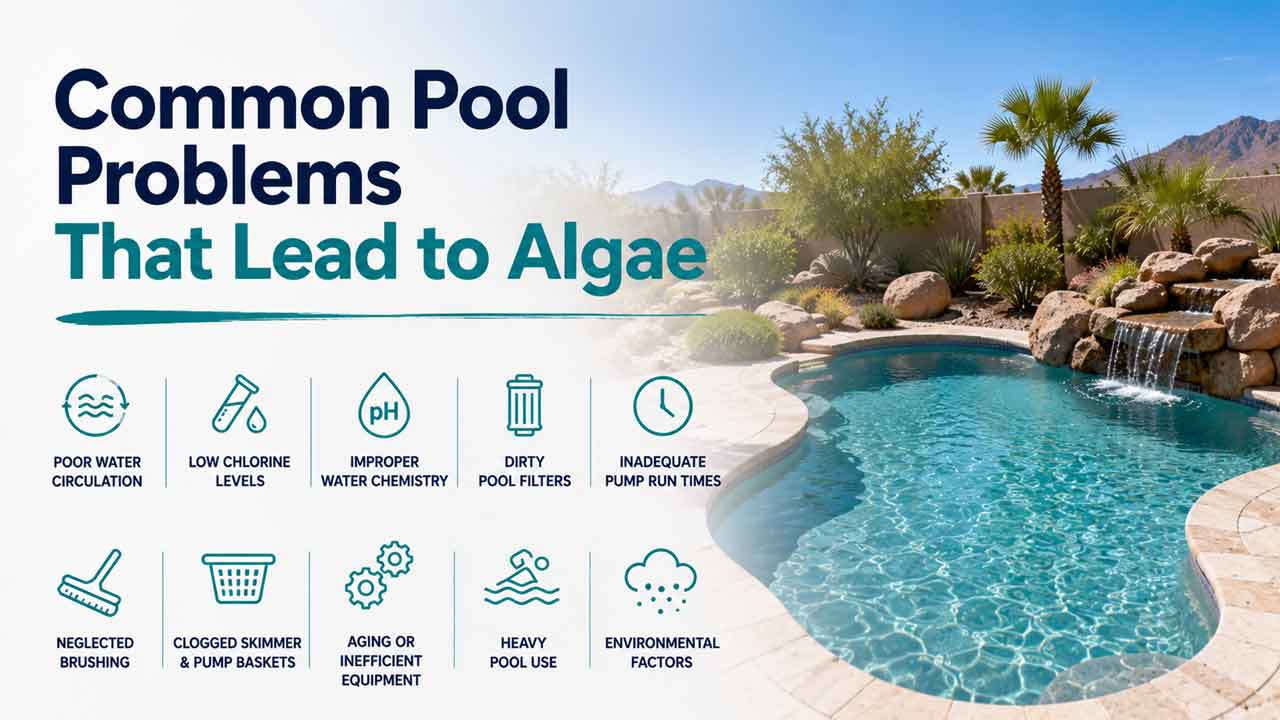
Algae rarely appears because of a single issue. Most blooms develop when several small problems combine over time.
Dead spots behind ladders, inside steps, tanning ledges, and tight corners don't receive enough moving water. These stagnant areas often become the first places algae establish themselves.
The most common cause of algae is simply insufficient sanitizer. Whether caused by sunlight, heavy swimming, equipment problems, or inconsistent maintenance, low chlorine leaves the pool vulnerable.
High pH significantly reduces chlorine's effectiveness. Even if testing shows chlorine is present, it may not be working efficiently when water chemistry falls outside recommended ranges.
A clogged cartridge, sand filter, or DE filter reduces circulation and filtration efficiency. When water isn't moving properly, algae spores remain in the pool instead of being removed.
Many homeowners reduce pump operating hours to save electricity, particularly during the summer when utility bills rise. Unfortunately, insufficient circulation can quickly lead to algae growth.
Brushing removes algae before it becomes established. Areas that aren't brushed regularly develop biofilms that protect algae from chlorine.
Older single-speed pumps may not provide consistent circulation throughout the day, while worn-out filters, failing chlorinators, and malfunctioning automation systems can all contribute to recurring algae problems.
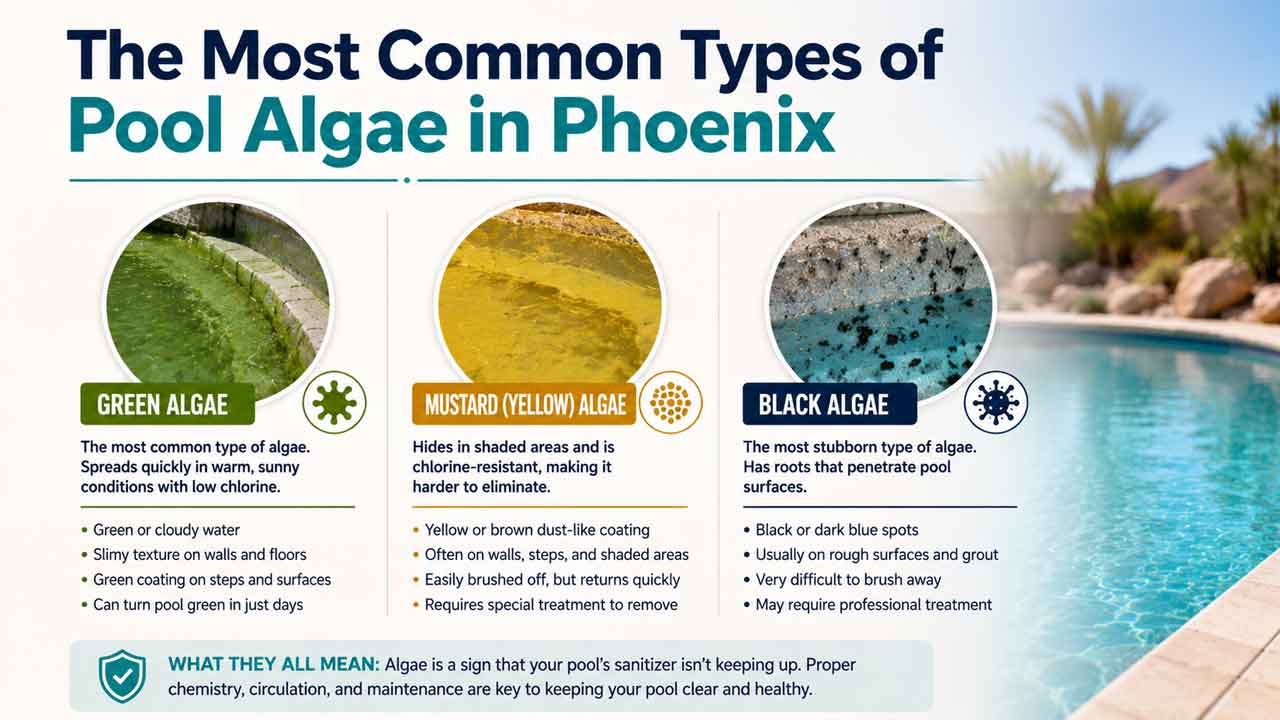
Not all algae look the same, and different varieties require different treatment methods.
Green algae are by far the most common type found in Phoenix pools.
Appearance:
Green algae respond well when caught early but can become overwhelming if ignored.
Mustard algae are especially common in warm climates like Arizona.
Appearance:
Because mustard algae are chlorine-resistant, they require specialized treatment and thorough cleaning of pool toys, brushes, and equipment to prevent reinfection.
Black algae are the most difficult type to eliminate.
Appearance:
Black algae develop protective layers that make them resistant to normal chlorination. Removing them often requires aggressive brushing, specialized chemicals, and professional treatment.
Many homeowners assume algae are simply a cosmetic issue. Unfortunately, allowing algae to remain in the pool can create much larger problems.
Once algae become established, dramatically more chlorine and specialty chemicals are required to eliminate them than would have been needed to prevent them.
Dead algae clog cartridges, overload sand filters, and increase pressure inside the filtration system.
Long periods of poor water quality place additional strain on pumps, chlorinators, heaters, and filtration equipment.
Certain algae can stain plaster, grout, and pebble finishes. Black algae, in particular, can permanently discolor porous surfaces if left untreated.
Cloudy green water reduces visibility, making it difficult to see swimmers below the surface. Poor water quality can also harbor harmful bacteria alongside algae growth.
The easiest algae cleanup is the one that never becomes necessary.
A proactive maintenance routine dramatically reduces the chance of experiencing a major bloom.
Summer pools should be tested several times each week to ensure sanitizer and pH remain balanced.
Consistent sanitizer is your strongest defense against algae.
Brushing removes algae before they become established and exposes hidden growth to chlorine.
Regular filter cleaning improves circulation and removes contaminants before they become food for algae.
Proper water flow depends on unrestricted circulation throughout the system.
During Phoenix summers, many pools require 10–14 hours of daily circulation depending on water temperature, equipment, and bather load.
Don't wait until the pool turns green. Small chemistry adjustments are far less expensive than full algae treatments.
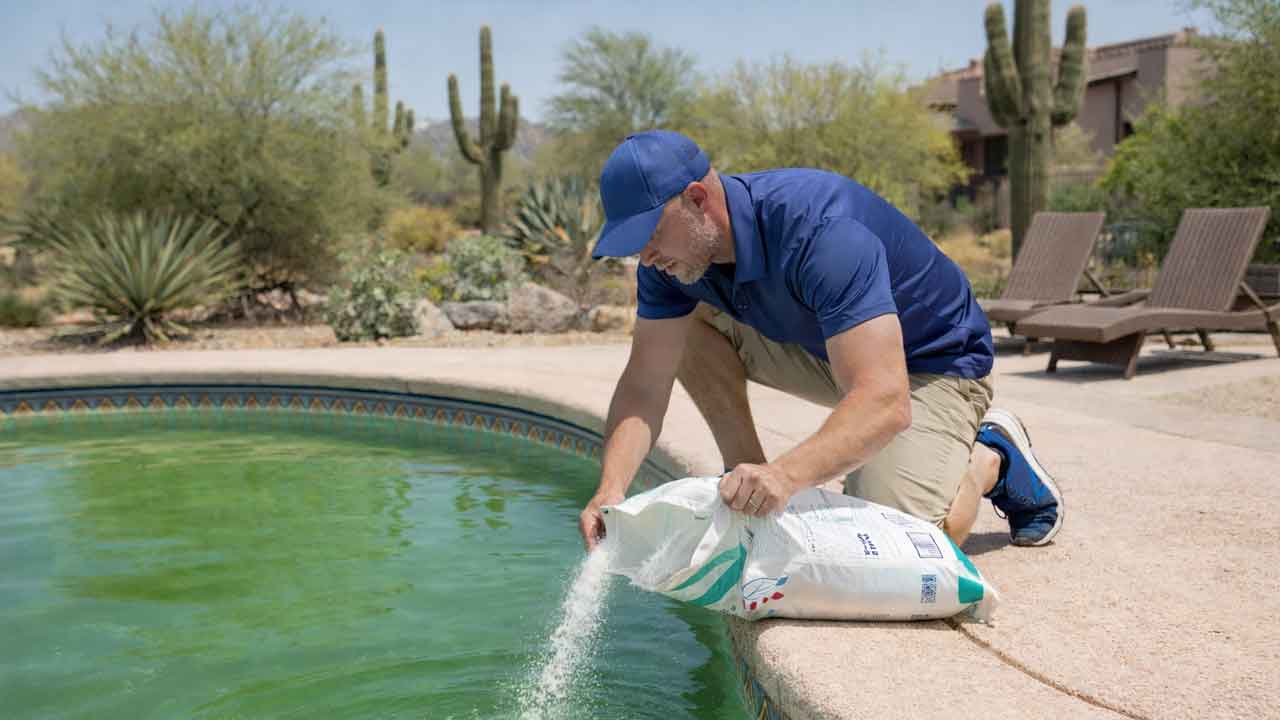
If algae have spread throughout the pool, standard weekly maintenance is often no longer enough.
Professional green-to-clean services typically include:
Trying to solve a severe bloom without the proper chemicals or experience often prolongs the problem and increases chemical costs.
If algae continue returning despite your efforts, it's usually a sign that something more than chemistry is causing the problem. Circulation issues, failing equipment, inadequate filtration, hidden phosphates, or inconsistent sanitizer production may all be contributing to recurring blooms.
That's where Aqua Harmony Pools can help.
As one of Phoenix's trusted pool service companies, Aqua Harmony Pools provides professional weekly pool service, equipment inspections, filter cleaning, equipment repairs, and comprehensive green-to-clean treatments designed specifically for Arizona's challenging climate. Their experienced technicians don't just remove algae—they identify why it keeps returning and help prevent future outbreaks.
Whether your pool has just started showing signs of algae or has already turned completely green, Aqua Harmony Pools has the knowledge, equipment, and experience to restore your water quickly and keep it looking beautiful throughout the year.
Usually because chlorine cannot keep up with the combination of intense sunlight, high water temperatures, dust, heavy swimming, or poor circulation. Recurring algae often indicate an underlying maintenance or equipment issue.
Yes. If chlorine levels are too low, pH is out of balance, or circulation is poor, algae can still establish themselves despite chlorine being present.
During Phoenix summers, algae can grow from nearly invisible to a noticeable bloom within just a couple of days when conditions are favorable.
Absolutely. Brushing removes biofilm and exposes algae to chlorine, making treatments much more effective.
Shock treatments kill existing algae, but they don't always address the underlying cause. Poor circulation, dirty filters, phosphates, or improper chemistry can allow algae to return.
It's not recommended. Algae reduce visibility, may indicate inadequate sanitation, and can create slippery surfaces that increase the risk of accidents.
Rain itself doesn't create algae, but it dilutes chlorine and washes organic debris into the pool, making algae blooms more likely if water chemistry isn't corrected promptly.
If the water has turned green, algae keep returning after treatment, black algae have appeared, or you're using large amounts of chemicals without success, professional service is usually the fastest and most cost-effective solution.
Arizona's climate is hard on swimming pools, but algae doesn't have to become a regular part of pool ownership. With consistent maintenance, balanced water chemistry, clean filtration, and properly operating equipment, most algae problems can be prevented before they ever begin.
If your pool is showing signs of algae—or you want to avoid dealing with another green pool this summer—contact Aqua Harmony Pools. From dependable weekly pool service and filter cleanings to equipment repairs and complete green-to-clean restorations, our experienced technicians help Phoenix homeowners keep their pools healthy, beautiful, and swim-ready all year long.

Learn what causes recurring algae blooms, how to identify different types of pool algae, and the proactive steps you can take to keep your pool clean, healthy, and swim-ready while avoiding costly green-to-clean treatments.
.png)

