May 15, 2026

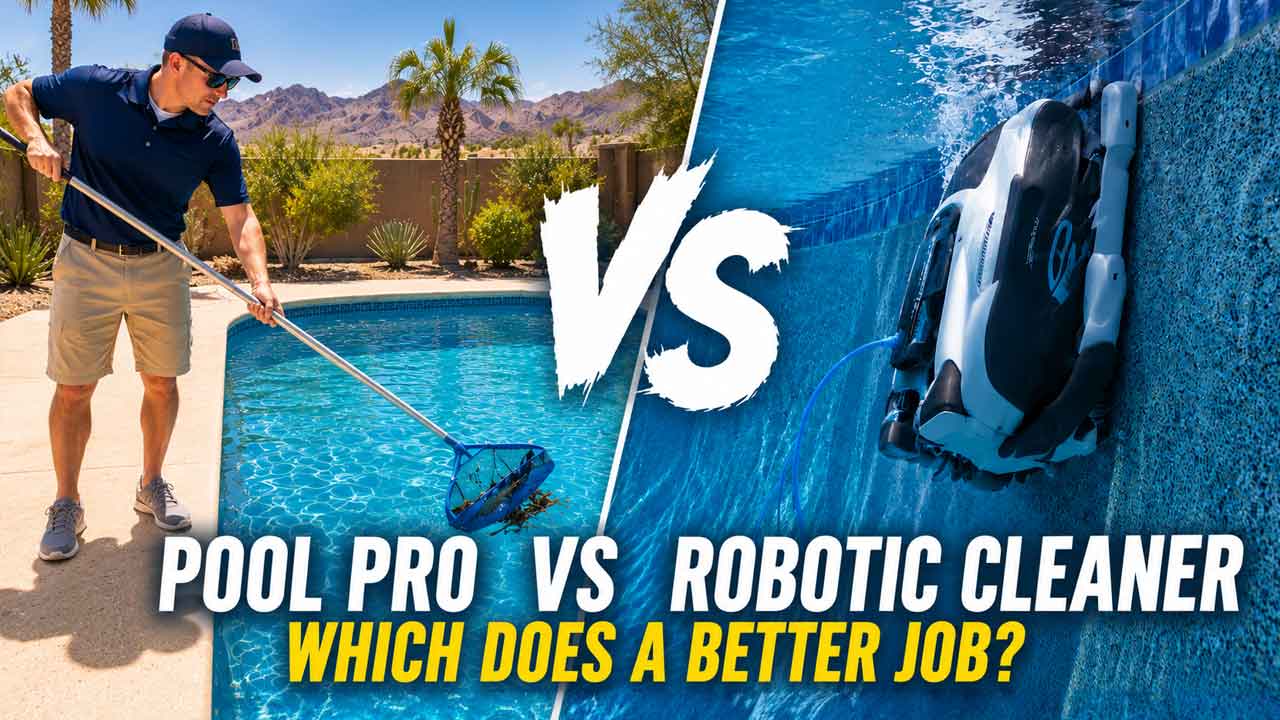
Not too many years ago, the idea of dropping a machine into your swimming pool and letting it clean on its own sounded like something out of science fiction. Today, robotic pool cleaners are one of the fastest-growing categories of pool equipment, and for good reason—they're smarter, more efficient, and more capable than ever before.
Modern robotic cleaners map your pool, scrub walls, vacuum debris, and navigate around obstacles with remarkable precision. They're changing the way homeowners think about pool maintenance.
But does that mean the neighborhood pool professional is becoming obsolete?
Not even close.
At first glance, it feels a little like the old John Henry story: man versus machine. On one side is a robotic pool cleaner powered by artificial intelligence, sophisticated sensors, and smart navigation. On the other is an experienced pool technician with years of hands-on knowledge, trained eyes, and the ability to solve problems before they become expensive repairs.
Unlike John Henry's legendary showdown, though, this isn't a story where one replaces the other.
The truth is, they're not really competitors at all.
They're teammates.
Today's robotic pool cleaners are a far cry from the clunky automatic cleaners of years past.
Many premium models now feature intelligent navigation systems that scan the shape of your pool, calculate efficient cleaning routes, and systematically cover the floor, walls, steps, and even the waterline. Instead of wandering aimlessly, they're beginning to behave much like a robotic vacuum inside your home, learning the layout of your pool and cleaning it with remarkable efficiency.
Modern robotic cleaners can:
For homeowners who dread dragging out a manual vacuum every weekend, robotic cleaners are nothing short of revolutionary. They save time, reduce the amount of physical work involved in pool ownership, and keep the pool looking cleaner between service visits. If your goal is spending more time swimming and less time cleaning, it's easy to understand why these machines have become so popular.
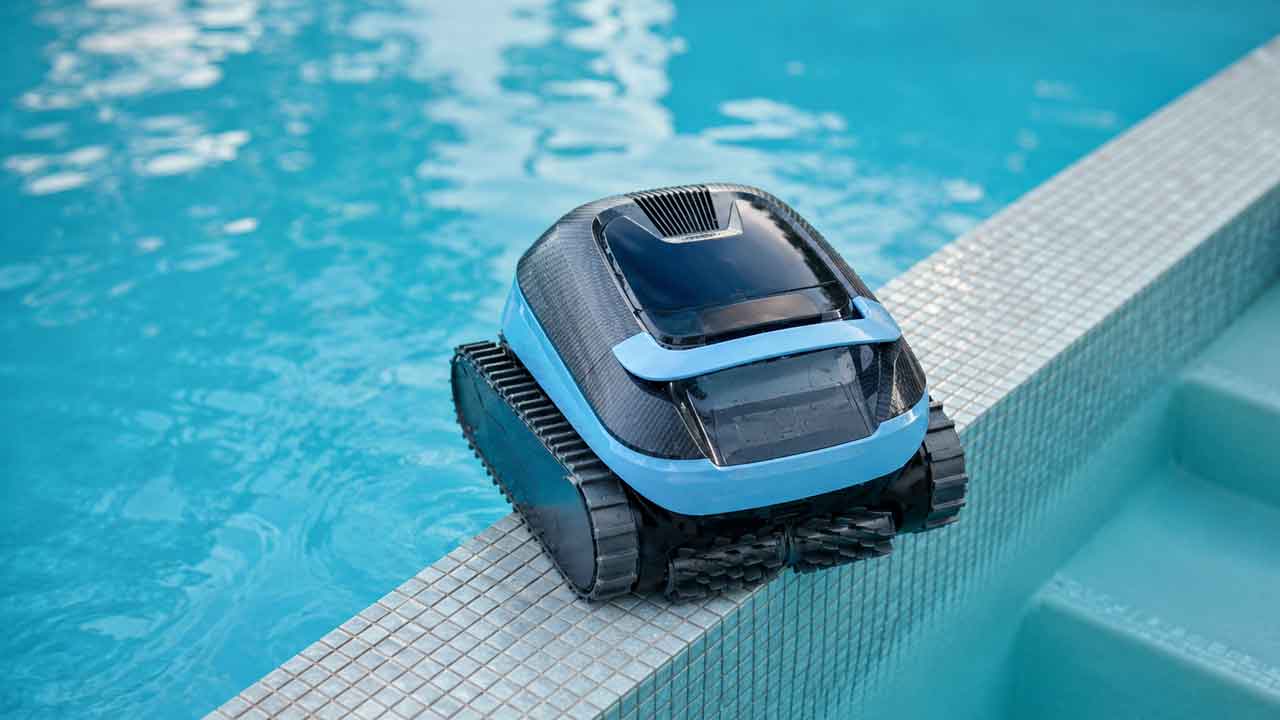
Robotic pool cleaners excel at repetitive physical work. They don't get tired, they don't lose focus, and they'll happily spend two hours vacuuming the floor while you're grilling burgers or watching the game.
Run one several times a week and you'll usually notice cleaner floors, cleaner walls, and less debris collecting in corners. Because most robotic cleaners filter debris internally, they can also reduce the amount of dirt reaching your skimmer baskets and pool filter. That doesn't eliminate filter maintenance, but it can certainly reduce how hard your equipment has to work.
For homeowners in Phoenix, that's especially valuable. Between dust storms, blowing palm fronds, desert landscaping, and pools that see heavy use for much of the year, debris has a way of finding its way into the water almost daily. A robot helps you stay ahead of that constant battle without spending every weekend holding a vacuum pole.
That's where robotic cleaners earn their reputation. They're exceptionally good at one very specific job.
Cleaning.
This is where the comparison starts to shift.
Cleaning a pool and maintaining a pool aren't the same thing.
A robotic cleaner is designed to remove dirt and debris. A pool professional is responsible for the health of the entire pool system, and that's a much bigger responsibility than simply vacuuming the floor.
During a routine service visit, a technician is constantly evaluating the condition of your pool. Water chemistry is tested and adjusted. Filter pressure is checked. Pumps, valves, heaters, automation systems, salt cells, plumbing, and electrical equipment are all inspected as part of the visit. They're looking for the little things that most homeowners never notice because those little things have a habit of becoming big problems.
Imagine your pool pump develops a faint bearing noise. Your robotic cleaner doesn't hear it. If your filter pressure has slowly climbed over the past few weeks, the robot doesn't recognize that either. If a union fitting develops a slow drip or your sanitizer demand suddenly increases because your filter needs attention, the robot simply continues following the cleaning route it was programmed to run.
A pool technician sees the bigger picture.
Years of experience teach them when something sounds different, looks different, or simply doesn't feel right. Often those observations prevent expensive repairs because problems are caught while they're still inexpensive to fix instead of waiting until something fails completely.
That's not something artificial intelligence can replace—at least not today.
Every swimming pool has its own personality.
Some pools collect leaves in the same corner after every windy afternoon. Others seem to attract dust no matter how often they're cleaned. One pool may consistently require small chemistry adjustments throughout the summer while another stays remarkably stable.
An experienced pool technician gets to know those patterns.
After servicing the same pool week after week, they begin to understand how that particular pool behaves. They know what "normal" looks like, which makes it much easier to recognize when something changes.
More importantly, they understand why.
A spike in chlorine demand might point to a dirty filter or inadequate circulation. Cloudy water may have less to do with chemicals than a pump that isn't moving enough water. That patch of algae returning to the same corner might not be a chemistry problem at all—it could be a circulation issue creating a dead spot.
A robot sees the symptoms.
A professional looks for the cause.
That's the difference between cleaning a pool and caring for one.
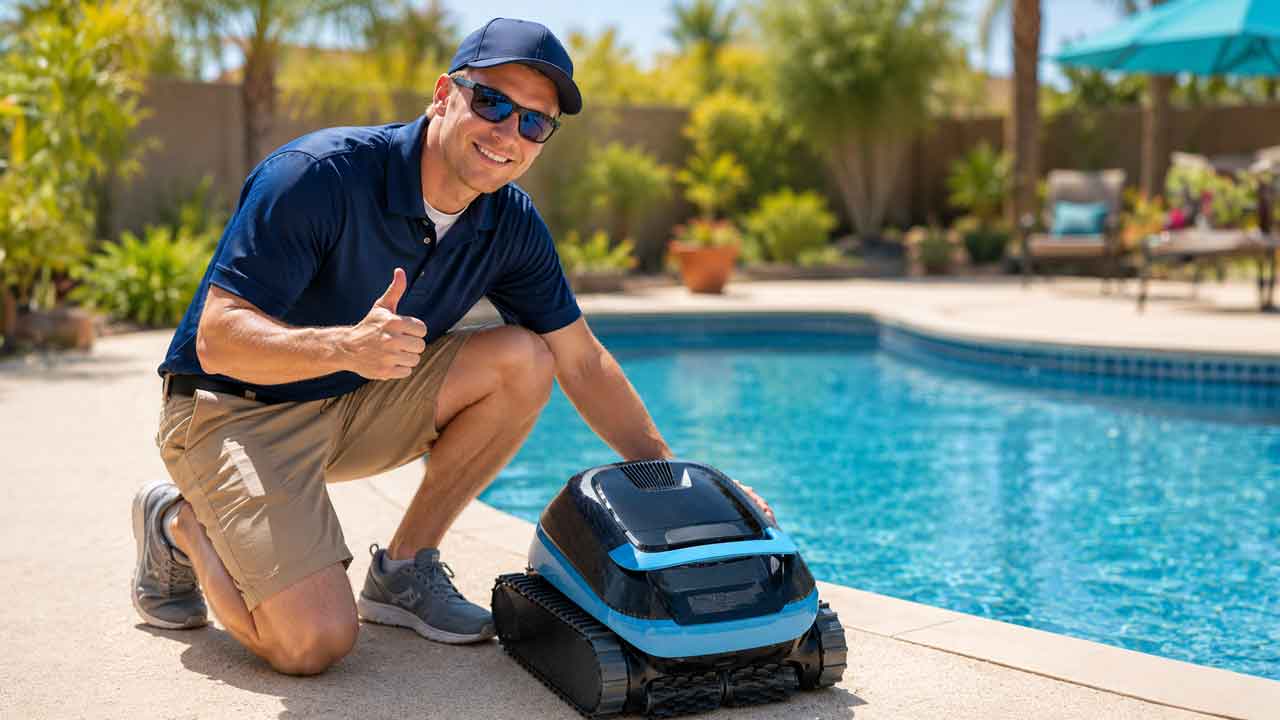
Here's the interesting part about this whole debate: the smartest pool owners don't choose between a robotic cleaner and professional pool service because they serve completely different purposes.
Think of a robotic cleaner as another tool in your maintenance routine. It handles the repetitive cleaning that keeps your pool looking beautiful from day to day, quietly vacuuming debris, brushing surfaces, and helping prevent dirt from building up between service visits.
Meanwhile, your pool technician is doing the work that requires judgment rather than programming. They're balancing water chemistry, inspecting equipment, cleaning filters when necessary, identifying worn components, and making recommendations that help extend the life of your investment. They're also answering questions, noticing changes, and making adjustments based on conditions that change from season to season.
It's a partnership that simply works.
The robot helps keep the pool cleaner throughout the week, which often makes routine maintenance easier. In turn, the technician ensures the robot—and everything else connected to your pool—is operating in an environment that's healthy, properly balanced, and functioning the way it should.
One makes pool ownership more convenient.
The other makes pool ownership more dependable.
When you combine the two, you spend less time cleaning, reduce the chances of costly repairs, and enjoy a pool that's consistently ready whenever you want to jump in.
After everything we've covered, the answer is probably obvious.
Robotic pool cleaners are one of the biggest advances in residential pool care we've seen in years. They're remarkably effective at vacuuming debris, scrubbing pool surfaces, and keeping your pool looking cleaner between service visits. For many homeowners, they're absolutely worth the investment, and they're a product we'd happily recommend.
But a robotic cleaner is still just a piece of equipment.
It doesn't understand water chemistry, inspect plumbing, diagnose equipment problems, or recognize the subtle warning signs that often prevent costly repairs. It performs the job it was designed to do exceptionally well, but that job represents only one part of proper pool care.
A professional pool technician can vacuum a pool just as effectively when necessary, but that's only a small part of what happens during a service visit. The real value comes from years of experience, understanding how every component of the pool system works together, and recognizing when something isn't quite right. Those observations often save homeowners far more money than a robot ever could.
So, who does a better job?
When the question is simply, "Who cleans the pool?" the answer is that both can do an excellent job.
When the question becomes, "Who takes better care of my pool?" the answer is easy.
A knowledgeable pool professional wins every time because great pool care has never been just about removing leaves from the bottom of the pool. It's about protecting the entire investment, keeping the water healthy, extending the life of expensive equipment, and making sure your pool is always ready when you are.
That's exactly what we do at Aqua Harmony Pools. We believe robotic cleaners are a fantastic addition to any backyard, but they're at their best when they're working alongside an experienced pool professional who knows your pool as well as you do.

Discover whether a robotic pool cleaner can really replace a professional pool technician. Learn what each does best, where robots fall short, and why expert pool care still matters.
.png)

