April 3, 2026

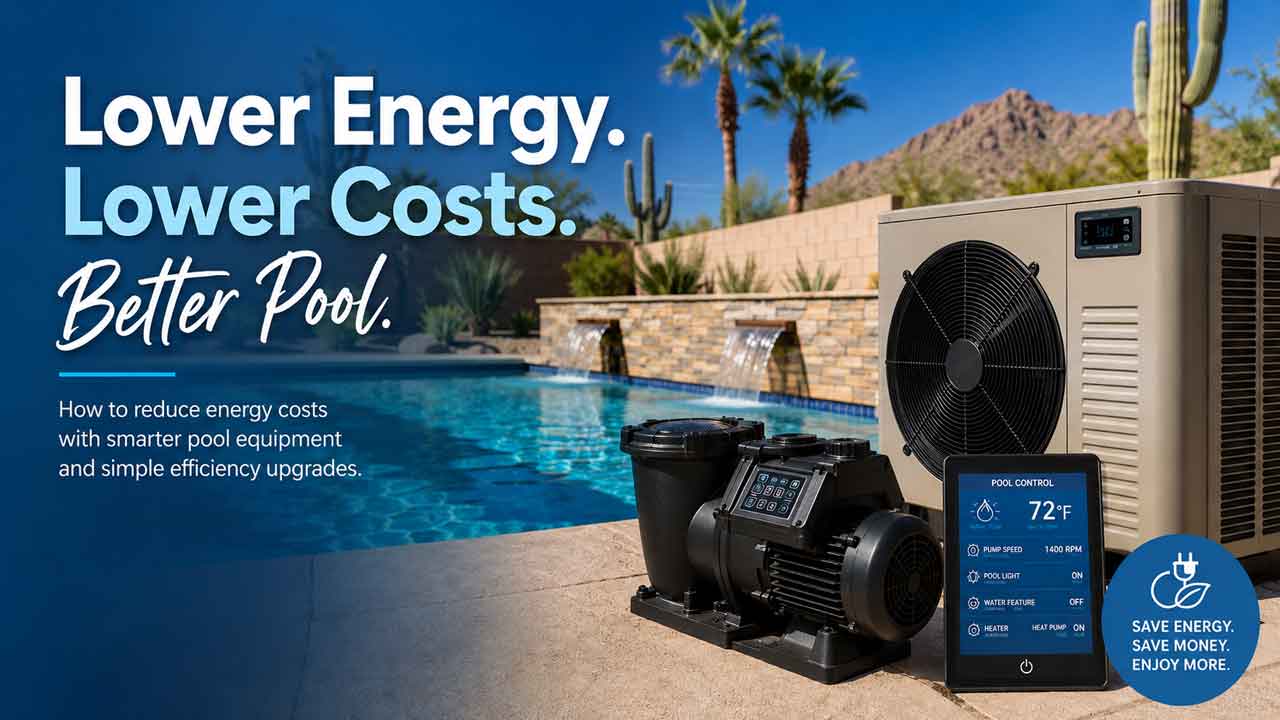
Owning a swimming pool in the Phoenix area means enjoying nearly year-round swimming, but it also means dealing with some of the highest electricity costs associated with pool ownership. Between circulation pumps, heaters, cleaners, lighting, and filtration equipment, many homeowners are paying far more than they need to every month.
The good news? Most high energy bills aren't caused by the pool itself—they're caused by outdated equipment or inefficient operating habits.
At Aqua Harmony Pools, we help homeowners throughout Phoenix reduce their monthly operating costs by upgrading aging equipment, repairing inefficient systems, and recommending energy-saving solutions that make a noticeable difference.
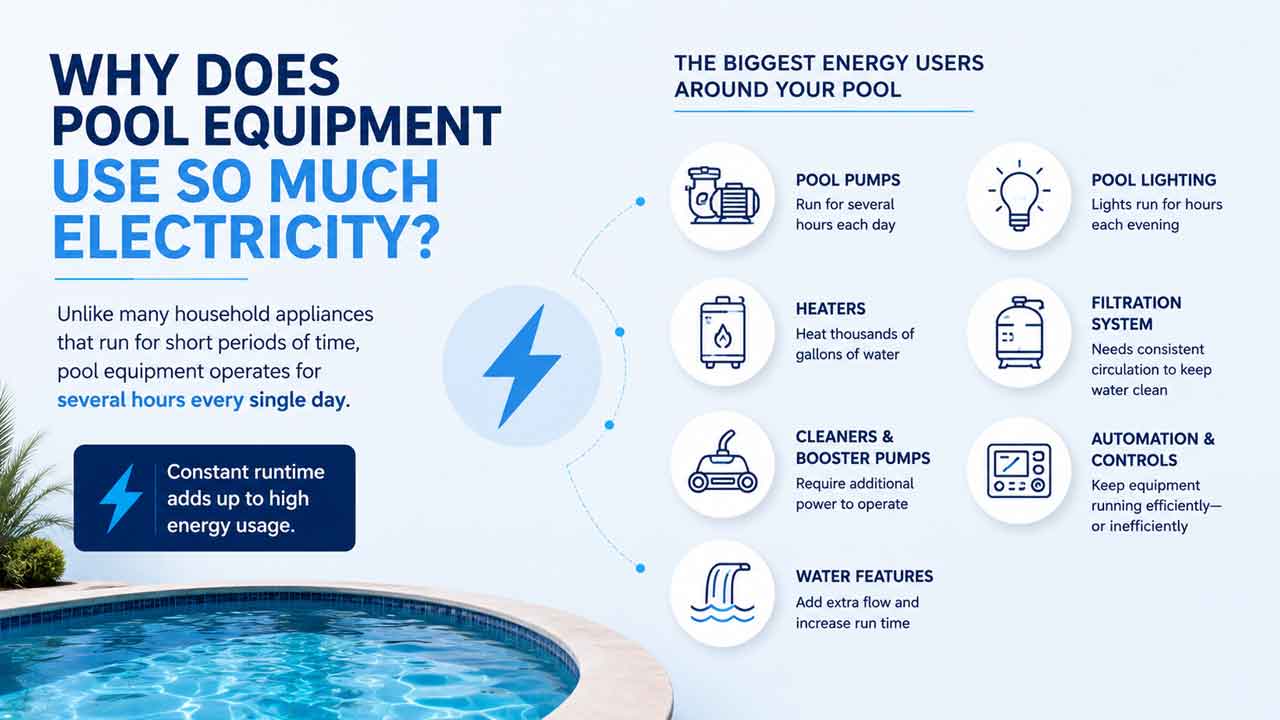
Unlike many household appliances that run for short periods of time, pool equipment often operates for several hours every single day.
Over the course of a year, that constant runtime can consume thousands of kilowatt-hours of electricity.
The biggest contributors include:
The age of your equipment matters just as much as how often you use it. Many pools in Phoenix still operate with single-speed pumps that were installed 10 to 20 years ago. While they still move water, they do so at full power every minute they're running—even when that much power isn't necessary.
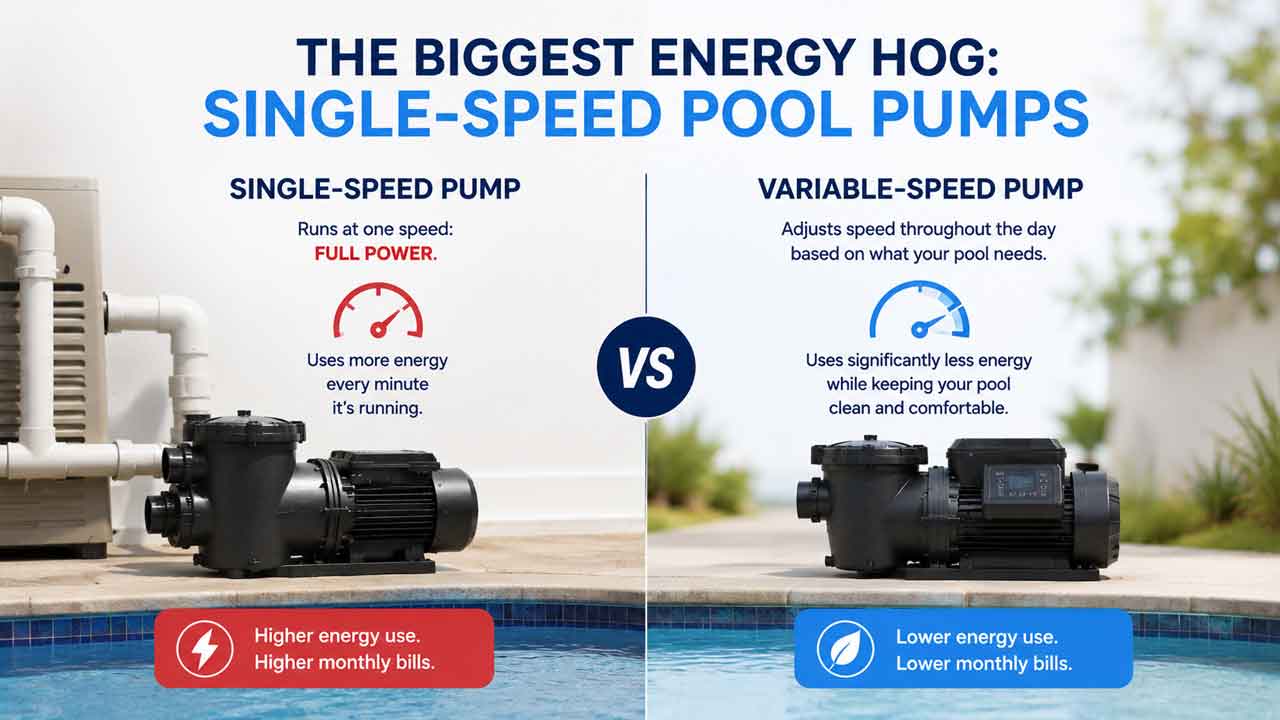
If your pool still has a single-speed pump, chances are it's the largest contributor to your electric bill.
These pumps operate at one speed:
Full power.
Whether the pool only needs gentle circulation or heavy cleaning, the motor runs at maximum RPM every time it turns on.
That creates unnecessary electrical demand.
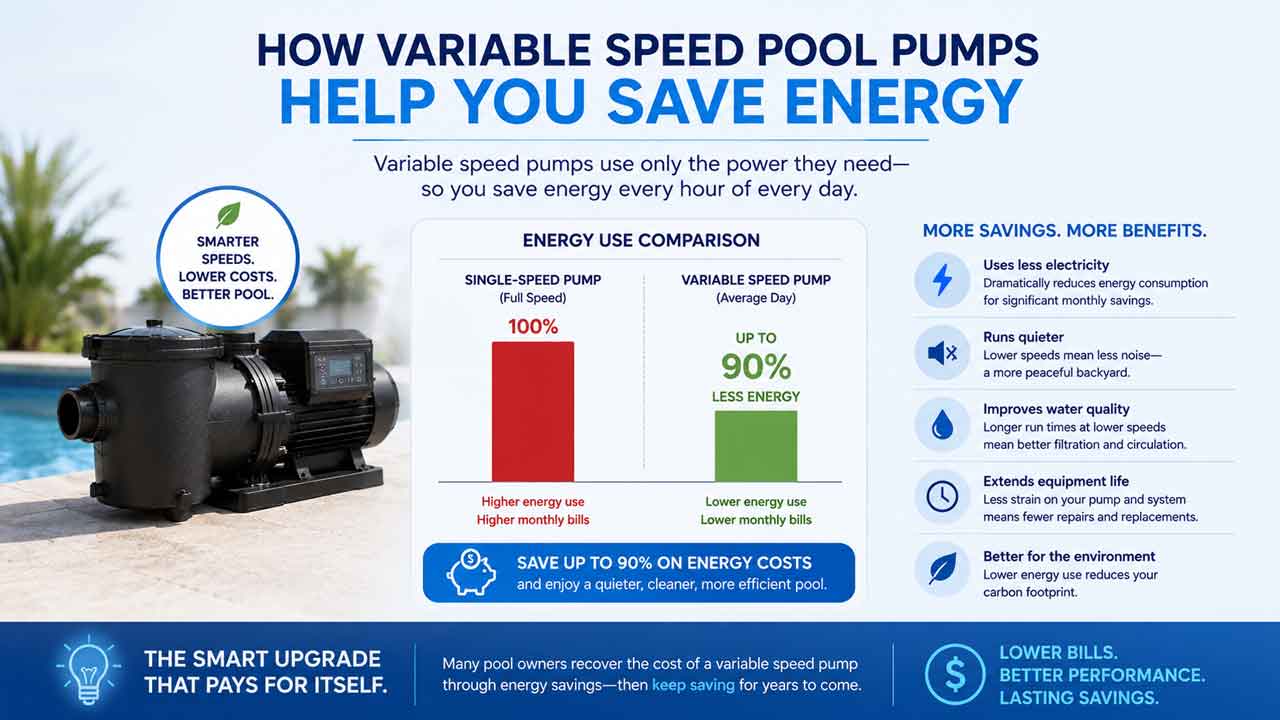
A modern variable-speed pump adjusts its speed throughout the day depending on what the pool actually needs.
Instead of running at 3,450 RPM all day, it may spend most of its time operating between 1,200 and 2,000 RPM while using a fraction of the electricity.
Many Phoenix homeowners see energy savings of 60% to 90% after replacing an old single-speed pump with a variable-speed model.
In many cases, the monthly energy savings help offset the cost of the upgrade over time.
Energy savings aren't the only advantage.
Because they operate at lower speeds, variable-speed pumps also:
They're one of the smartest upgrades available for almost any swimming pool.
Pool heaters are another major source of operating costs.
Traditional gas heaters warm water quickly, making them ideal when you want to heat the pool for a weekend or special occasion.
However, heating thousands of gallons of water requires a tremendous amount of energy.
During cooler months, repeatedly heating a pool with natural gas or propane can become one of the largest utility expenses associated with pool ownership.
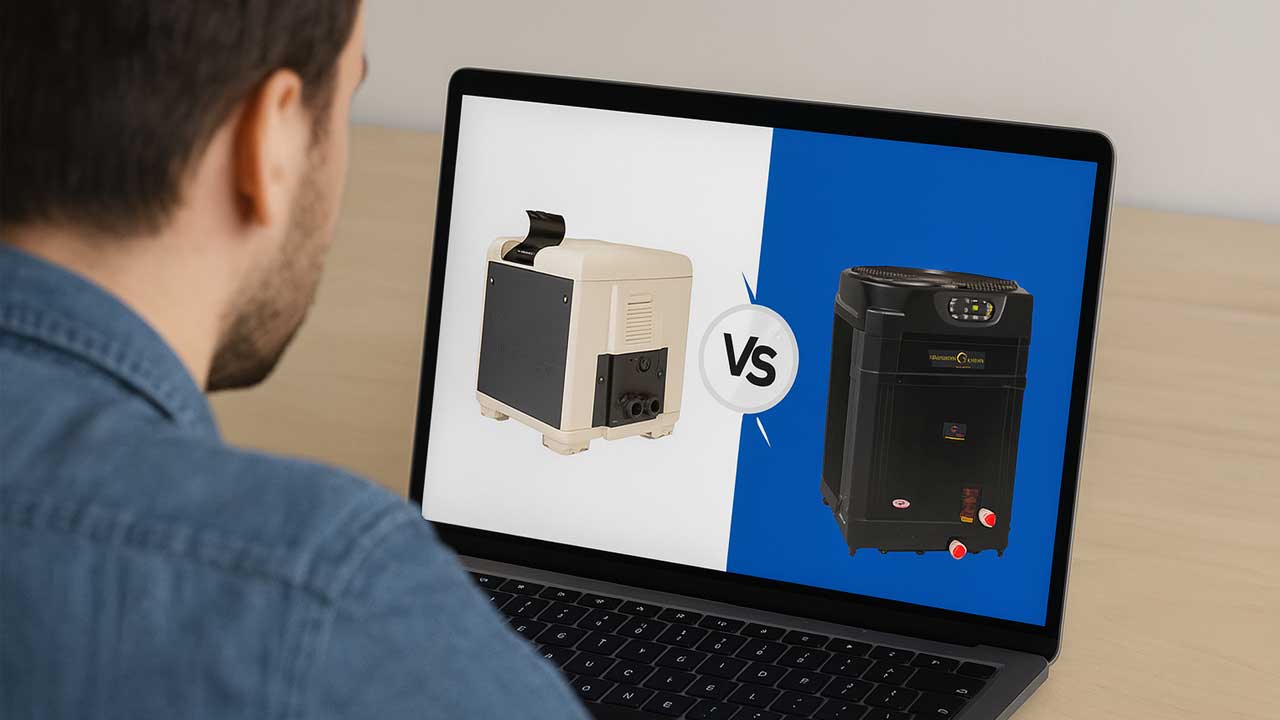
Instead of generating heat by burning fuel, a pool heat pump transfers existing heat from the surrounding air into your pool water.
Because Phoenix enjoys warm temperatures for much of the year, heat pumps work exceptionally well in our climate.
While they heat water more gradually than gas heaters, they typically cost significantly less to operate over the long term.
For homeowners who like maintaining comfortable swimming temperatures throughout spring and fall, heat pumps often provide the best balance between comfort and efficiency.
A dirty filter forces your pump to work harder.
As pressure increases inside the filter, water flow becomes restricted.
That causes:
Routine filter cleaning helps restore proper water flow while reducing strain on your equipment.
Whether your pool has a cartridge, sand, or DE filter, regular maintenance is one of the simplest ways to improve efficiency.
Deck jets.
Sheer descents.
Rock waterfalls.
Bubblers.
Laminar jets.
These features look incredible, but they require additional water flow.
That means your pump often needs to operate at higher speeds whenever they're running.
Many homeowners leave decorative water features operating longer than necessary without realizing the additional electrical cost.
Running them only when you're enjoying the pool can help lower monthly energy consumption.
Older incandescent or halogen pool lights consume considerably more electricity than modern LED lighting.
LED pool lights offer several advantages:
If you're already upgrading equipment, replacing aging pool lights can further reduce operating costs while improving the appearance of your backyard.
Pool automation isn't just about convenience.
It also prevents equipment from running longer than necessary.
Modern automation systems can:
Instead of manually turning equipment on and forgetting about it, automation keeps your pool operating efficiently throughout the day.
Poor water chemistry doesn't directly increase electrical usage, but it does create problems that make equipment work harder.
Scale buildup inside heaters reduces heat transfer.
Dirty filters restrict circulation.
Calcium buildup affects sensors and valves.
Balanced water protects your equipment, improves efficiency, and helps expensive components last longer.
Regular professional pool service can often prevent costly repairs before they happen.
Sometimes higher energy costs aren't caused by old equipment at all.
Leaks.
Failing motors.
Bad bearings.
Worn impellers.
Air leaks.
Valve problems.
Electrical issues.
All of these can reduce efficiency while increasing power consumption.
A professional inspection can often identify problems long before complete equipment failure occurs.
Many homeowners focus on reducing water or chemical costs, but electricity is often the largest long-term expense associated with pool ownership.
A combination of:
can significantly reduce monthly operating costs while extending the life of your entire pool system.
For many Phoenix homeowners, upgrading equipment isn't simply about adding new features—it's about spending less every month while enjoying a pool that's easier to own.
The most common cause is an older single-speed pump running several hours each day. Pool heaters, water features, dirty filters, and outdated lighting can also contribute to higher electricity usage.
Yes. Variable-speed pumps typically use 60% to 90% less electricity than older single-speed pumps because they operate at lower speeds for routine circulation instead of running at full power all day.
Not usually. Most residential pools only need enough circulation to maintain clean, balanced water. A pool professional can recommend an appropriate schedule based on your pool's size, equipment, and usage.
For homeowners who maintain comfortable water temperatures over longer periods, heat pumps generally cost much less to operate than gas heaters. Gas heaters warm water faster, but they consume significantly more energy.
Yes. As filters become clogged, your pump has to work harder to move water through the system. Regular filter cleaning improves circulation and reduces unnecessary strain on the equipment.
They can. Most decorative water features require higher pump speeds or additional pumps, which increases energy consumption while they're operating.
Absolutely. LED pool lights use far less electricity, last much longer than traditional bulbs, and provide brighter illumination with color-changing capabilities.
Most homeowners should have their pool equipment professionally inspected at least once a year. Regular inspections can identify worn components, leaks, electrical issues, and inefficient operation before they become expensive repairs.
Many components can be repaired, depending on their age and condition. In some cases, replacing inefficient equipment with newer technology offers greater long-term savings than repeatedly repairing older systems.
If your pool equipment is outdated, noisy, inefficient, or driving up your monthly electric bill, the team at Aqua Harmony Pools can help. We provide professional pool equipment installation, equipment repairs, variable-speed pump upgrades, heater replacement, filter service, and money saving solutions for homeowners throughout the Phoenix area.
Whether you're looking to replace a failing pump, install a high-efficiency heat pump, repair existing equipment, or simply lower your operating costs, we'll recommend the solution that makes the most sense for your pool—not just the most expensive option.
Contact Aqua Harmony Pools today to schedule a pool equipment inspection or repair and discover how much you could save with a more efficient pool system.

Discover how Phoenix homeowners can save money with variable-speed pool pumps, heat pumps, LED lighting, and energy-efficient pool equipment.
.png)

