May 25, 2026
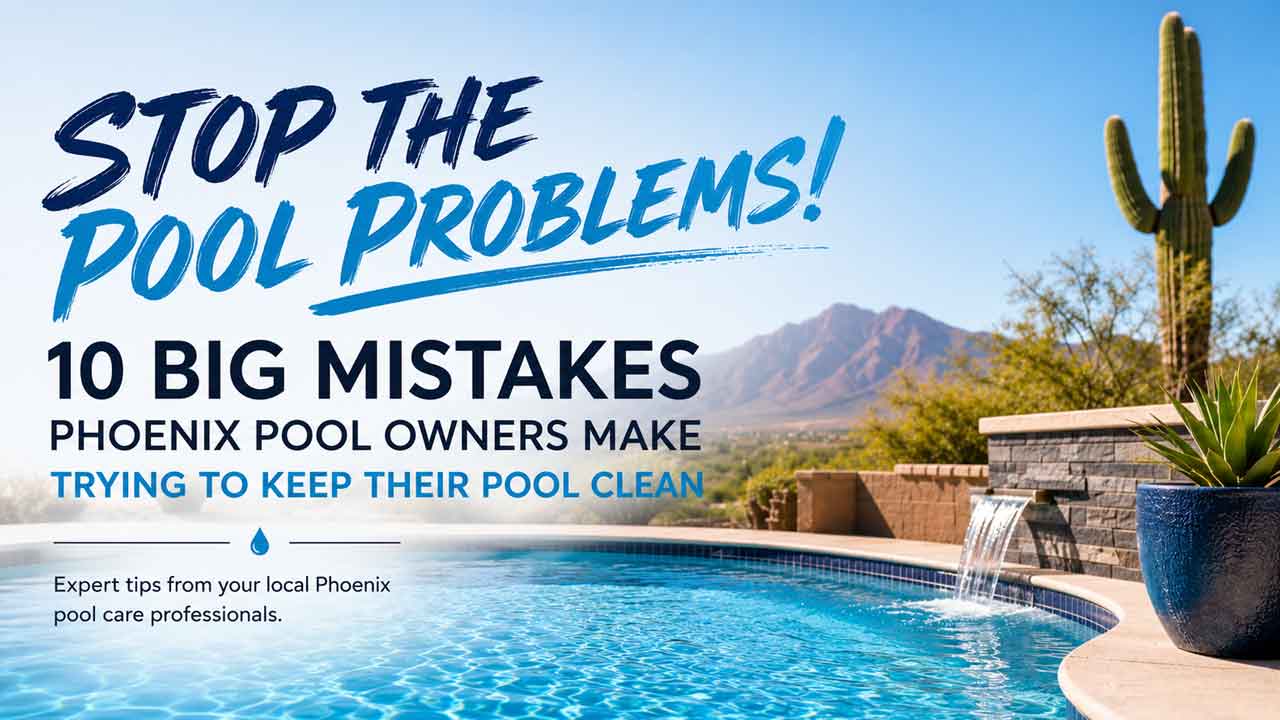
Keeping a swimming pool clean sounds simple enough. Skim the leaves, add a little chlorine, vacuum once in a while, and you're good to go, right?
Not exactly.
At Aqua Harmony Pools, we've seen just about every pool maintenance mistake imaginable. Most homeowners aren't trying to neglect their pool—they simply don't know how quickly a small issue can turn into cloudy water, algae growth, damaged equipment, or costly repairs. Phoenix presents unique challenges that make pool care even more demanding than in other parts of the country.
If you've ever wondered why your pool seems to fight you every summer, these are some of the biggest mistakes we see every week.
Phoenix pools work overtime.
Extreme summer temperatures, constant UV exposure, blowing dust, monsoon debris, hard water, and year-round swimming all place tremendous stress on your pool. Water chemistry changes much faster than most homeowners realize, and equipment often runs longer than pools in cooler climates.
That means small maintenance mistakes become much bigger problems much faster.
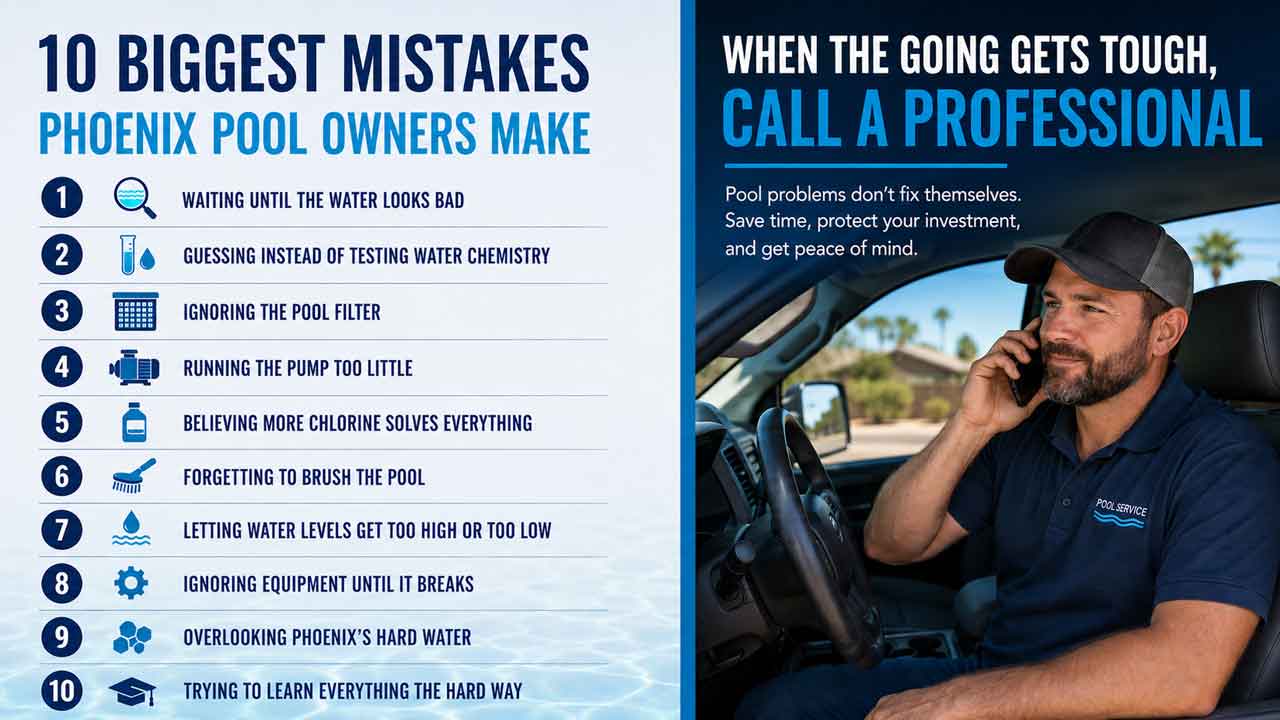
One of the biggest misconceptions is that clear water means healthy water.
A pool can look perfectly clean while chlorine levels have dropped, pH has drifted out of range, or algae is beginning to establish itself.
By the time the water turns cloudy or green, you've already lost the battle.
Routine testing and preventative maintenance keep problems from developing in the first place.
Many homeowners simply toss in chlorine because "it seems about time."
Unfortunately, pools don't work that way.
Without testing:
Proper testing removes the guesswork and saves money by treating the actual problem instead of throwing chemicals at it.
Think of your filter as your pool's kidneys.
It continuously removes dirt, pollen, oils, dust, algae spores, and microscopic debris from the water.
When the pool filter becomes dirty or clogged, circulation drops dramatically. Water stays cloudy longer, sanitizer becomes less effective, and your pump has to work harder.
Whether you have a cartridge, sand, or DE filter, routine cleaning is essential in Phoenix.
Electricity isn't cheap, so many homeowners reduce pool pump run times hoping to save money.
Unfortunately, insufficient circulation usually costs far more in chemicals and repairs.
During Phoenix summers, most pools require significantly longer filtration cycles because of:
Your pool can only clean water that's actually moving through the filter.
When water starts looking questionable, many people immediately dump in extra chlorine.
Sometimes that's appropriate.
Many times it isn't.
If pH is too high or stabilizer levels are excessive, adding more chlorine often accomplishes very little. The chlorine simply can't work efficiently until the underlying chemistry is corrected.
The answer isn't always "more chemicals."
It's the right chemicals in the proper balance.
Your filter can't remove dirt that's still stuck to the walls.
Brushing helps remove:
Corners, steps, benches, tile lines, and behind ladders are common areas homeowners overlook.
Even robotic cleaners can't replace routine brushing.
Phoenix evaporation can remove inches of water surprisingly quickly.
Low water levels allow pumps to pull air instead of water, potentially damaging seals and motors.
Too much water after monsoon rains can dilute sanitizer and reduce skimmer performance.
Keeping the water at the proper level protects your equipment and improves circulation.
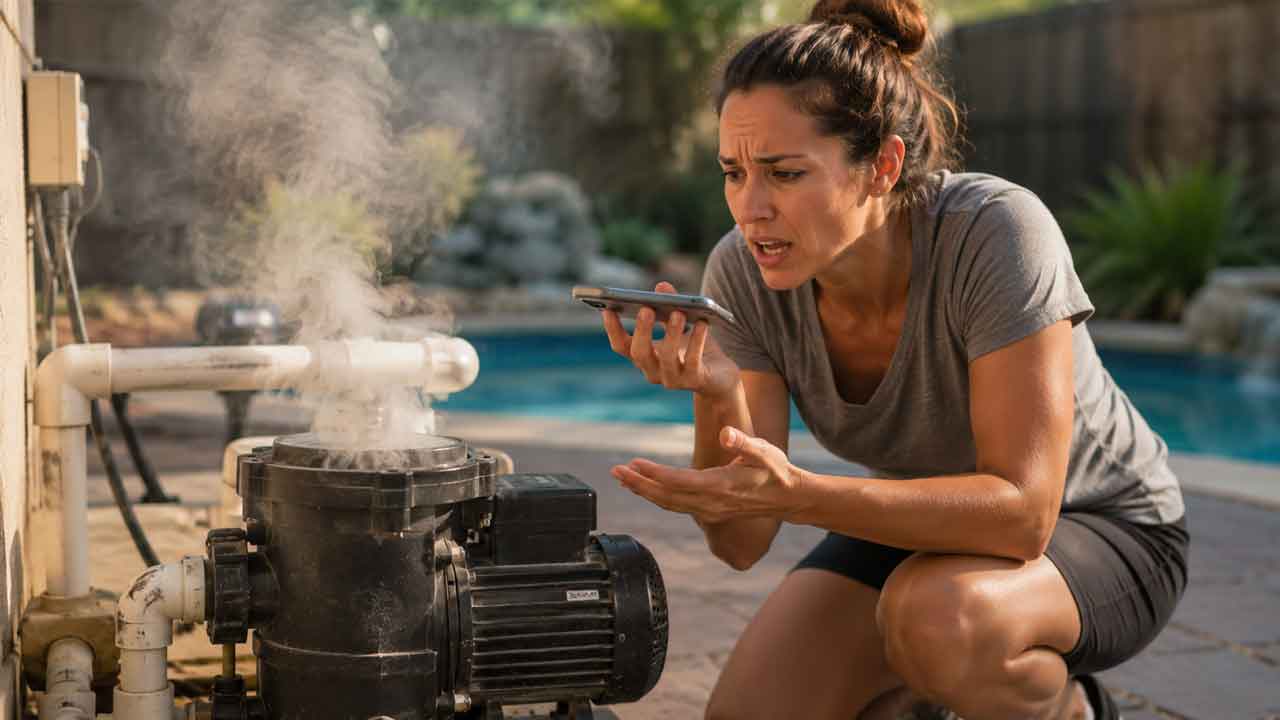
Most pool equipment gives warning signs before failing.
You may notice:
Addressing these issues early often prevents much larger repairs later.
Waiting rarely saves money.
Hard water is simply part of living in Arizona.
As water evaporates, minerals remain behind.
Over time this can lead to:
Managing calcium hardness is one of the biggest differences between maintaining a Phoenix pool and maintaining pools in many other parts of the country.
There are thousands of articles online about pool maintenance.
The problem?
Many of them were written for climates that aren't anything like Phoenix.
What works in Oregon or North Carolina doesn't always work in Arizona.
Every pool is different, and factors like equipment, water source, sunlight, landscaping, swimmer load, and age all affect maintenance requirements.
Sometimes the smartest decision isn't trying to become an expert overnight.
It's relying on someone who already is.
During Phoenix summers, homeowners should test water at least two to three times each week. Heavy use or extreme heat may require even more frequent testing.
Green pools are usually caused by inadequate sanitizer, poor circulation, improper water balance, or neglected filtration. Simply adding chlorine doesn't always solve the underlying issue.
That depends on the filter type and how heavily your pool is used. Cartridge filters typically require periodic cleaning throughout the year, while sand and DE filters have different maintenance schedules.
Absolutely. Many homeowners successfully care for their own pools after learning proper water chemistry and maintenance routines. The key is consistency and understanding how each part of the system works together.
For many homeowners, yes. Professional service helps prevent algae, equipment failures, chemical imbalances, and costly repairs while saving time and removing the guesswork.
Owning a pool should be about relaxing—not constantly wondering why the water is cloudy, why algae keeps coming back, or whether you're adding the right chemicals.
If you're not a chemistry whiz, don't have the time to stay on top of weekly maintenance, or you're simply tired of chasing one problem after another, Aqua Harmony Pools is here to help.
Our experienced technicians understand the unique demands Phoenix pools face every day. From routine weekly maintenance and water balancing to equipment inspections, filter cleaning, and repairs, we'll keep your pool looking its best so you can spend more time enjoying it instead of working on it.
One phone call can save you countless hours of frustration—and potentially thousands of dollars in preventable repairs.
Contact Aqua Harmony Pools today to schedule professional pool service and let our team keep your pool clean, balanced, and swim-ready all year long.

Learn the 10 most common pool maintenance mistakes Phoenix homeowners make, why they lead to cloudy water, algae, and costly equipment repairs, and how proper pool care—or professional service from Aqua Harmony Pools—can keep your pool clean, healthy, and swim-ready year-round.
.png)

