October 29, 2026


A Phoenix dust storm can change the condition of your pool in minutes. The water that looked clear earlier in the day is suddenly hazy, leaves are collecting around the skimmer, and a layer of brown dirt is settling across the steps.
The natural reaction is to turn up the pump and let the filter take care of it.
Sometimes additional filtration is part of the answer. But before running your equipment harder, it helps to understand what the storm left behind and whether the circulation system can handle it.
After a dust storm, wait until conditions are safe, remove large debris, check the water level and baskets, inspect the equipment, and test the water. Restart circulation only when the system is ready, then monitor flow and filter pressure.
That sequence can make cleanup more effective and help you avoid turning a dirty pool into an equipment repair.
Arizona homeowners know that a haboob brings more than a little dust. The National Weather Service explains that haboobs develop from thunderstorm outflow winds, which can carry dust and debris across a wide area.
For a backyard pool, that can mean fine airborne dirt, leaves, seed pods, small branches and material blown off surrounding patios. When rain accompanies the wind, runoff can introduce additional contamination if the yard drains toward the pool.
Those materials create different problems.
Leaves and branches can obstruct baskets. Fine particles can remain suspended in the water or settle on the floor. Organic debris adds to the work your sanitizer must do. A dirty filter can restrict circulation just when the pool needs effective filtration.
That is why storm cleanup works best when you address debris, circulation and water chemistry together.
Pool cleanup can wait until the storm has passed. Stay away from the water and exposed equipment during lightning, strong winds or blowing dust.
Once conditions are safe, walk around the pool before touching the controls. Look for damaged fencing, broken glass, fallen branches, displaced equipment and anything that could make the area unsafe.
If the equipment pad has flooded, electrical components are wet or damaged, or a power line has fallen nearby, keep clear and arrange qualified assistance. Do not repeatedly reset a breaker or attempt to restart equipment that may have electrical damage.
Also distinguish a dusty pool from one that received contaminated floodwater. Suspected sewage, significant runoff or unknown chemicals call for professional assessment. Routine skimming and a dose of chlorine are not a reliable response to every type of contamination.
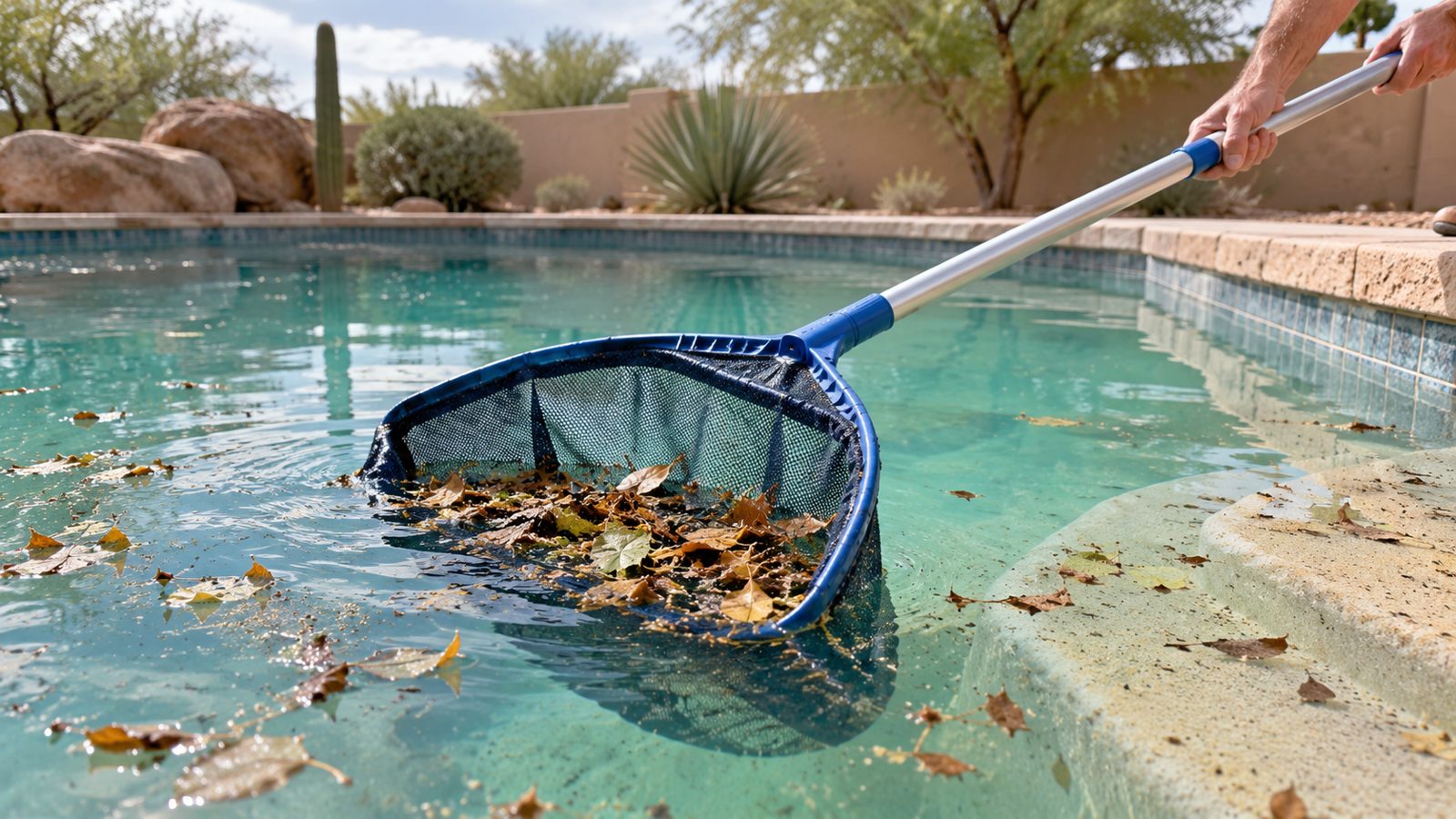
Start with the material you can physically remove.
A leaf net is useful for collecting floating leaves and larger debris before they sink. Work gently around the steps and corners where wind tends to concentrate material. If there is glass or sharp debris in the pool, keep people out and have it removed safely rather than reaching into cloudy water.
Removing debris by hand reduces the amount that must pass through your cleaner, baskets and filtration system. It also removes organic material that would otherwise remain in the water.
Do not sweep a dusty patio directly into the pool while you are cleaning. Clear the surrounding deck in a way that keeps dirt and wash water out of the basin.
A robotic cleaner can help with compatible debris, but it has limits. Large branches, heavy sediment and overloaded debris baskets can make it ineffective. Check the cleaner's instructions and inspect its collection basket frequently rather than leaving it to handle the entire aftermath unattended.
For the broader cleaning process, our guide to pool filter cleaning in Phoenix explains why removing dirt from the water is only part of maintaining a clean pool.
Before restarting circulation, make sure the pool water is at the operating level required by your skimmer and equipment. Water that is too low can allow air into the system; unusually high water can reduce the skimmer's ability to collect floating debris.
Next, inspect the skimmer baskets. A basket packed with leaves can restrict the water reaching the pump. Turn the pump off before removing baskets or clearing obstructions, and prevent an automatic schedule from restarting it while you work.
The pump basket may also need attention, but opening the pump lid requires the correct shutdown and pressure-relief procedure for your system. If you are unsure, leave it to a pool professional. Never loosen filter clamps or open a filter tank while the system is pressurized.
Look for cracked plumbing, displaced connections, visible leaks and damage around the pad. A storm is also a good time to notice problems that were already developing.
If the pump struggles to establish circulation, do not let it continue running dry. Our article on why a pool pump loses prime covers several problems that can look similar from the homeowner's perspective.
Once the pool and equipment have been checked, restart the system according to the manufacturer's instructions. Stay nearby long enough to confirm normal circulation rather than switching it on and walking away.
Listen for unusual noises. Watch for persistent air in the pump, leaks and a noticeable reduction in flow at the returns. Shut the system down and arrange an inspection if it is not operating normally.
The filter pressure gauge provides another useful clue, but the number needs context.
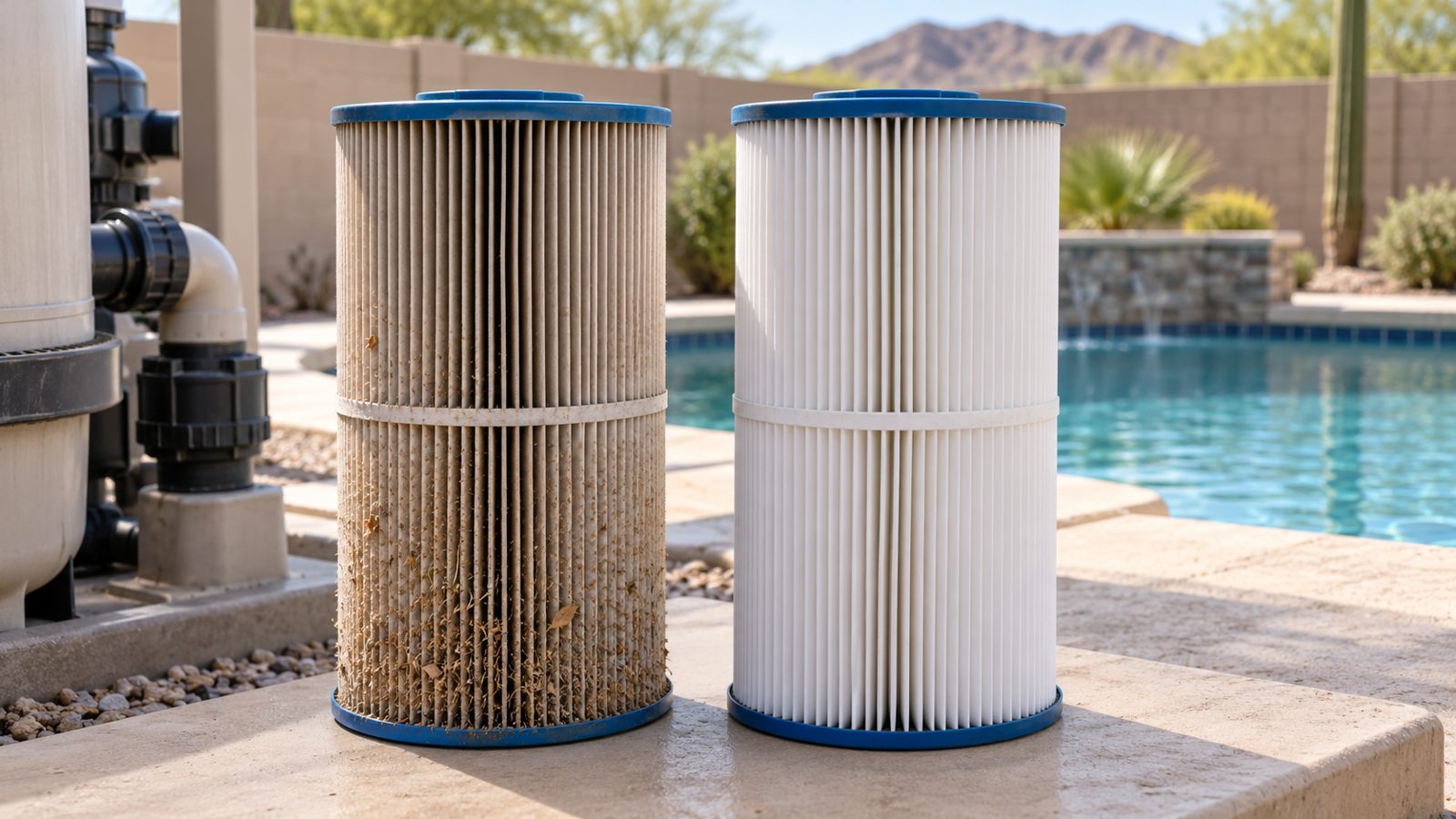
A reading should be compared with the clean-filter baseline at the same pump speed and valve settings. A variable-speed pump operating faster than usual can produce a higher pressure reading even when the filter condition has not changed.
For example, Pentair's Clean & Clear RP guidance identifies an increase of approximately 8–10 psi above starting pressure as a cleaning indicator for that filter. Your own filter's manual should determine the service threshold and procedure.
A significant storm can load a filter faster than its normal maintenance schedule suggests. It may need attention during cleanup even if it was serviced recently.
Aqua Harmony Pools provides professional pool filter cleaning to address accumulated debris and help restore proper filtration. Cartridge, sand and DE filters have different maintenance requirements; backwashing is not the correct procedure for every system.
Brown or cloudy water does not automatically tell you which chemical to add.
After a storm, suspended dirt may be the main cause of the appearance. At the same time, the pool's sanitizer level may need attention because of organic debris, dilution or an existing water-balance problem.
Test free chlorine and pH, and evaluate alkalinity, stabilizer and other relevant parameters as needed. Use the results, pool volume, product label and equipment requirements to determine the treatment.
A saltwater pool needs this check too. Having a salt generator does not guarantee that the water has maintained adequate chlorine through a storm.
Do not automatically add acid, shock, algaecide and clarifier because the water looks bad. Each product has a purpose, and unnecessary additions can complicate the cleanup. Never mix pool chemicals together or add them through a skimmer unless the specific product and equipment instructions allow it.
Our Phoenix homeowner's guide to pool chemistry explains how the main water-balance factors work together.
As the water circulates, some fine material will settle. Brushing can help release dirt from surfaces so it can be collected, while careful vacuuming removes sediment from the floor.
The right vacuuming method depends on the amount of dirt and the equipment installed. Heavy sediment may be better removed with professional equipment or a suitable waste setting where the system supports it. Not every pool has that option.
Vacuuming through the filter can load it quickly. Keep watching pressure and flow, and service the filter as required. If water is being discharged, monitor the pool level and follow local disposal requirements.
Avoid adding a flocculant unless you know how the settled material will be removed. Some products require vacuuming to waste and may be unsuitable for your filtration arrangement. A product that creates a layer of settled debris is not helpful if you have no practical way to extract it.
There is no universal promise that a storm-damaged pool will be clear by tomorrow. Debris load, filtration, circulation and chemistry all influence recovery.
Call for help if the pool remains cloudy despite appropriate cleaning, filter pressure rises repeatedly, circulation is weak, the pump will not prime, or debris is beyond what your equipment can collect.
Visible leaks, breaker trips and suspected storm damage warrant an equipment inspection. Aqua Harmony Pools offers pool equipment repairs in Phoenix to diagnose the underlying problem before damaged components are pushed harder.
Keep swimmers out while the water is too cloudy to clearly see the bottom, while debris presents a hazard, or while water testing indicates unsuitable conditions. Clear-looking water alone is not proof that the pool is ready to use.
The most effective storm cleanup starts with a clear sequence: make the area safe, remove debris, check circulation, evaluate the filter, and bring the water back into balance.
For homeowners already using weekly pool maintenance, a major dust storm is a reason to contact the service team rather than assume the next scheduled visit will be soon enough. Share photos and describe any unusual equipment behavior so the response can be planned around the actual condition of the pool.
Need help cleaning your pool after a Phoenix dust storm? Contact Aqua Harmony Pools or call (480) 542-7341 to discuss cleanup, filter service or equipment concerns. We will help you determine what your pool needs to get back to normal.

A Phoenix dust storm can leave your pool cloudy, load the filter with fine dirt and clog baskets with debris. Learn what to inspect before restarting equipment, how to approach cleanup and water testing, and when professional pool service can help.