October 7, 2026


The pump is running, but the pool does not seem to be moving much water. The return jets feel weaker than usual, leaves are collecting in one corner, and the skimmer is not pulling debris across the surface the way it used to.
Does that mean the pump is failing?
Not necessarily.
Weak pool jets can result from restricted baskets, a dirty filter, a low water level, air entering the system, changed valve positions or a different pump-speed setting. The useful question is what changed, and whether the problem affects one return or the entire pool.
Before turning the pump up to its highest setting or ordering replacement parts, a few observations can help narrow down the cause.
A pool return is the fitting that sends filtered water back into the pool. Its directional opening, often called an eyeball, affects how that water enters the basin.
The strength you feel at one nozzle is not a direct measurement of the total gallons moving through the system. Nozzle size, direction, pump speed and the number of operating returns can all change that sensation.
A small opening can produce a concentrated stream. A larger opening can feel gentler without necessarily indicating inadequate overall circulation.
That is why comparing your pool with a neighbor's pool is not particularly useful. Even two similar-looking pools can have very different plumbing and operating settings.
Compare your own pool at the same pump speed, in the same operating mode, with the same water features running. If the jets are normally gentle during an energy-saving filtration schedule but stronger during spa operation, you may be noticing a programmed difference rather than a failure.
This distinction can make the service call much more productive.
If only one return seems different while the others are operating normally, the issue may involve that fitting, the way flow is distributed between branches, or a localized restriction. A loose or missing directional fitting can also change the stream enough to make it feel unfamiliar.
If every return has weakened at the same time, look at the parts of the circulation system they share: the water supply to the pump, the pump's operating conditions, the filter and the return-side routing.
Also consider whether the change was sudden or gradual.
A decline over several weeks may point toward accumulating debris or filter loading. An immediate change after a cleaner was connected, equipment was serviced or an automation schedule was adjusted provides a different starting point.
Those clues do not establish the diagnosis, but they are more useful than simply reporting that the jets are weak.
Start with what is visible from the deck.
Water that falls below the level needed by the skimmer can allow air into the circulation system. Look for a vortex or repeated gulping at the skimmer opening, and compare the level with the operating range specified for your installation.
Phoenix evaporation makes water-level checks particularly relevant. An automatic fill system is helpful, but it should not be assumed to be working correctly simply because one is installed.
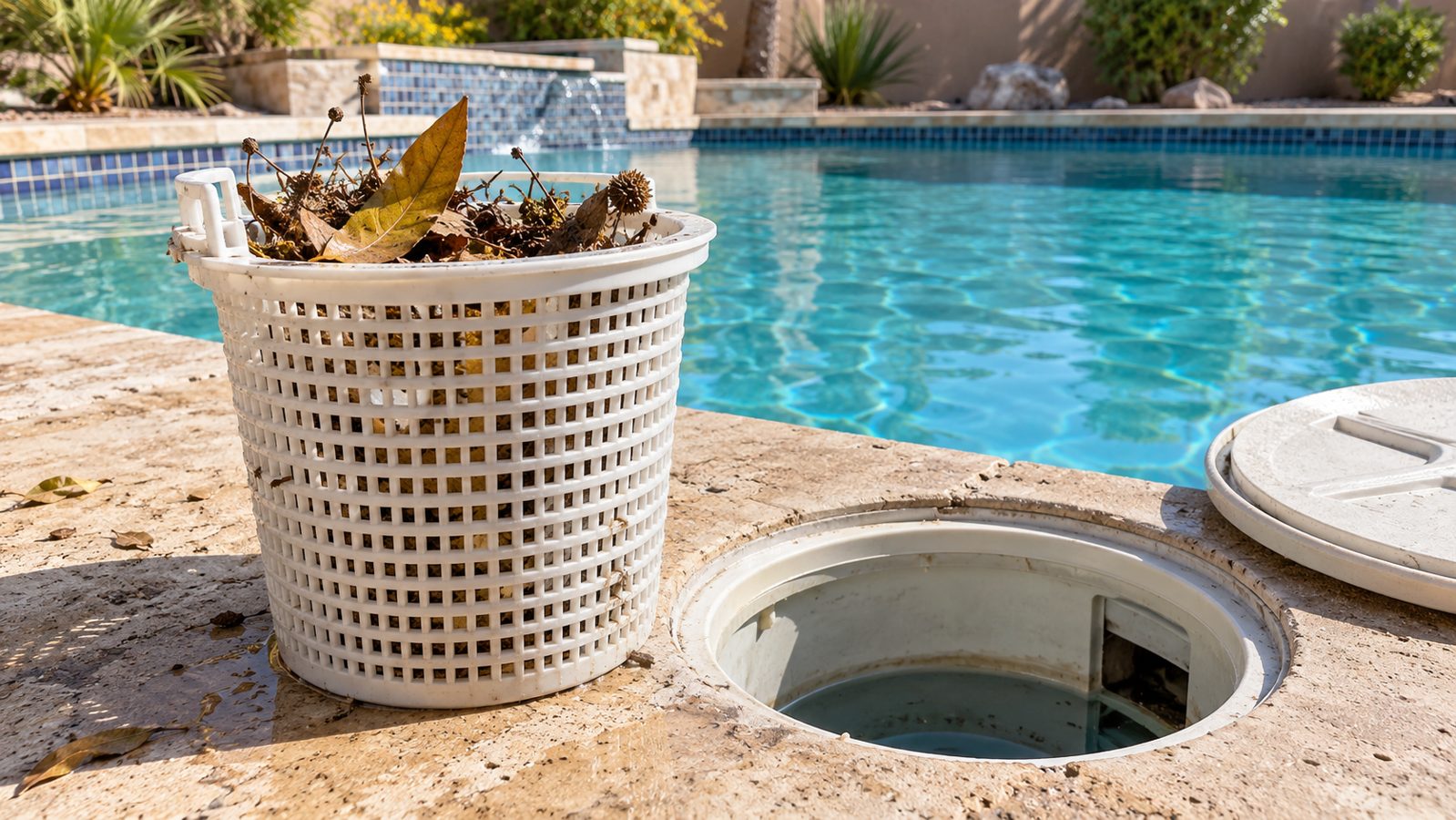
A skimmer basket packed with leaves or seed pods can also restrict the water reaching the pump. Debris conditions can change quickly, especially when wind concentrates material in one part of the yard.
Turn the pump off and prevent automatic restart before removing baskets or clearing debris. Never reach into a suction opening. Keep the pool closed to swimmers if a suction cover is missing or damaged until it has been properly repaired.
The pump basket may need attention as well, but opening the pump requires the correct shutdown, isolation and pressure-relief procedure for the equipment. If you are unfamiliar with the system, have a pool professional handle it.
Manufacturer troubleshooting supports checking these basic conditions early. Poolrite's pump guidance, for example, includes water level, baskets, valves and air leaks among the items to evaluate when a running pump produces little flow.
The filter gauge can help explain weak returns, but only when the reading is compared with a meaningful baseline.
Write down the pressure when the filter is clean and the system is operating normally. Record the pump speed and operating mode at the same time.
Later, compare the gauge under those same conditions. A reading taken at a low filtration speed cannot be directly compared with one taken while the pump is running faster to operate a water feature.
A filter that has accumulated dirt can increase resistance and reduce flow. Depending on where the gauge is installed, a restriction farther along the return path can also contribute to elevated pressure.
That makes a dirty filter a possibility, not an automatic conclusion.
For a specific example, Pentair's Clean & Clear RP support guidance uses a rise of approximately 8–10 psi above starting pressure as a cleaning indicator for that model. Your filter's own instructions should determine when and how it is serviced.
Lower pressure combined with weak flow can mean the pump is receiving or moving less water. Basket restrictions, air entering the suction side, a lower speed setting and other pump-side conditions are among the possibilities.
The gauge itself can also be inaccurate or stuck. An unusual reading should be checked against the rest of the system's behavior.
Our guide to common pool filter problems in Phoenix explains why pressure, flow and water clarity need to be considered together.
Never loosen a filter clamp or open a filter tank while it is pressurized. Filter service requires proper shutdown and pressure relief, followed by the manufacturer's restart procedure.
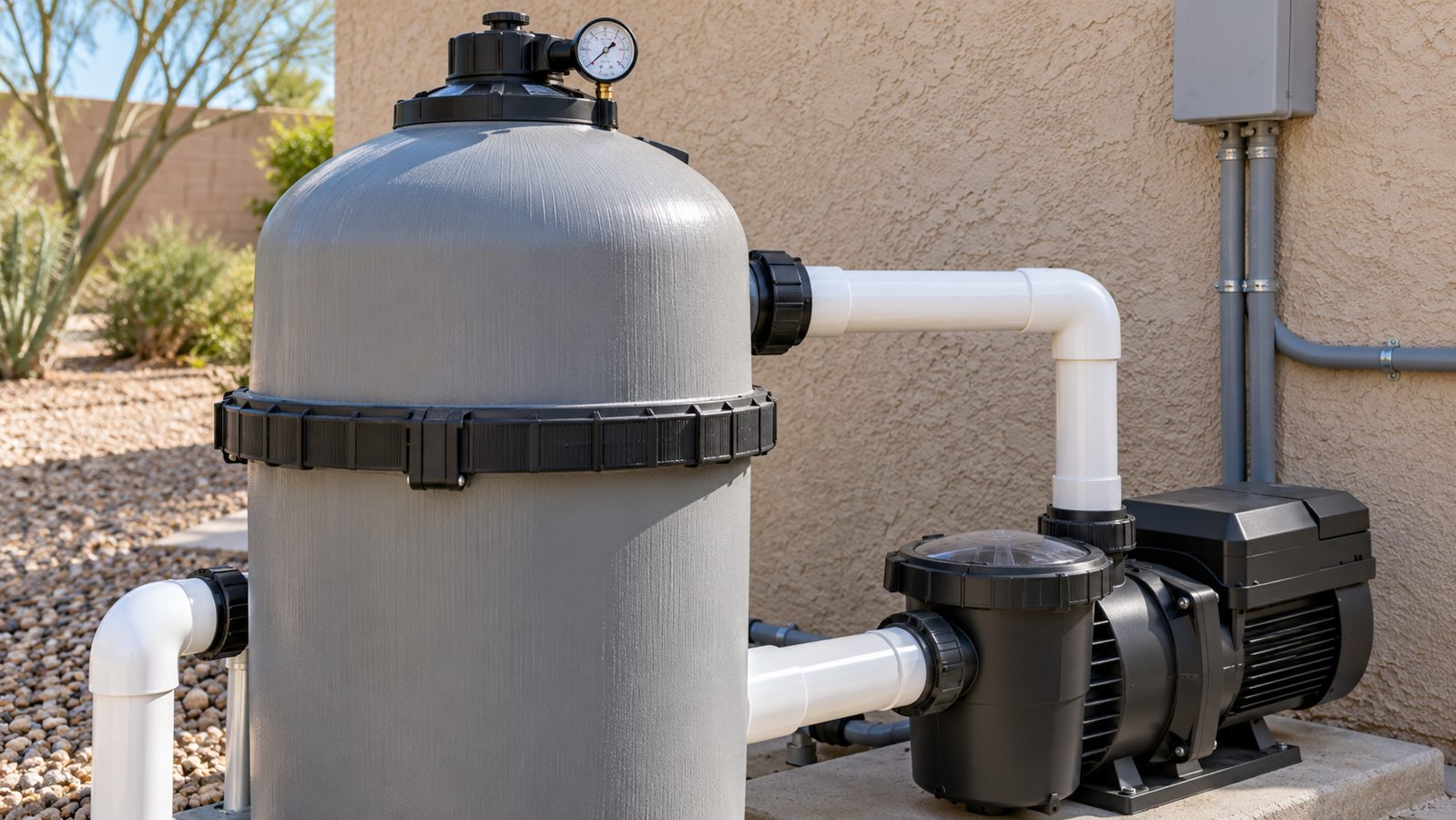
Variable-speed pumps do not need to make the returns feel forceful all day to be doing useful work.
The objective is adequate circulation at an appropriate operating speed, with enough flow for the equipment and features that are active. The Building America Solution Center's variable-speed pump guidance emphasizes verifying circulation while using the lowest practical motor speed.
If the pump is running at a different programmed speed than it was last week, the returns may feel different even though no component has failed.
Check the displayed RPM, scheduled operating period and selected mode. A recent power interruption, controller adjustment or equipment service may be relevant. Note any error messages before clearing or changing settings.
At the same time, an efficiency setting is not automatically a suitable setting. If the skimmer barely functions, a heater reports inadequate flow or another component cannot operate properly, the schedule needs to be evaluated against the system's requirements.
Turning the pump to maximum speed can temporarily make a symptom less noticeable while leaving its cause unresolved. It can also waste energy.
Our article on variable-speed pool pumps in Phoenix covers the importance of matching programming to the pool.
A pool-and-spa system may send water through different paths depending on its operating mode. Water features, solar heating, cleaners and other equipment can influence the amount returning through particular outlets.
If the pool jets weakened immediately after a mode change, check what the controller says is running.
A system in spa mode may direct much of its circulation through the spa. An adjusted valve may send more water toward a feature and less toward the pool returns.
Do not start turning every valve handle in search of a stronger stream. Closing the wrong path can create an unsafe or unsuitable operating condition, and a handle's orientation is not always self-explanatory.
Instead, note the current positions, operating mode and any recent work, then have the routing checked if it does not match normal operation.
Settings matter, but equipment compatibility matters too. A newly installed component or changed plumbing arrangement may require the system to be evaluated as a whole.
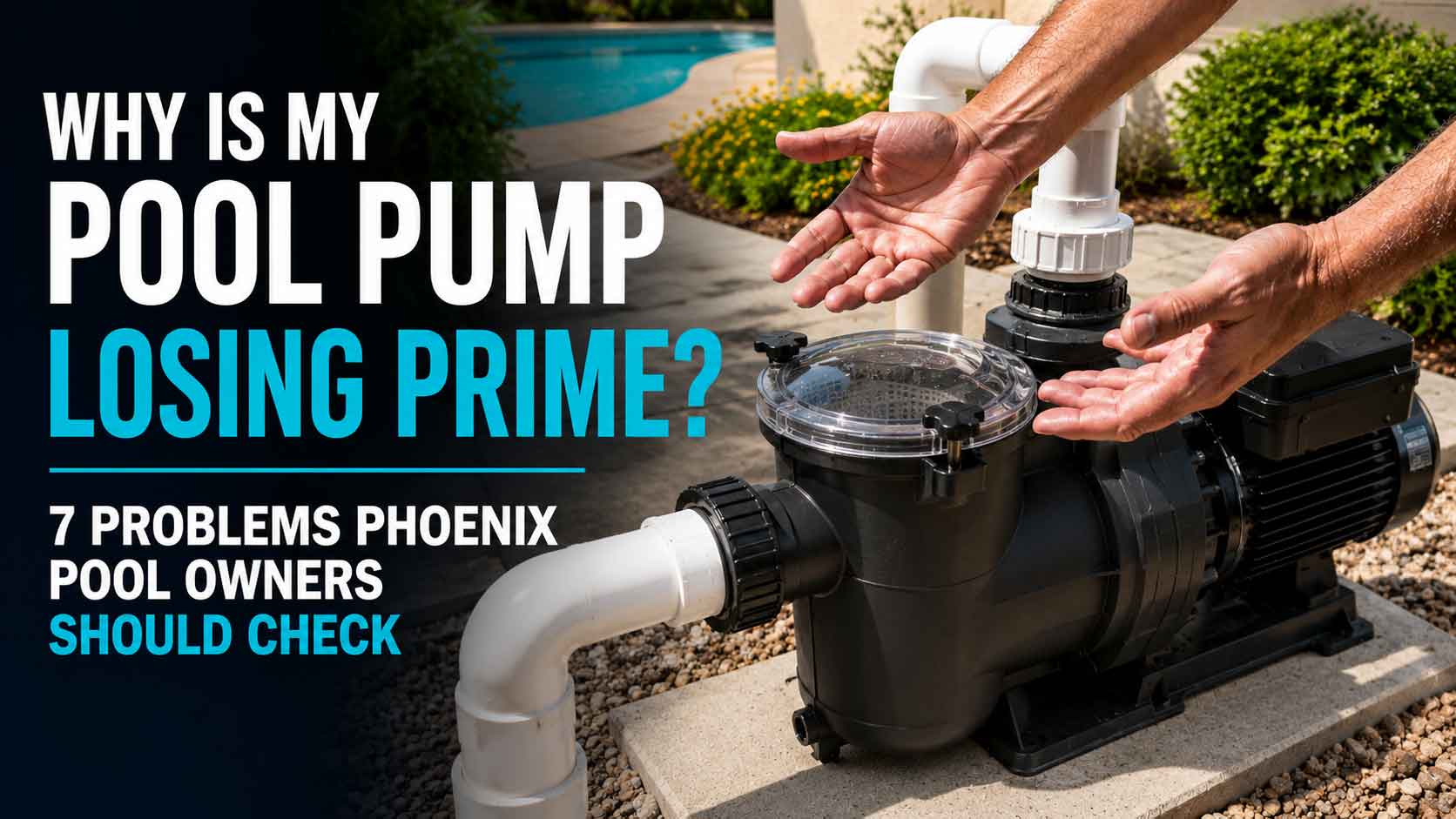
Persistent bubbles under the pump lid, repeated loss of prime or unusual air returning to the pool can be clues that the system needs attention. Brief air during an appropriate startup sequence is different from a problem that continues throughout operation.
Because part of the suction plumbing operates below atmospheric pressure, air can enter a connection without an obvious outward water leak.
Another possibility is debris affecting the pump impeller. The motor can sound as though it is running while the pump is not moving water normally.
Jandy's low-flow troubleshooting guidance includes suction-side air leaks, plumbing restrictions and blocked impeller vanes among the conditions a technician should consider.
These checks should not involve reaching into a running pump, removing electrical covers or repeatedly operating equipment that will not maintain circulation.
If the pump is running dry, overheating, tripping a breaker or making an unusual mechanical noise, shut it down and arrange an inspection.
For a closer look at the air and water-supply side of the problem, see our article on why a pool pump loses prime.
A few details can help separate a maintenance issue from a repair:
A photo of the equipment pad and a short video of the pump's behavior can also be useful. You do not need to take equipment apart to provide helpful information.
If filter loading is the issue, Aqua Harmony Pools offers professional pool filter cleaning. If a component or circulation problem needs diagnosis, our pool equipment repair service can evaluate the cause before parts are replaced.
Weak jets are a symptom. Sometimes the explanation is a basket full of leaves or a changed speed schedule. Sometimes it is a restriction, air leak or equipment problem that needs professional attention.
Regular weekly pool maintenance helps establish what normal operation looks like so changes are easier to catch.
Are your pool jets weaker than usual? Contact Aqua Harmony Pools or call (480) 542-7341 for help with pool circulation, filter maintenance and equipment concerns in the Phoenix area. We will help determine what changed and what your system needs.

Weak pool jets do not automatically mean the pump is failing. Learn how water level, debris, filter pressure, pump speed and valve routing can affect circulation, what details help narrow down the cause, and when to call for professional pool service in Phoenix.