August 1, 2026

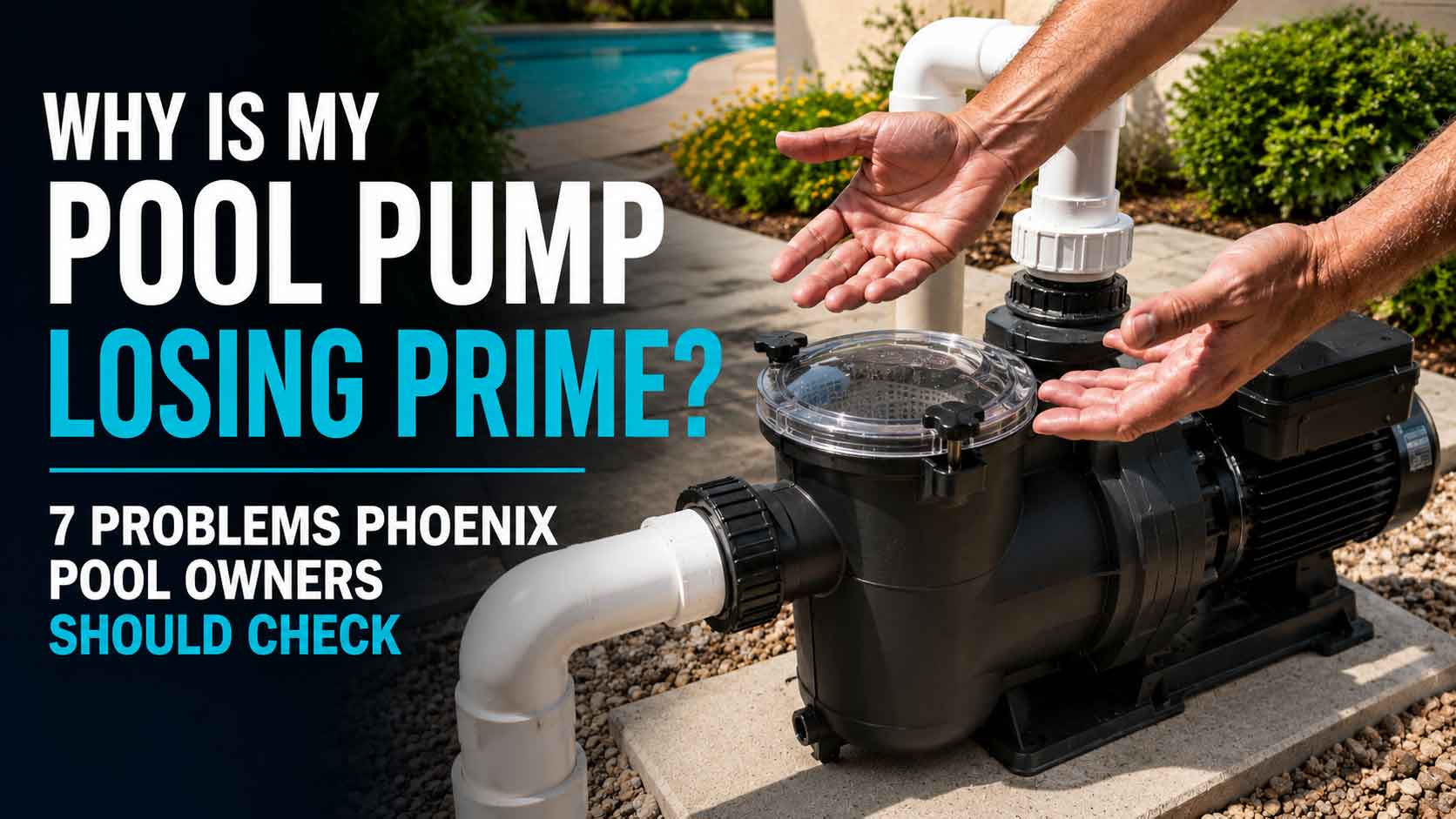
You walk into the backyard, glance at the pool and notice something doesn't sound right. The pump is running, but instead of seeing a solid column of water beneath the clear pump lid, you see air bubbles, churning water or an almost-empty pump basket.
Your pool pump may be losing prime.
A properly operating pool pump should maintain enough water in its housing and suction plumbing to continuously pull water from the pool, push it through the filter and other equipment, and return it to the pool. When air enters the suction side or the pump can't get enough water, that process can break down.
Sometimes the solution is remarkably simple. Other times, a pump that repeatedly loses prime is warning you about a plumbing, equipment or circulation problem that deserves professional attention.
For Phoenix pool owners, it's especially important not to ignore the problem. Pool equipment works hard during Arizona's long swimming season, and running a pump without adequate water flow can lead to overheating and expensive equipment damage.
Here are seven places to start looking.
Before taking anything apart, look at the pool.
The water level should normally sit around the middle of the skimmer opening. If the level drops too low, the skimmer can begin pulling air along with water.
You'll often be able to see or hear it happening. Water may surge into the skimmer, form a small vortex or occasionally gulp air. That air travels through the suction plumbing directly to the pump.
This is particularly relevant in Phoenix.
Extreme summer temperatures and low humidity can produce substantial evaporation. If your automatic water leveler isn't working properly—or your pool doesn't have one—the water level can fall surprisingly quickly.
Top the pool back up and see whether normal circulation returns. If you're losing an unusual amount of water rather than experiencing normal evaporation, however, there could be a leak that needs investigation.
Also check the skimmer weir door. A stuck or malfunctioning weir can restrict the amount of water entering the skimmer and contribute to circulation problems.
Your pump can't circulate water it can't receive.
Leaves, pine needles, seed pods, insects and other debris can accumulate inside the skimmer basket. When the basket becomes packed, the restriction reduces the amount of water reaching the pump.
The same thing can happen at the pump basket.
Shut the pump off before opening the pump lid and inspect the basket. Remove debris and check the basket itself for cracks or damage.
This is an easy maintenance task, but don't underestimate how much a severely clogged basket can affect circulation.
Phoenix-area pools can accumulate a tremendous amount of debris during windy conditions and monsoon season. A basket that was relatively clean a few days ago can suddenly become packed after a storm.
If cleaning both baskets restores normal flow, you may have found your problem.
If the pump still struggles to prime, keep looking.
This is one of the most common places to look when a pool pump repeatedly pulls air.
The pump lid creates an airtight seal over the pump basket housing. Underneath that lid is an O-ring or gasket that maintains the seal.
If the O-ring is dirty, dry, stretched, cracked, flattened or improperly seated, air can be pulled into the pump while it's running.
Here's where pool plumbing can confuse homeowners: a suction-side air leak doesn't necessarily leak water.
The plumbing between the pool and pump operates under negative pressure while the pump is running. Instead of water spraying out of a bad connection, air can be sucked inward.
That means you may have an air leak without ever finding a puddle.
With the pump turned off, inspect the lid and O-ring. Clean the sealing surfaces and make sure the O-ring is properly seated. If lubrication is appropriate for your particular gasket, use a pool-equipment-compatible lubricant rather than petroleum-based products that can damage some rubber components.
A damaged O-ring should be replaced.
The lid itself should also be inspected for cracks or damage.
If the lid and O-ring look good, the problem may be somewhere else between the pool and the pump.
Potential air-entry points include plumbing fittings, unions, valve stems, drain plugs, threaded connections and cracked PVC.
Arizona's environment isn't particularly gentle on pool equipment pads.
Equipment sits through extreme heat, intense UV exposure and substantial temperature swings. Plastic components, seals and fittings age. Plumbing can shift, O-rings deteriorate and previously reliable connections can eventually develop problems.
A suction-side leak can produce several recognizable symptoms. You might notice persistent air underneath the pump lid, bubbles coming from the pool returns, difficulty priming after the pump shuts off or water draining out of the pump housing when the system isn't running.
Finding exactly where the air is entering can be more difficult.
That's when professional diagnosis becomes valuable. Replacing random fittings because they might be leaking can quickly become more expensive and frustrating than identifying the actual source first.
Most Phoenix pools have more going on than a single skimmer connected directly to a pump.
You may have multiple skimmers, a main drain, spa suction, dedicated cleaner plumbing, water features or other equipment controlled by a series of valves.
A valve in the wrong position can restrict water reaching the pump.
Valves can also develop problems internally. Seals and O-rings wear out, handles break and valve bodies can develop leaks.
Think about whether the priming problem started immediately after somebody changed the equipment settings.
Perhaps you switched from pool mode to spa mode. Maybe someone adjusted a valve while cleaning the pool. Perhaps a suction line was accidentally closed.
If the pump suddenly can't prime after a plumbing configuration was changed, checking valve positions should be near the top of your list.
Don't force a valve that doesn't want to move. An aging valve that feels unusually stiff may already need service, and breaking the handle or internal assembly will only add another repair.
You've checked the water level.
The baskets are clean.
The lid appears sealed.
The valves are open.
And the pump still seems starved for water.
The restriction may be farther inside the pump.
The impeller is the rotating component responsible for moving water through the pump. Small debris can occasionally get past the pump basket and become lodged inside or around the impeller.
Hair, leaves, pine needles and other material can reduce the amount of water the pump is capable of moving.
A partially clogged impeller can sometimes make the problem deceptive because the pump may still circulate some water. It just doesn't produce the flow you're accustomed to seeing.
You might notice weak returns, poor skimming, reduced filter pressure or difficulty establishing a strong prime.
This is where we recommend homeowners become more cautious.
Turn off power to the pump before attempting any inspection or service. Pool pumps combine electricity, water and moving components, and more involved disassembly is better left to someone familiar with the equipment.
Sometimes nothing is technically "broken."
The system simply has difficulty establishing prime because of the way it's configured.
Pool pumps are designed to move water extremely well, but pulling air is another story. If the pump sits significantly above the pool's water level, it has to lift water farther through the suction plumbing before establishing prime.
Long plumbing runs, undersized pipes, excessive fittings and other restrictions can make that process more difficult.
The problem can become especially noticeable after you've opened the pump basket for cleaning, serviced the filter or drained water from the equipment.
Older pumps can also develop internal wear that reduces their ability to establish or maintain prime.
If you've recently replaced a pump, changed plumbing or upgraded to a variable-speed pump and priming problems began afterward, the installation and programming deserve a closer look.
Modern variable-speed pumps may have configurable priming speeds and durations. Incorrect settings can sometimes create the impression that the new pump isn't working correctly when the system simply hasn't been configured appropriately for the pool.
A pump that's struggling to prime isn't something you want to leave running indefinitely hoping it eventually sorts itself out.
Pool pumps depend on moving water.
Operating without sufficient water can generate excessive heat and damage components inside the pump. Seals can fail, plastic components can deform and what started as a relatively minor air leak or clogged basket can eventually become a much more expensive repair.
Poor circulation creates problems elsewhere, too.
Your filter can't properly filter water that isn't reaching it. Your heater, salt chlorine generator and other circulation-dependent equipment also require appropriate water flow.
Meanwhile, reduced circulation can contribute to poor sanitation, cloudy water and algae.
The pump is essentially the heart of your pool's circulation system. When it isn't moving water correctly, the entire system is affected.
A pump that loses prime once after you've opened the basket isn't necessarily cause for alarm.
A pump that repeatedly loses prime is different.
If you're constantly filling the pump housing with water, tightening the lid, restarting the system and hoping it stays primed this time, something is telling you it needs attention.
Start with the simple things. Check the pool water level. Empty the skimmer and pump baskets. Look at the pump lid and O-ring. Verify that your valves are positioned correctly.
Then pay attention to what the system is telling you.
Are there bubbles underneath the pump lid? Are bubbles coming from the pool returns? Does the pump lose its water every time it shuts off? Is the problem worse at lower pump speeds? Did it begin after equipment or plumbing work? Has circulation gradually become weaker?
Those clues can help distinguish a simple maintenance issue from an air leak, restriction, plumbing problem or failing piece of equipment.
And you don't have to figure it all out alone.
At Aqua Harmony Pools, we're here to help Phoenix pool owners keep their circulation systems operating the way they're supposed to. Whether your pump won't prime, keeps pulling air, has lost flow, is making strange noises or simply isn't performing like it used to, we can diagnose the problem and determine what actually needs to be repaired.
Sometimes it's a five-minute fix. Sometimes it's a worn component. Sometimes an aging pump has simply reached the point where replacement makes more sense than another repair.
Whatever the problem turns out to be, Aqua Harmony Pools is only a phone call away and ready to tackle your pool pump problems with the top-notch service Phoenix pool owners deserve.

A pool pump that repeatedly loses prime can signal anything from a low water level or clogged basket to an air leak, faulty valve, clogged impeller or plumbing issue. This article walks Phoenix pool owners through seven common causes, explains why running a pump dry can cause serious damage, and shows when it’s time to call Aqua Harmony Pools for professional diagnosis and repair.
.png)

