September 17, 2026

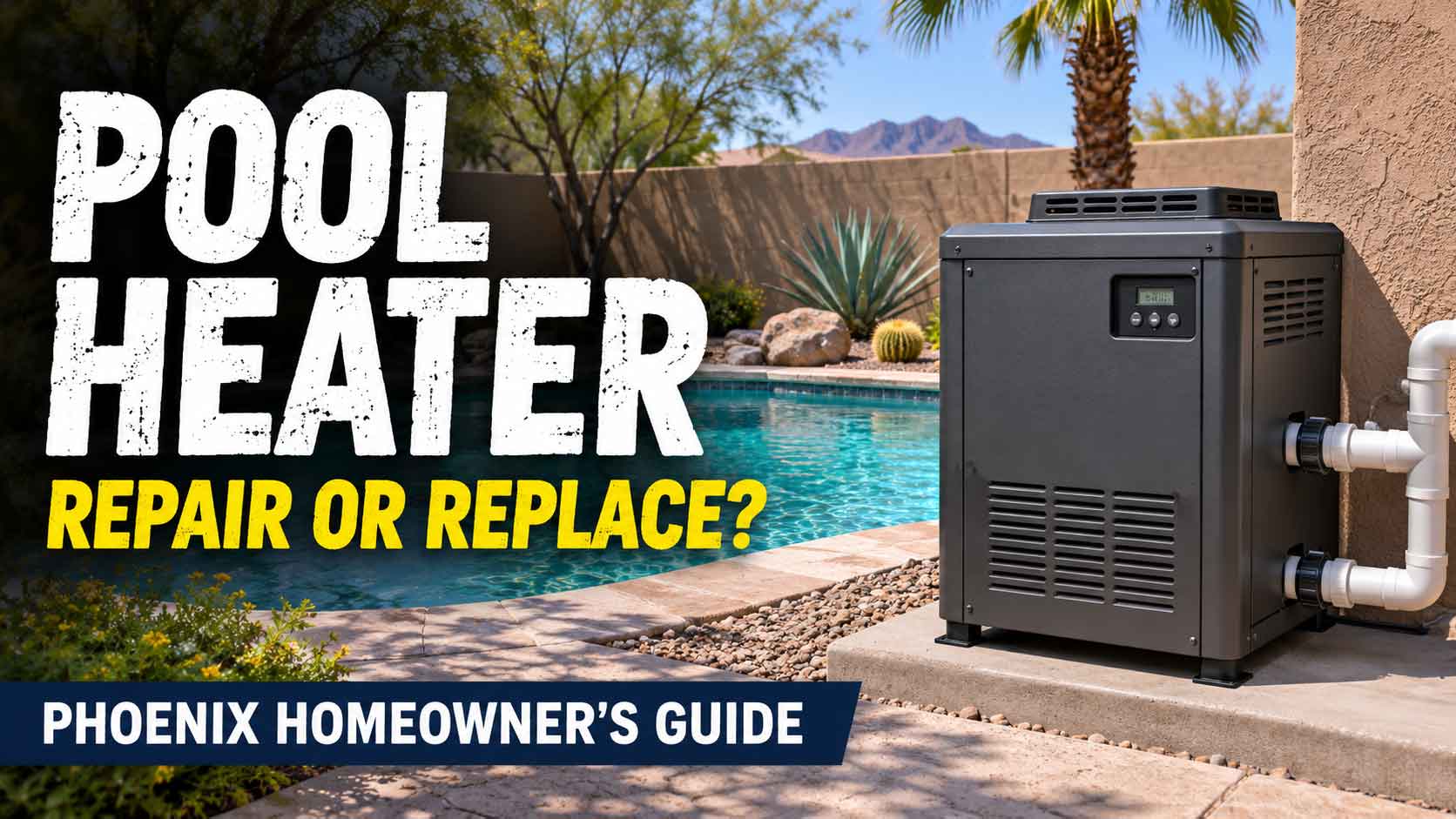
You turn on the pool heater for the first cool-weather swim of the season, and the water never reaches the temperature you expected. Maybe the heater will not start. Maybe it runs briefly, shuts down and displays a service message.
Now you have a decision to make: repair the equipment you own or put that money toward a replacement.
A repair usually deserves consideration when the problem is clearly identified, the rest of the heater is in serviceable condition and suitable parts are available. Replacement deserves a closer look when major damage, repeated failures or a mismatch with your heating needs makes another repair difficult to justify.
Age and price matter, but neither should make the decision by itself. Here is a practical way to compare the options for your Phoenix pool.
A heater that does not heat is showing a symptom. It has not yet told you which part is at fault.
The issue may involve the heater, circulation, controls or the conditions under which it is operating. A system that recently received a new pump schedule, filter service or automation adjustment provides different clues from one that gradually stopped heating over several months.
Write down the model, approximate installation date and exact display message. Note whether the problem affects pool mode, spa mode or both, and whether it began after another change at the equipment pad.
Ask the technician to explain what was tested and what the findings show. A useful recommendation connects the proposed work to an identified cause.
Aqua Harmony Pools provides pool equipment diagnosis and repairs. Starting with the whole system can help separate a heater failure from a problem that a new heater would inherit.
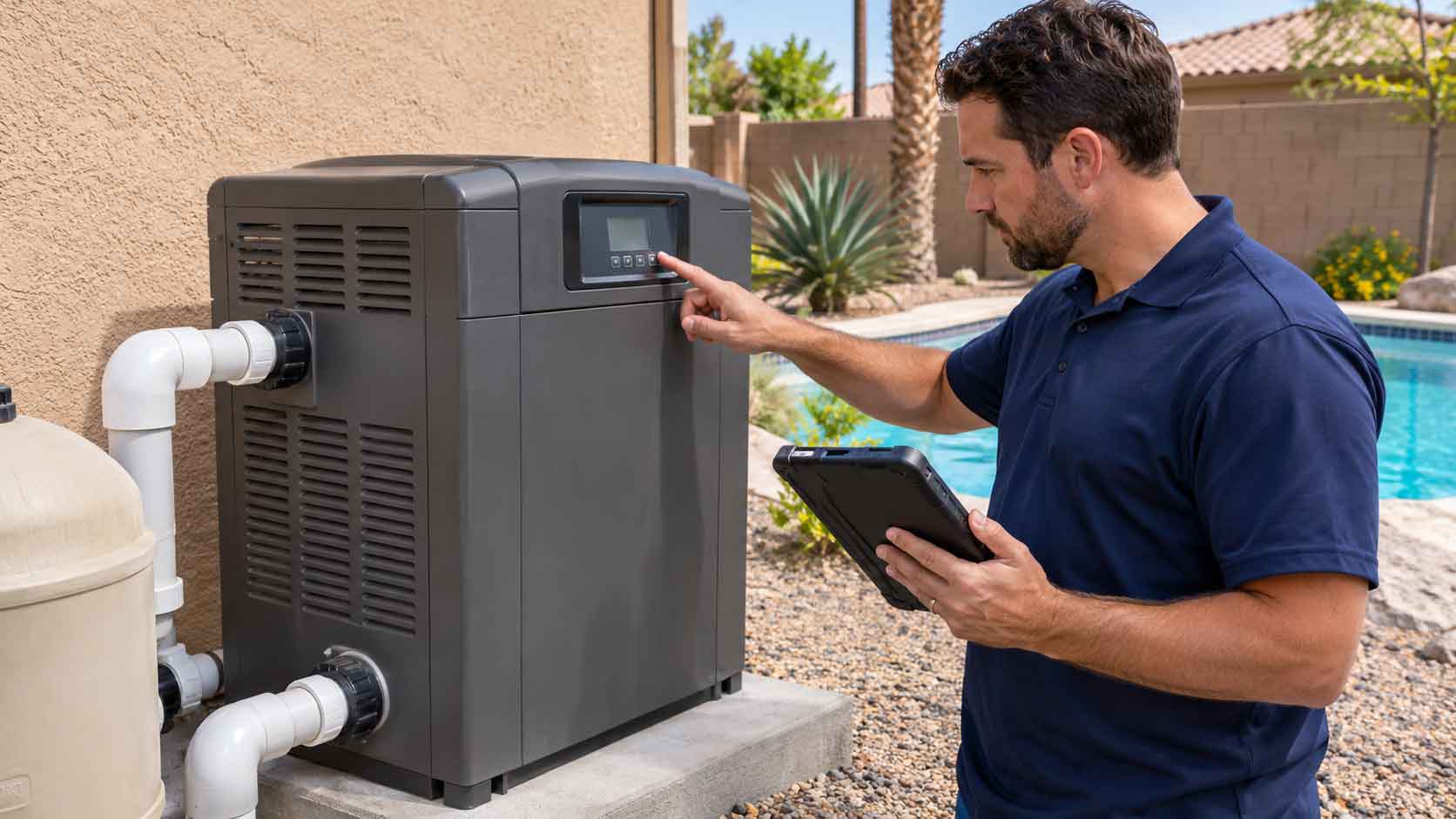
Pool heaters need water moving through them within the operating range specified for the model. A flow-related shutdown does not automatically mean the heater has reached the end of its life.
A dirty filter, restricted basket, unsuitable pump speed or an incorrect operating mode may affect the water reaching the heater.
For example, Pentair's MasterTemp 125 instructions identify insufficient water flow as a possible reason for an ERR PS message and call for qualified service if the problem persists after appropriate filter and skimmer maintenance. That code applies to the specified equipment; other heaters use different messages and diagnostic procedures.
Do not bypass a pressure switch or another safety device to make a heater run. A protective shutdown needs an explanation.
If filtration is part of the problem, professional pool filter cleaning may be part of restoring normal operation. The filter's maintenance requirements should be checked alongside pump settings and plumbing conditions.
A repair is easier to evaluate when it addresses a specific fault and leaves you with equipment that still fits the way you use the pool.
Consider a heater that has performed reliably, has no significant internal damage and now needs one confirmed component replaced. That is a different situation from a heater with extensive deterioration and several unresolved faults.
A repair may be reasonable when:
A sensor or ignition-related fault can be repairable, but the part name alone does not establish whether the job is simple or economical. Access, related damage, diagnostic time and the cause of failure can all affect the scope.
Ask what the repair is expected to restore and what uncertainties remain. No repair estimate can guarantee that every other aging component will continue working indefinitely.
Replacement becomes more compelling when the problem extends beyond one serviceable component.
A leaking or substantially damaged heat exchanger, extensive corrosion, multiple major faults or unavailable parts can change the economics quickly. Those findings need professional assessment rather than a judgment based only on how the cabinet looks from the deck.
Repeated breakdowns matter too. Review the pattern: were earlier calls for unrelated maintenance issues, or has the same underlying problem continued despite repairs?
Money already spent cannot be recovered by making one more repair. Use the current condition and the next realistic options to decide what happens now.
A replacement may also deserve consideration if the existing heater never delivered the experience you wanted. Restoring it to its original performance will not necessarily solve a capacity or heating-strategy mismatch.
Age is context, not a diagnosis.
Two heaters installed in the same year can have very different histories. One may have operated frequently with documented maintenance. Another may have sat unused for long periods or experienced recurring water-balance and circulation problems.
Find the installation invoice if possible. A model number identifies the equipment, but it does not always establish the date it entered service. Gather prior repair records and any warranty information before authorizing work.
Ask the technician how the heater's actual condition affects the recommendation. A relatively young unit with serious damage may be a poor repair candidate. An older unit with an isolated fault may still justify repair if the broader assessment supports it.
Our existing guide to pool heater repair and maintenance in Phoenix provides background on common symptoms and routine care. Use service history and the current inspection to make your own decision.
A replacement heater's advertised equipment price is not the same as its installed cost.
For the repair option, request a written description of the diagnosed fault, parts, labor, any additional work and the applicable warranty. Ask whether diagnostic charges are included or billed separately.
For replacement, ask what the quoted price includes:
Not every project needs every item, but the quote should make the scope clear. Ask which work is included, which work requires another qualified trade and which costs remain uncertain.
A rule such as replacing a heater whenever a repair reaches a certain percentage of the new-unit price is only a starting point for discussion. It does not account for condition, warranty, installation changes or how well the equipment meets your needs.
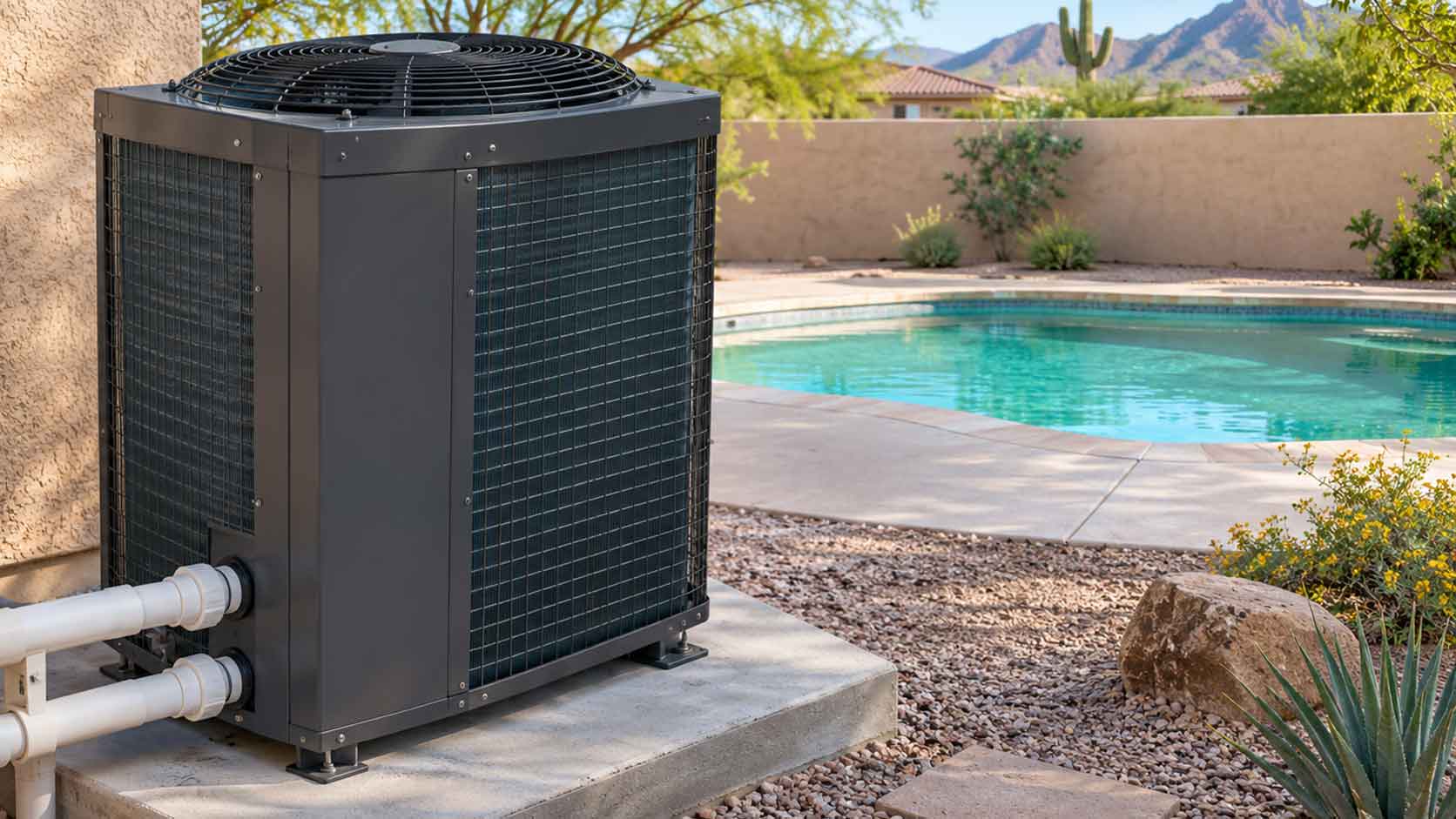
Changing heater type is a separate decision from replacing a failed unit with a comparable model.
Gas heaters generate heat by burning fuel. Air-source pool heat pumps use electricity to transfer heat from outdoor air into the water. Their performance and operating costs need to be compared under conditions relevant to your pool.
Pentair's pool-heating overview describes gas heating as an option for faster heat-up and notes that heat-pump performance depends on air temperature and humidity.
For a homeowner who wants occasional rapid spa heating, the priorities may differ from someone maintaining a pool at a steady temperature for frequent swimming.
The Air-Conditioning, Heating, and Refrigeration Institute's explanation of pool heat pumps is a useful reference for understanding the technology and efficiency measurements.
Ask for heating-capacity information at the conditions you expect to encounter, not just a favorable headline rating. Also check electrical capacity, available space, airflow clearances, noise considerations and controller integration.
A Phoenix address alone does not determine the best heater type. Your swimming habits, target temperature and willingness to plan ahead belong in the comparison.
A heater can be operating while the pool loses heat to its surroundings. Cooler nights, wind and an uncovered water surface can affect the temperature you see the next morning.
Before choosing larger equipment, discuss the complete heating plan. How warm do you want the water? How quickly must it reach that temperature? Will you maintain it continuously or heat only for planned use?
If a cover is part of the plan, choose and use it appropriately. A thermal or solar cover should not be assumed to provide the protection of a certified safety cover.
Controls matter as well. A heater following an unintended schedule or receiving the wrong temperature setting may produce disappointing results even when its mechanical components are functional. Our guide to pool automation and smart upgrades explains how controls fit into the larger equipment setup.
If the inspection finds damage associated with water chemistry or circulation, replacing the heater is only part of the solution.
The new equipment will share the same water and much of the same system. Ask what needs to change so the replacement does not encounter the conditions that damaged its predecessor.
Review water-test history, service records and the manufacturer's requirements. Hard water deserves attention, but visible tile scale does not prove what is happening inside a heater.
For help understanding the broader balance, see our Phoenix homeowner's guide to pool chemistry. Consistent weekly pool maintenance can also help track changes before they develop into larger problems.
Keep heater service within qualified hands. If you smell gas, leave the area and contact the gas utility or emergency services from a safe location. Do not attempt ignition, repeatedly reset the heater or operate electrical switches nearby.
The best repair-or-replacement recommendation should answer three questions: what failed, what each option includes and how each option supports the way you want to use your pool.
Get the diagnosis first. Compare complete costs. Consider equipment condition, parts availability and installation requirements, then decide whether restoring the current heater or replacing it offers the better path.
Is your pool heater struggling to keep up? Contact Aqua Harmony Pools or call (480) 542-7341 to discuss heater concerns, equipment repairs and maintenance for your Phoenix-area pool.

A heater that stops working does not automatically need replacement. Learn how Phoenix homeowners can compare diagnosis, repair scope, equipment condition and complete replacement costs before deciding what to do next.