September 7, 2026


Owning a seasonal home in Arizona means you can enjoy the pool when the weather suits you. It also means the pool may spend weeks or months outside your everyday view.
Before leaving, it is tempting to set the timer, add chemicals and assume the equipment will handle everything until you return.
A pool at a vacant home still needs regular cleaning, water testing, circulation, water-level checks and a clear response plan when something changes. The most useful snowbird pool-care plan combines dependable local service with specific responsibilities and reliable communication.
Whether you leave Phoenix for the summer or travel for part of the cooler season, here is how to make that plan practical.
The best time to discover a leaking connection or an unreliable gate latch is while you are still in town.
Arrange a walkthrough with your pool service provider before departure. Review the pool's current condition, equipment behavior and any work that has been postponed. Tell the provider how long you expect to be away and whether anyone will use the property during that time.
Photograph the water level, equipment pad and controller settings for your own records. Gather equipment model information, recent repair invoices and relevant warranty documents in a place you can access while traveling.
If the pump has been losing prime, the filter needs service or a controller repeatedly displays an error, deal with that issue before leaving it to an unattended schedule.
Aqua Harmony Pools offers pool equipment diagnosis and repairs to help identify problems that need attention before a long absence.
“Someone is looking after the pool” can mean very different things.
A neighbor glancing through the fence, a home-watch company checking the property and a pool technician maintaining the water each provide a different kind of oversight. Agree on the responsibilities rather than assuming one visit covers everything.
Ask your pool service provider which tasks are included and how additional work is handled. Discuss water testing, chemical adjustments, brushing, debris removal, cleaner inspection, baskets and observations about the equipment.
Filter service may follow a separate schedule or require separate approval. Clarify that before the filter becomes restricted between visits. Aqua Harmony Pools provides professional pool filter cleaning as well as weekly pool maintenance.
Also ask about visit reports and missed-access procedures. If a locked gate prevents service, you should know who receives the message and who can resolve it locally.
A routine pool-service visit should not be assumed to include daily property inspections, leak monitoring or an immediate storm response. Put those expectations into the plan explicitly.

An unused pool is still exposed to sunlight, windblown dirt and changes in water balance. Fewer swimmers do not eliminate the need to maintain it.
The CDC's guidance on home pool water treatment and testing explains why maintaining disinfectant and pH requires routine testing. It recommends checking chlorine and pH at least twice daily, with additional checks during heavier use.
A weekly service appointment does not provide that level of observation by itself. Discuss the monitoring needed between visits, particularly if family, guests or renters will be swimming. Arrange for a capable local person to carry out necessary checks rather than assuming a weekly reading establishes conditions for the entire week.
Do not leave instructions to add the same amount of a chemical regardless of test results. The treatment needs to reflect the water, pool volume, product label and equipment requirements.
For background on the measurements involved, see our Phoenix homeowner's guide to pool chemistry.
A saltwater system needs oversight too. Confirm that the cell is producing normally under the current conditions and that someone will respond to flow or production warnings.
Water level deserves its own assigned responsibility.
A pool can look reasonably clear while its level moves outside the range the skimmer and circulation system need. A seasonal homeowner may miss the gradual change that would be obvious from a daily glance out the window.
If the pool has an automatic fill system, have its operation checked before departure. It is useful equipment, but it should not be treated as proof that the pool will always remain at the correct level.
A malfunction can allow the water to fall or continue filling unnecessarily. An autofill can also make a leak less visually obvious by replacing lost water.
Agree on how often someone will inspect the actual level and what they should report. If available, review water-use alerts or bills for an unexplained change. Those tools provide clues; they do not identify the cause by themselves.
Provide a local contact who can arrange qualified help if the pool is losing water unexpectedly. A running hose left as an improvised long-term solution creates another problem to manage.
The pool needs a circulation schedule appropriate to its equipment and conditions while you are away.
Do not turn the pump off for the season simply because no one plans to swim. Equally, there is no reason to assume every pool must keep an unchanged high-speed schedule throughout a long absence.
Have the operating periods and speeds reviewed with the requirements of the filter, sanitizer and cleaner in mind. Record the approved settings and tell your technician before making changes remotely.
Review heating separately. If no one will use the pool, discuss an appropriate heating plan and the manufacturer's shutdown or operating requirements. A normal timer program should not be assumed to provide freeze protection.
If your absence includes cold-weather forecasts, have a professional review the installed system's protection and outage plan before you leave. Avoid asking a neighbor unfamiliar with the equipment to improvise valve or electrical changes.
Remote controls can help you see equipment status and coordinate settings from another state. Their value depends on what the installed system actually measures and reports.
For example, Pentair's IntelliCenter user guide describes a vacation mode that can apply a temporary pump and filter schedule. Other controllers have different functions, and a feature's name does not tell you whether its settings suit your pool.
Before traveling, confirm that remote access works, notifications reach the right person and the household internet equipment will remain powered. Know which functions continue locally if the internet connection drops.
An app reporting that a pump is scheduled to run does not establish that the pool has the correct water level, balanced chemistry or a clean basket. A backyard camera can show a broad view, but it cannot replace water testing or equipment inspection.
Our guide to pool automation and smart upgrades explains where connected controls can help with everyday ownership.
What happens if a storm fills the pool with leaves two days after service? Who responds if the pump stops while you are on a flight?
Make those decisions before the event.
Choose a primary local contact and a backup. Give them the pool provider's contact information and explain what observations should trigger a call, such as a major water-level change, persistent equipment noise, visible leaks or loss of circulation.
Arrange how extra cleanup is requested and approved. A scheduled visit may not be soon enough after a substantial debris event, and a service agreement may not automatically include emergency work.
If water turns green or the condition has deteriorated, describe what is happening and ask for an assessment. Aqua Harmony Pools offers green-to-blue pool cleaning for pools that need more than routine maintenance.
Keep the pool closed to swimming when the water is too cloudy to clearly see the bottom or when testing or equipment conditions make it unsuitable for use. A return date or a visiting guest should not override the condition of the pool.
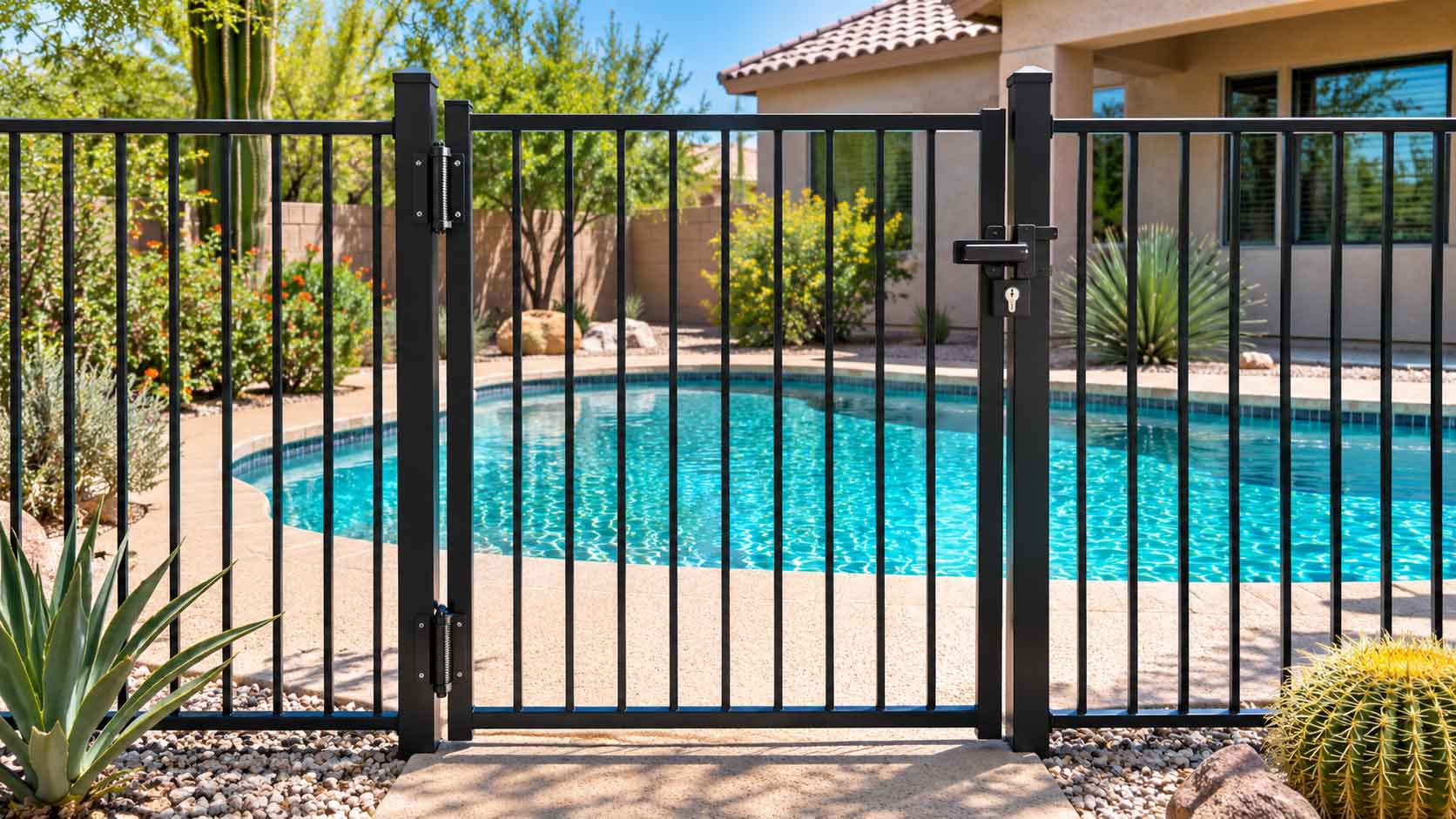
A home being empty does not remove the need to prevent unintended pool access.
Check that barriers are intact and gates close and latch properly. Remove nearby objects that could help a child climb a fence, and arrange for someone to report damaged or unsecured gates during your absence.
The U.S. Consumer Product Safety Commission's Pool Safely guidance recommends barriers and self-closing, self-latching gates as layers of protection. When children are present, active adult supervision remains essential.
A camera, alarm or service visit is not a substitute for a functioning barrier. Likewise, a floating solar cover should not be treated as a safety cover.
Give authorized providers a secure access arrangement and clear instructions for leaving the gate latched after a visit. Avoid posting access codes or travel details where other people can see them.
A short written handoff can prevent repeated phone calls and confusion. Include:
Set a spending authorization appropriate to the arrangement, and distinguish routine maintenance from repairs requiring a separate estimate. Share sensitive access details through a suitable private channel.
If several people help with the property, give them the same current instructions. One person changing a timer while another adjusts sanitizer can complicate an otherwise straightforward service plan.
Let your provider know when you expect to return, especially if the date changes.
Ask for a condition update before planning the first swim. Confirm water testing, clarity, cleaner operation and any unresolved equipment concerns. If heating is needed, coordinate the schedule in advance rather than expecting the water to be ready immediately.
Walk the pool area when you arrive. Check the barriers, water level and equipment observations against the latest service report, and ask about anything that looks different.
Planning time away from your Arizona home? Contact Aqua Harmony Pools or call (480) 542-7341 to discuss dependable pool maintenance and equipment care for your Phoenix-area property.

Leaving a seasonal home does not put the pool on pause. This guide helps Arizona snowbirds arrange dependable pool maintenance, coordinate water-level and equipment checks, prepare for problems and return to a pool that has received consistent care.