September 29, 2026


The weather is finally cooling down, the pool is getting less use, and the pump is still following its summer schedule. Is it time to cut back?
For many Phoenix homeowners, fall is a sensible time to review pool equipment settings. But choosing a winter schedule involves more than subtracting a few hours because the afternoons feel comfortable.
The right pool pump run time depends on how much water the system moves, the pump speed, debris conditions, sanitizer needs and any equipment that requires circulation. A shorter schedule may work in cooler weather, but there is no single number of hours that fits every Phoenix pool.
Here is how to make a useful seasonal adjustment without trading a lower electric bill for cloudy water or equipment problems.
A pool used every afternoon in July has different demands from one sitting mostly undisturbed in December. Water temperature, sunlight, swimming activity and debris all affect the maintenance plan.
Those factors do not change together on a calendar date. A warm September can still bring regular swimming. A heated pool may remain in use through winter. A yard with overhanging trees may need more surface cleaning just when the swimming season slows down.
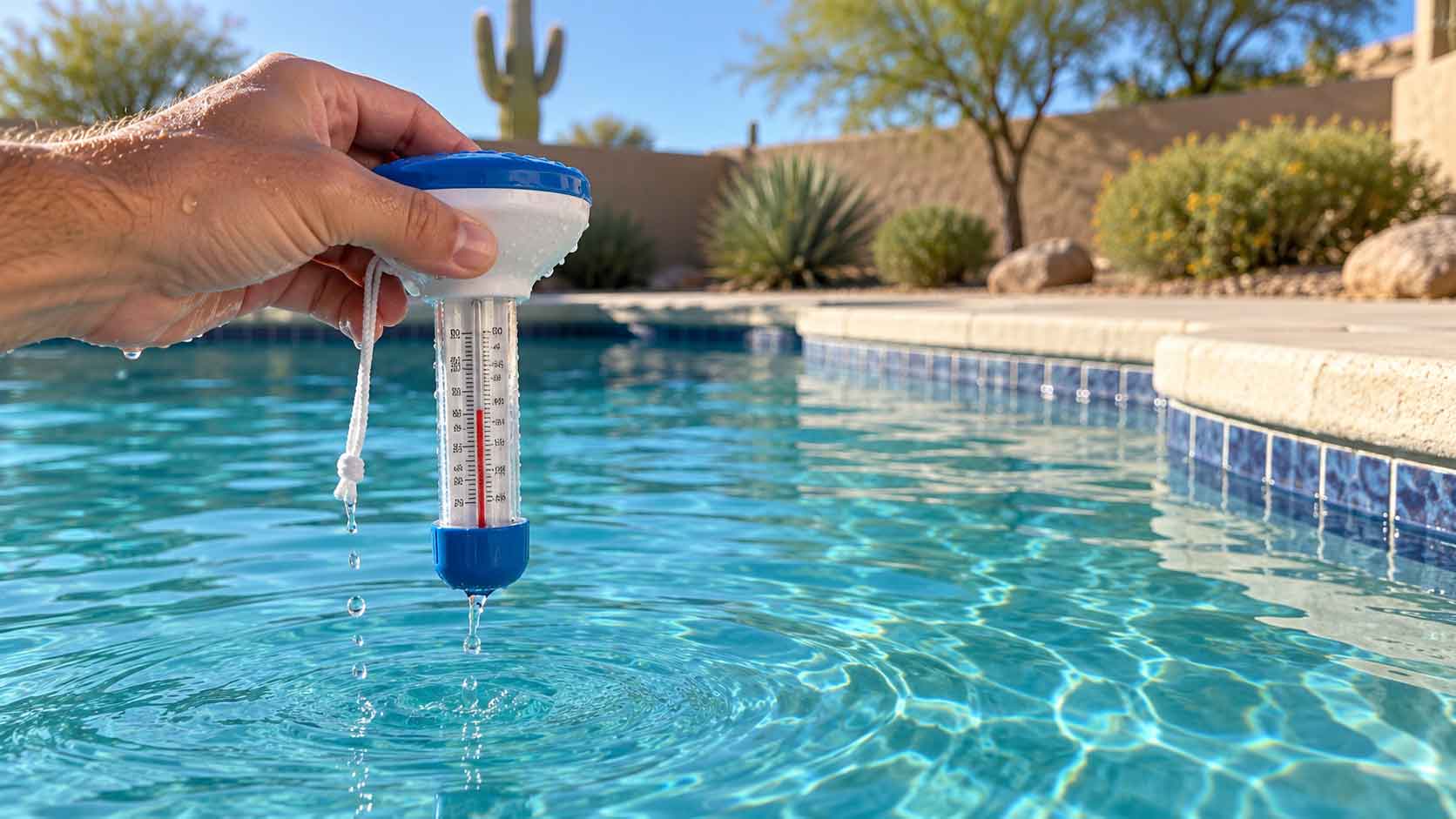
Start with the actual condition of your pool. Check water temperature, recent chlorine test results, clarity and the amount of material collecting on the surface or floor.
A clean-looking pool is a helpful observation, but appearance does not replace water testing. Reducing circulation and reducing sanitizer at the same time can also make it harder to identify which change caused a problem.
Two pumps can run for eight hours and do very different amounts of work.
A single-speed pump operates at its fixed operating speed whenever it is on. A variable-speed pump may spend much of its schedule at a lower speed, then increase output for cleaning, heating or other functions.
That means your neighbor's four-hour schedule cannot be compared directly with your ten-hour schedule without knowing the equipment and flow involved.
Consider a simple calculation. At an actual, steady flow of 40 gallons per minute, six hours moves 14,400 gallons through the equipment. At 20 gallons per minute, those same six hours moves 7,200 gallons. The arithmetic is flow multiplied by minutes.
Those figures are examples, not recommended flow rates or schedules. They also do not mean every gallon in the pool has passed through the filter exactly once. Pool water mixes continuously, and hydraulic performance matters.
A pressure gauge or RPM reading does not directly tell you gallons per minute. A technician can evaluate flow using suitable measurements and the installed equipment's operating information.
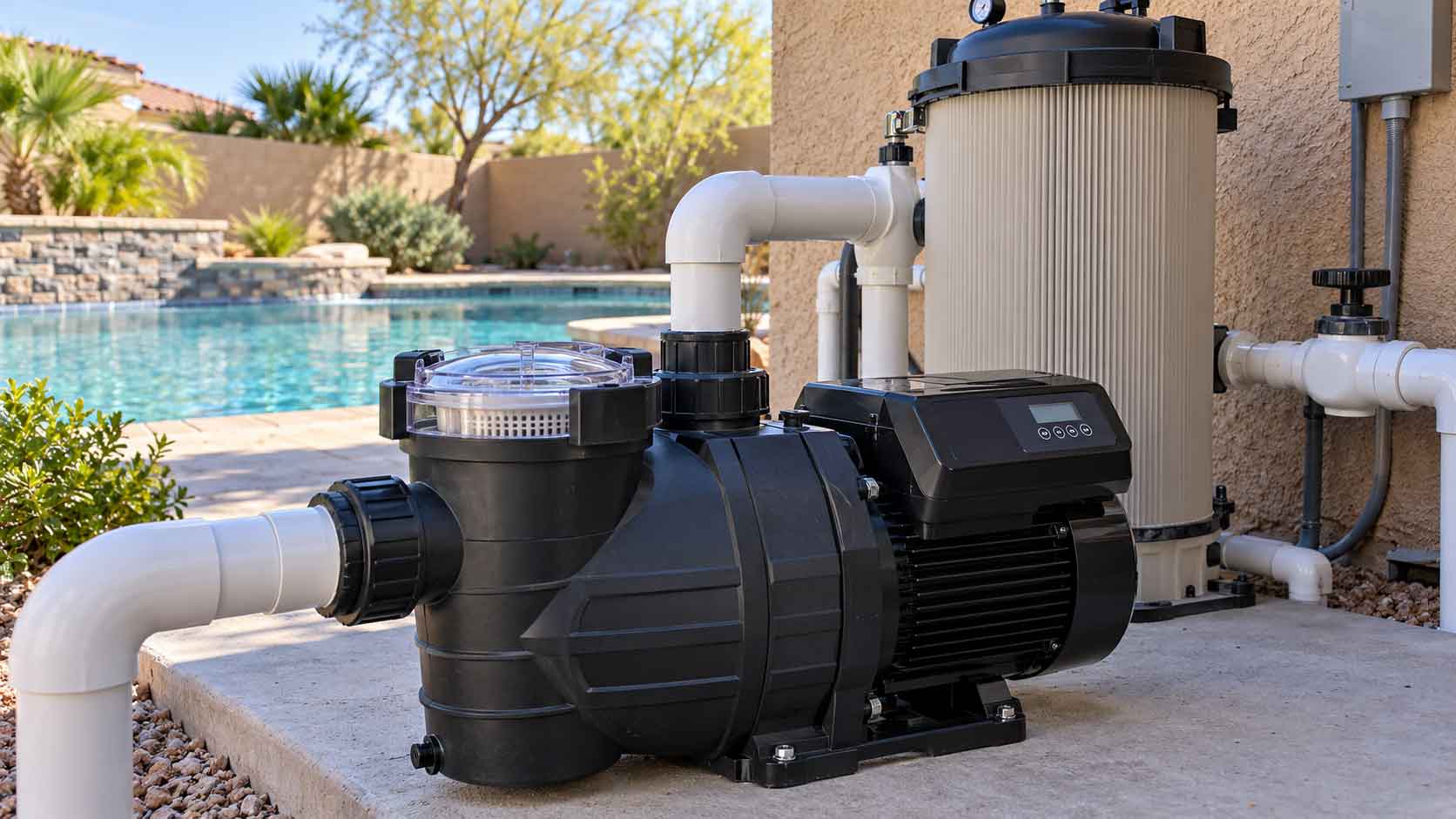
With a variable-speed pump, the goal is not necessarily the shortest possible schedule. The goal is to complete the required tasks efficiently.
The Building America Solution Center's variable-speed pump guidance recommends adequate circulation at the lowest practical motor speed, with adjustments for equipment and seasonal needs. A lower-speed schedule can require more hours while using less electricity than a shorter period at high speed.
For a seasonal review, identify what each programmed period is doing:
Some functions may need a higher flow than basic filtration. Keep those requirements in place rather than lowering every scheduled speed together.
Our guide to variable-speed pool pumps in Phoenix explains why programming is an important part of getting value from the equipment.
A seasonal schedule adjustment works best when the circulation system is already operating normally.
Check the pool's water level and inspect accessible baskets using the correct shutdown procedure. A basket packed with leaves can restrict flow regardless of how many hours the timer allows.
Review filter condition, too. Compare pressure with the clean-filter baseline at the same pump speed and operating mode. Follow your filter's service instructions; a pressure reading taken at a different speed can be misleading.
If the filter is due for service, Aqua Harmony Pools offers professional pool filter cleaning. Establishing a clean, functioning baseline makes later schedule comparisons more useful.
Persistent air in the pump, repeated loss of prime, leaks or unusual mechanical noise call for diagnosis. Do not leave a pump running dry or increase its speed to compensate for an unresolved problem. Our guide to why a pool pump loses prime explains several conditions that deserve attention.
A salt system makes chlorine during suitable operating conditions. The pump schedule therefore affects the time available for production.
If you shorten the circulation period while leaving the cell output setting unchanged, the system may make less chlorine over the day. Whether that is appropriate depends on the pool's measured chlorine demand and the cell's performance.
Check the controller for adequate flow and normal production rather than assuming the cell is working whenever the pump is on. Cold-water limits are model specific.
For example, Pentair's IntelliChlor IC15 instructions identify a cold-water condition in which chlorine production stops. Your own model's manual should guide the response.
Running the pump longer will not override a temperature-related production shutdown. Continue testing and have an appropriate supplemental sanitizing plan if the cell is not producing. Do not treat cold water as a reason to stop monitoring chlorine.
If you heat the pool in fall or winter, the pump must provide the flow required by the heating equipment while it operates. The heater's operating sequence, including any required cooldown, also needs to be respected.
A pool that is heated for regular swimming may have little in common with an unheated pool that is rarely used during the same month.
A suction-side cleaner relies on the circulation system, while some other cleaners have their own motor or booster pump. Check which type is installed before deciding that the cleaner can finish its job in a much shorter filtration window.
Watch what happens after a schedule change. If a cleaner repeatedly misses areas or debris stays on the surface, have its operating conditions checked. More hours may help in some cases; a restriction or unsuitable speed setting needs a different correction.
Automation can coordinate these functions, but the programmed settings still need to match the equipment. Our article on pool automation and smart upgrades covers how connected controls fit into everyday pool care.
Use your current successful schedule as the starting point, then work through a controlled review:
Do not wait for green water to decide a reduction went too far. A declining chlorine residual, accumulating debris or a flow warning is reason to review the plan early.
Weekly pool maintenance provides a useful record of how the pool responds through the season. Let your technician know about timer changes so the service plan and equipment settings stay coordinated.
That depends on your electricity plan and the jobs the pump needs to perform.
Check your own utility account for the applicable rate periods rather than assuming nighttime operation always costs less. Energy use and electricity cost are related, but they are not the same measurement.
For a simple comparison, daily energy use in kilowatt-hours equals average power in kilowatts multiplied by operating hours. A pump drawing 0.25 kilowatts for ten hours uses 2.5 kilowatt-hours; one drawing 1.5 kilowatts for four hours uses 6. These are arithmetic examples, not promised results for your equipment.
Compare actual readings where available, then consider rate periods. Keep enough suitable operation for skimming, sanitation and equipment functions. The cheapest timer window is only useful if the pool's maintenance needs are still being met.
A normal winter filtration schedule is not a complete freeze-protection plan.
Pentair's Sun Belt winter pool guidance discusses maintaining circulation and using appropriate automation during cold conditions. Which circuits are protected, how they activate and what happens during an outage depend on the installed system.
Have a pool professional review those settings before a freezing forecast. Do not assume every pipe, water feature or separate pump is protected because the main circulation pump has a freeze setting. Automatic protection also depends on power and functioning controls.
Extended freezing or an outage requires equipment-specific guidance. Get that plan in place ahead of the weather rather than experimenting with valves or equipment drains during a cold night.
Fall and winter can create opportunities to reduce unnecessary pumping, but useful savings start with understanding the system. Water temperature, actual flow, sanitizer needs, cleaning and heating all belong in the decision.
If the pump cannot maintain normal circulation or the controller repeatedly reports a fault, Aqua Harmony Pools can help with pool equipment diagnosis and repairs as well as routine maintenance.
Ready to review your pool's seasonal schedule? Contact Aqua Harmony Pools or call (480) 542-7341 to discuss maintenance and equipment needs for your Phoenix-area pool.

Cooler weather is a good time to review your pool pump schedule. Learn why hours alone do not tell the whole story, how salt systems and heaters affect run time, and what to check before reducing circulation in your Phoenix pool.