July 7, 2026

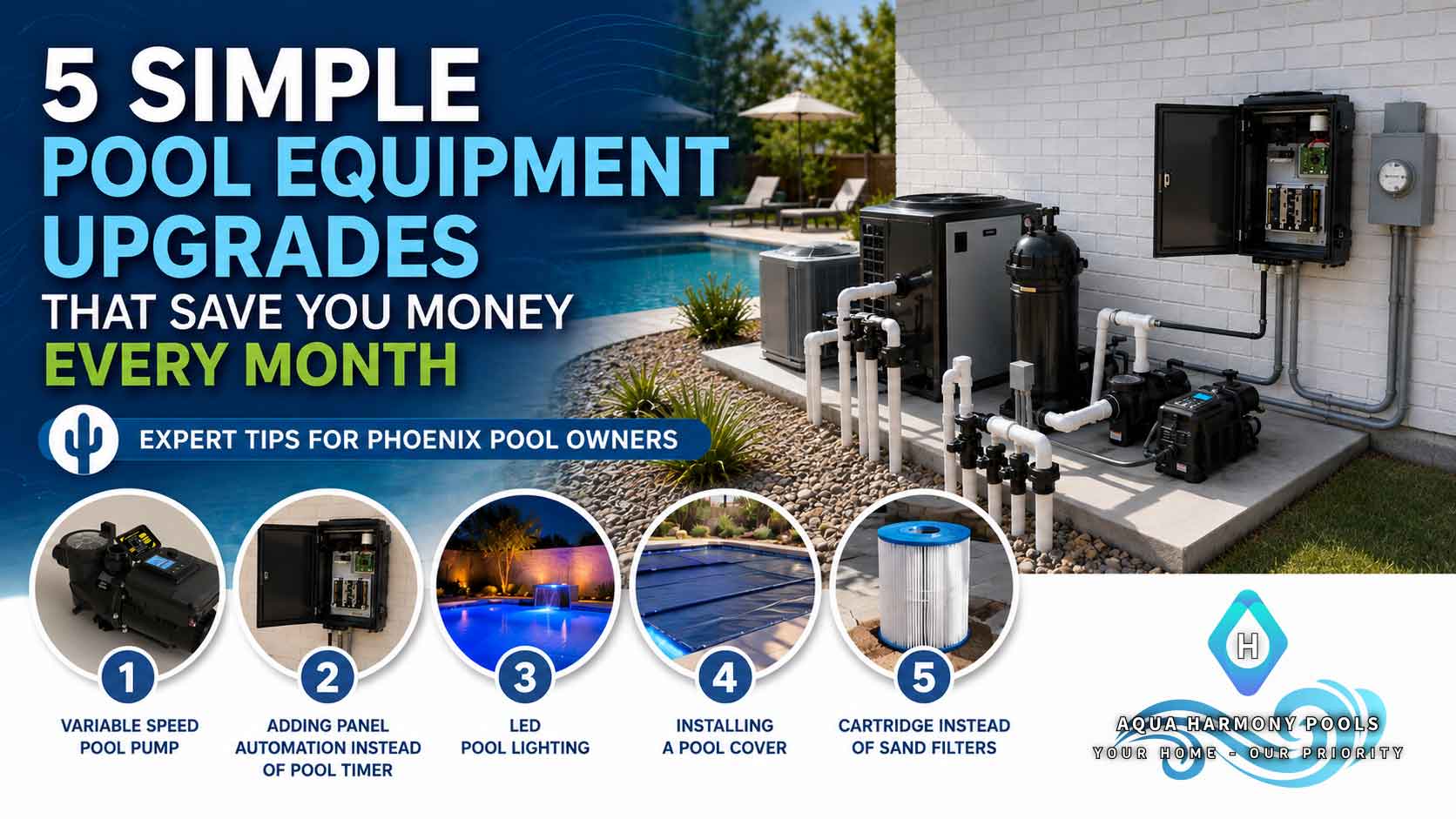
Owning a swimming pool in Phoenix comes with a unique set of operating costs. Between electricity, water, chemicals, routine maintenance, and the additional demands created by Arizona's extreme summer heat, it can easily cost a Phoenix homeowner thousands of dollars each year to operate and maintain a backyard pool.
The good news is that some of the biggest expenses are hiding in plain sight.
At Aqua Harmony Pools, we frequently see pools equipped with components that work perfectly well but aren't particularly efficient. An older single-speed pump may run for hours every day at full power. A mechanical timer provides little control over when and how equipment operates. Older incandescent or halogen pool lights consume considerably more electricity than modern LEDs. An uncovered pool can lose a tremendous amount of water to evaporation. Even the type of filter installed can affect how much water is wasted throughout the year.
Individually, these expenses may not seem significant. Over the 15, 20, or 30-year life of a swimming pool, however, they can add up to thousands of dollars in unnecessary operating costs.
If you're looking for ways to make your Phoenix pool less expensive to own, these five equipment upgrades are some of the biggest needle movers.
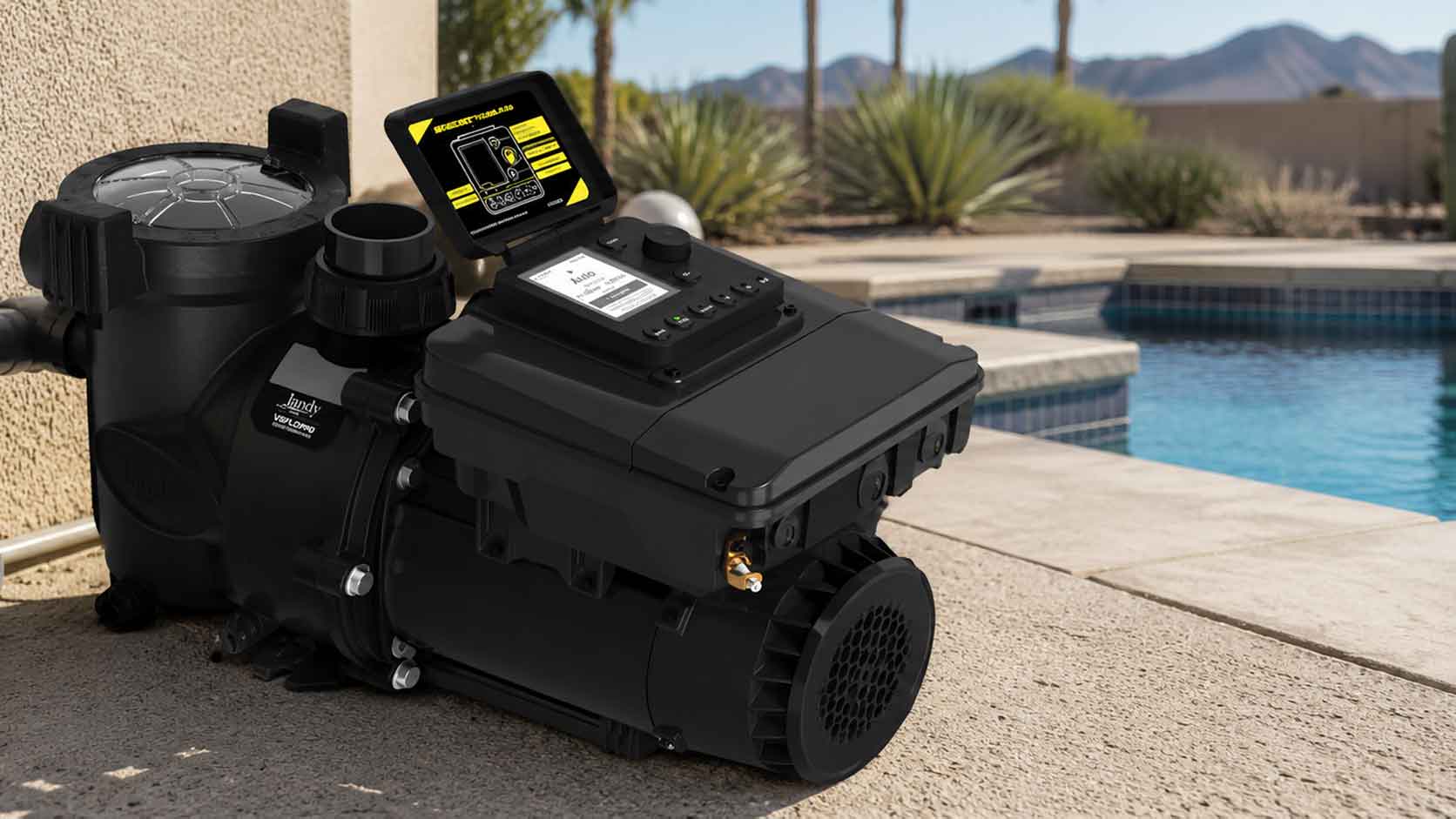
If your pool still uses an older single-speed pump, this should probably be the first upgrade on your list.
Traditional single-speed pumps essentially have two settings: on and off. Whenever the pump is running, the motor operates at its full rated speed regardless of whether the pool actually requires that much flow.
Variable-speed pumps work differently. They allow the pump to operate at lower speeds for routine filtration while increasing speed when additional flow is necessary for features such as spas, heaters, cleaners, or water features.
That distinction matters because reducing pump speed can dramatically reduce the amount of electricity required to circulate your pool water.
For Phoenix homeowners, where pools frequently operate throughout the year and filtration demands increase during the long summer season, those energy savings can become particularly meaningful. Instead of paying to operate your circulation system at maximum power whenever it's running, you're using only the amount of energy the pool needs.
Variable-speed pumps also provide additional advantages. Lower operating speeds generally mean quieter operation, and the ability to fine-tune flow rates gives pool owners considerably more control over how their circulation system performs.
If you're still running an old single-speed pump, replacing it with a properly sized variable-speed model can be one of the most impactful equipment upgrades you make.
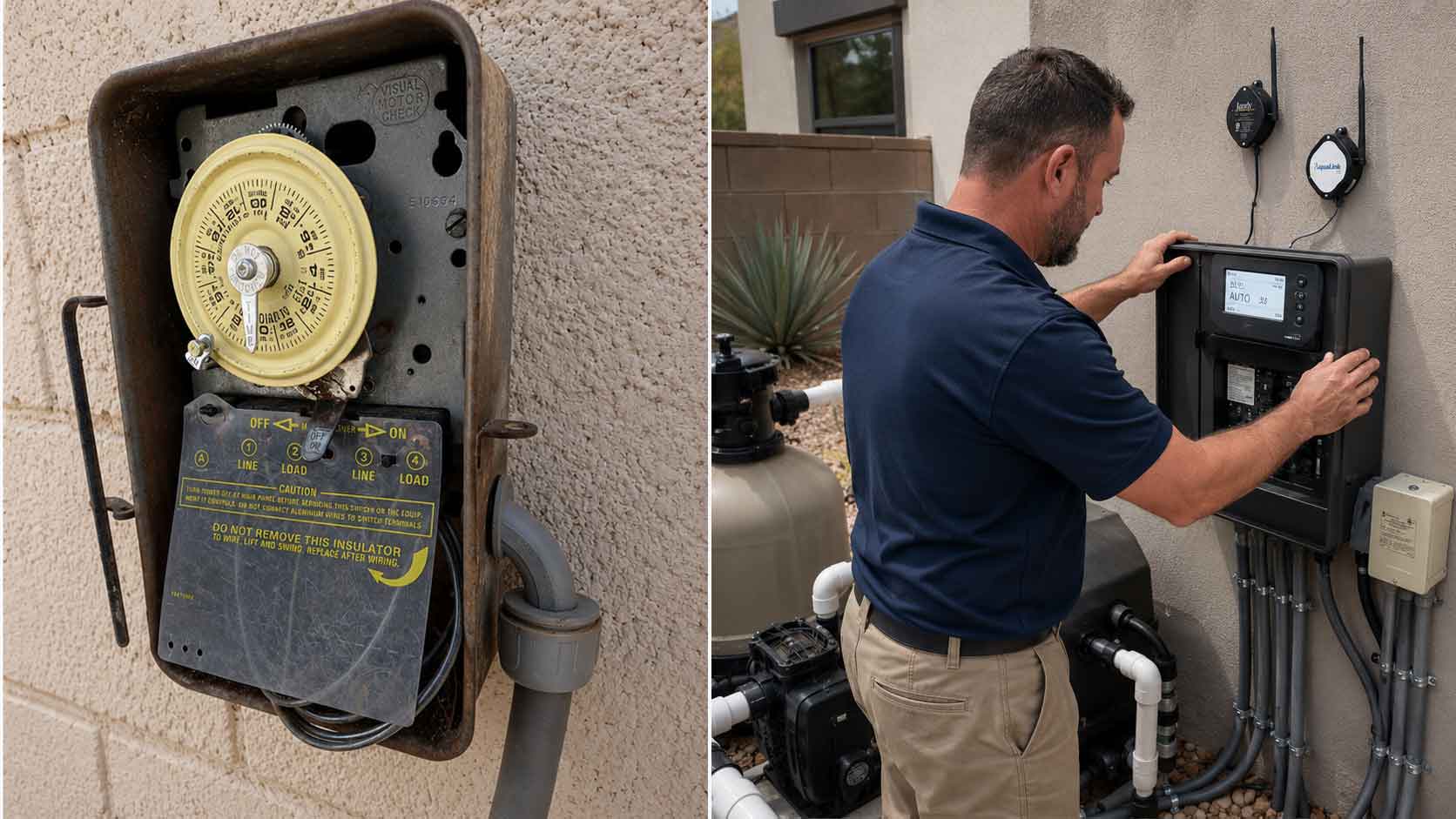
The traditional mechanical pool timer has been around forever. It's simple, inexpensive and generally reliable, but it doesn't give homeowners much control over their pool.
Modern pool automation changes that.
Instead of relying on a basic timer to switch equipment on and off, an automation panel can coordinate your pump, heater, spa, lighting, water features and other compatible equipment from one centralized control system. Many modern systems can also be controlled remotely through a smartphone or tablet.
From an efficiency standpoint, that control matters.
Your equipment can be programmed to operate when it's actually needed instead of simply running according to the same mechanical schedule every day. Pump speeds can be coordinated with different functions, heating schedules can be better managed, and homeowners are less likely to accidentally leave lights, water features, spa equipment, or other components operating unnecessarily.
Automation doesn't magically make equipment more efficient. What it does is give you much better control over when and how your equipment uses energy.
It also makes owning a pool considerably more convenient. For homeowners already considering upgrades to pumps, heaters, lighting, or other equipment, adding automation can bring the entire equipment pad together into a much smarter system.
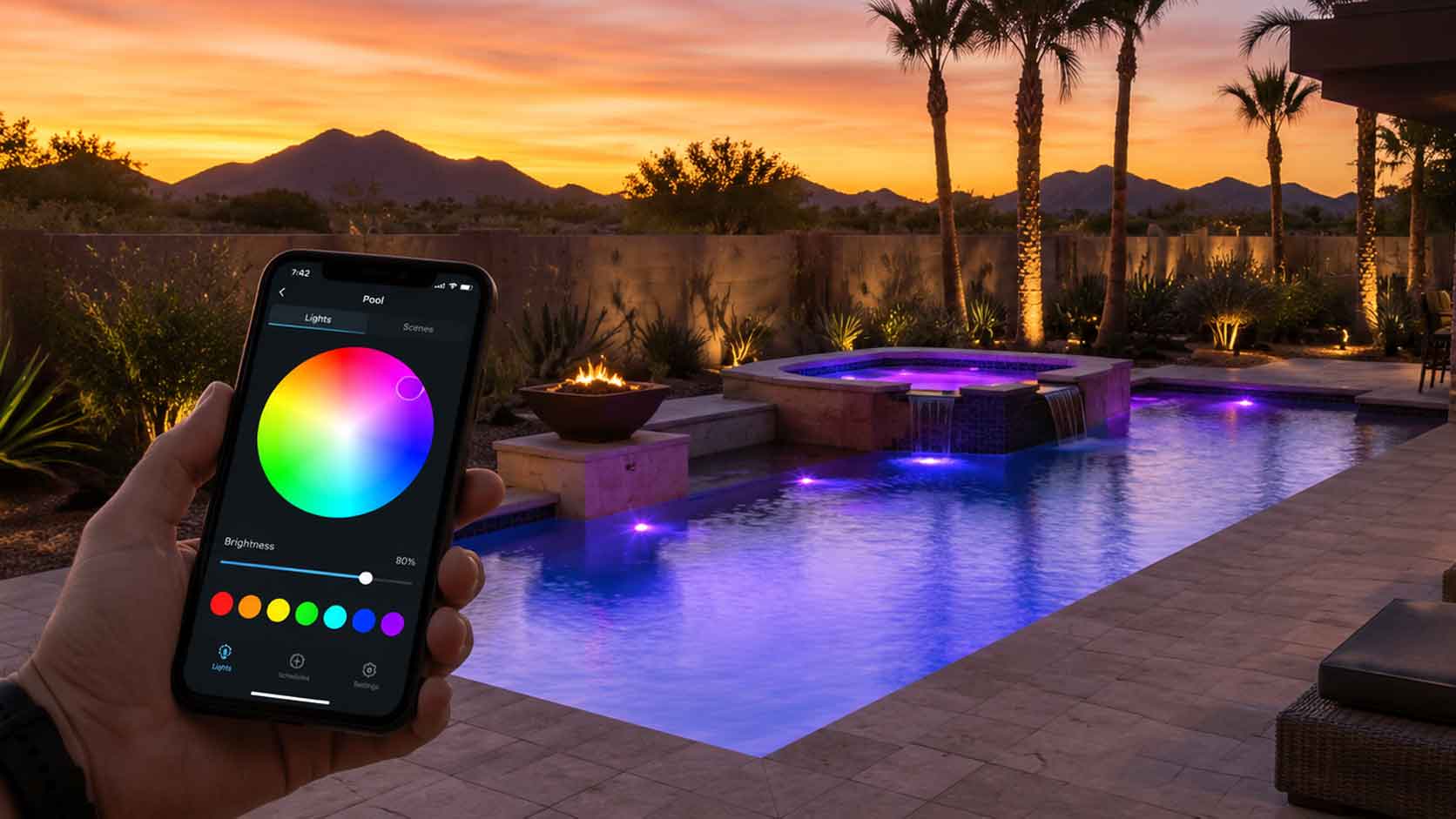
Pool lighting probably isn't your largest monthly expense, but upgrading older lights is one of the easiest ways to reduce energy consumption while improving the pool at the same time.
Older incandescent and halogen pool lights can require hundreds of watts of electricity per fixture. Modern LED pool lights can produce excellent illumination while using substantially less power.
The difference becomes even more noticeable on pools with multiple fixtures or homeowners who regularly use their pool lighting throughout the evening.
LEDs also typically provide significantly longer service life than traditional incandescent bulbs, which can reduce the frequency of replacement.
There is also an aesthetic benefit. Modern LED systems can offer brighter, cleaner illumination and, depending on the system selected, programmable colors and lighting scenes. When paired with pool automation, homeowners can control lighting directly alongside the rest of their pool equipment.
It's a relatively straightforward upgrade that can simultaneously improve efficiency, convenience, and the appearance of your backyard.
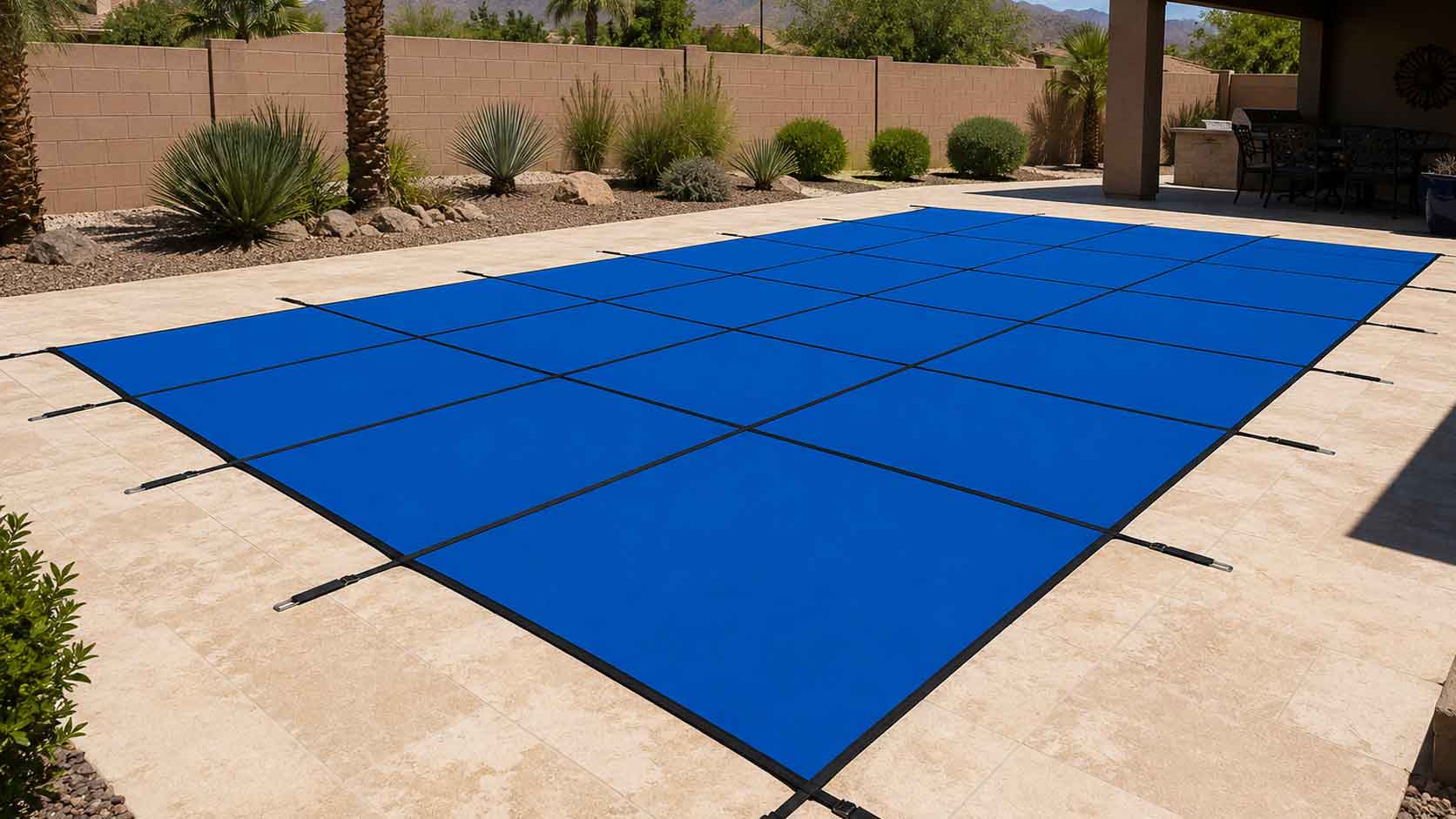
In Phoenix, one of your pool's biggest expenses may be disappearing directly into the air.
Evaporation is a major issue in Arizona's hot, dry climate. When water evaporates, you're not simply losing water. You're also losing some of the chemicals contained in that water and potentially increasing the amount of heating required if you're trying to maintain a particular temperature.
Then you have to replace the lost water.
A pool cover creates a physical barrier between the water and the surrounding environment, dramatically reducing the opportunity for evaporation.
That can mean less replacement water, better retention of heat, and reduced demand for certain pool chemicals. Covers can also help keep leaves, dust, and other debris from entering the pool, potentially reducing the workload placed on the filtration system.
For Phoenix homeowners in particular, reducing evaporation can have a meaningful impact because of the combination of high temperatures, low humidity, intense sunlight, and extended swimming seasons.
There are numerous cover options available, ranging from relatively simple covers to sophisticated automatic systems. The right choice depends on the pool, how frequently it's used, the homeowner's priorities, and the existing backyard configuration.
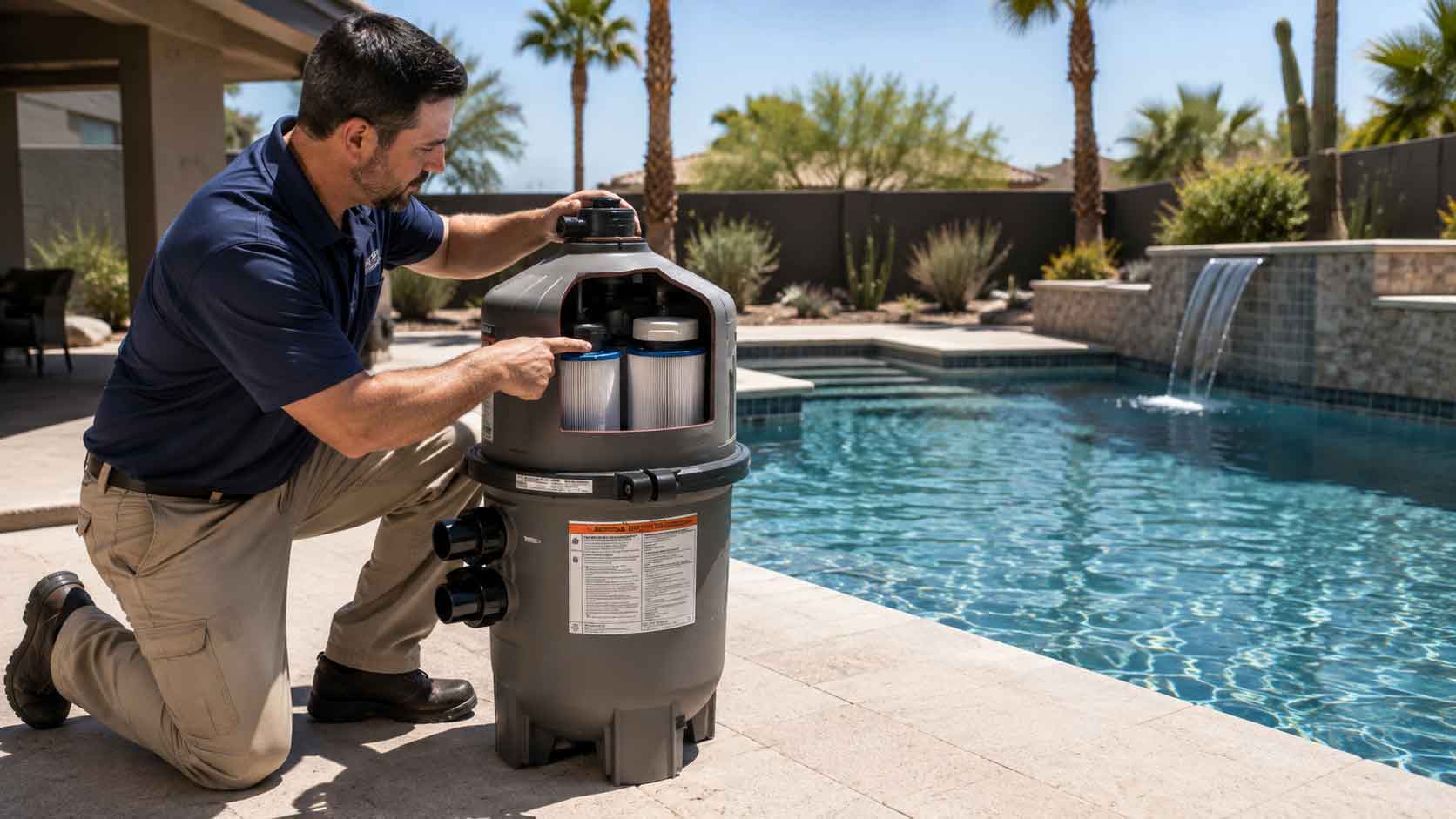
Both sand and cartridge filters can maintain excellent water quality when properly sized and maintained, so this isn't a question of one technology being universally "better" than the other.
For Phoenix homeowners concerned about operating costs and water conservation, however, cartridge filtration has an important advantage: it doesn't require routine backwashing.
Sand filters periodically need to be backwashed to remove accumulated debris from the filter media. During that process, pool water is discharged from the system.
A cartridge filter is maintained differently. The cartridges are removed from the filter housing and cleaned rather than backwashing large quantities of pool water to waste.
That can reduce the amount of water lost during routine filter maintenance.
In an environment like Phoenix, where conserving water is particularly important, eliminating routine backwashing can make cartridge filtration an attractive option. Properly sized cartridge filters can also provide excellent filtration while operating efficiently at lower flow rates, making them a natural companion to modern variable-speed pumps.
That doesn't mean every homeowner should immediately replace a functioning sand filter. But if your existing filter is nearing the end of its useful life or you're already upgrading the equipment pad, it's worth discussing whether cartridge filtration makes more sense for your pool.
The cost of owning a swimming pool isn't determined solely by what you paid to build it. It's also determined by what that pool costs you every month for the next several decades.
That's why equipment efficiency matters.
A variable-speed pump can reduce one of the pool's largest electrical loads. Automation can prevent unnecessary equipment operation. LED lighting dramatically reduces the power required for illumination. A pool cover can help combat Phoenix's relentless evaporation. Cartridge filtration can eliminate the water routinely lost through backwashing.
You don't necessarily have to make every upgrade at once, either. A knowledgeable pool professional can evaluate your existing equipment, identify the components responsible for the greatest operating costs, and prioritize upgrades based on where you're likely to see the greatest benefit.
If you're considering upgrading your pool equipment in Phoenix, contact Aqua Harmony Pools. Our team can evaluate your existing system, recommend equipment appropriate for your pool, and provide a proper, safe, and seamless installation.
Whether you're replacing a pump, modernizing your controls, upgrading your lighting, improving filtration, or making your entire equipment pad more efficient, Aqua Harmony Pools can help you install a pool system that's easier—and less expensive—to own.

Phoenix pool ownership can get expensive, but a few smart equipment upgrades can significantly reduce monthly operating costs. Aqua Harmony Pools explains five practical upgrades that can help homeowners save energy, conserve water, reduce maintenance, and get more from their pool.
.png)

